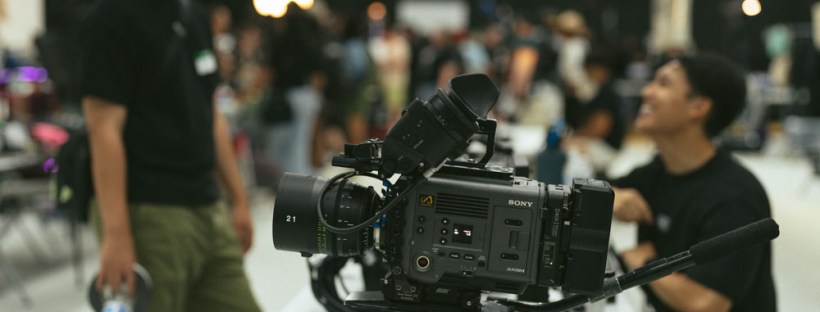
The Atlanta Film Yard Sale – Year 2!

Last year, a group of three camera department women got together to plan a simple yard sale — that ballooned into the event of the year. Those women were Erin Zellers, Tina Somphone and myself. And we had to go bigger and better this year.

I wrote about the first one here: https://bridgetlamonica.com/2024/09/11/the-atlanta-film-yard-sale-and-building-a-film-community/

Being a filmmaker doesn’t mean you are an artist on an island, creating alone. Film production is the ultimate group project. (sorry kids in high school, you still have to get along with other people!) Just as you would make a film with a group of dedicated people, the yard sale event comes together thanks to a wide network of people, from the three organizers, to the volunteers, to the sponsors, to the vendors and the attendees.

There was a lot of well-intentioned pressure from Year 1 to keep going. We didn’t even finish having the event last year before people were asking us when we would do it again. “Twice a year?” some people suggested. We all turned pale. “Once a year is fine” we assured them.

As 2025 dawned, we got to work.

Looking at what we got right and what needed work last year, we started figuring things out. One biggie was that we needed more space. We absolutely packed 24ATL last year, the LED Volume Studio in Doraville GA. It was a great space (and that wall is super cool, you should really check it out) but we ended up shortchanging people on space and didnt’ want to do that again.

Plus the need was simply greater this year. I know I haven’t discussed it on the blog much but I have talked endlessly about this to folks in person. The film industry is not in a great place right now. People are making the decision to either transition out of the industry entirely, or are holding on with their fingertips and hoping things will pick up work-wise. For this reason, there’s a number of people who just need to make some money or want to transition their business to something else. We had plenty of people who wanted to sell at the event.

Our sponsors this year made it possible to get any further. You can’t host an event without money to organize it.

Tier 2 Sponsors

You can see Local 600’s writeup about the event here.

Tier 1

Yes, we had a lot of sponsors! They donated money, prizes for the drawing, and more. We also had a surprise bonus drawing prize from Panavision! Super awesome.

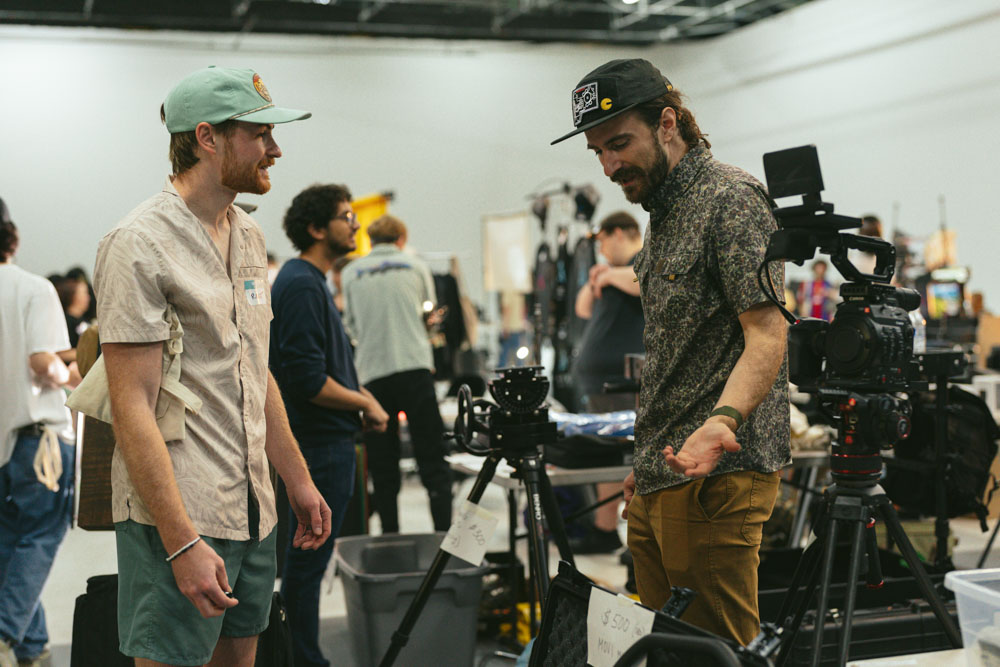
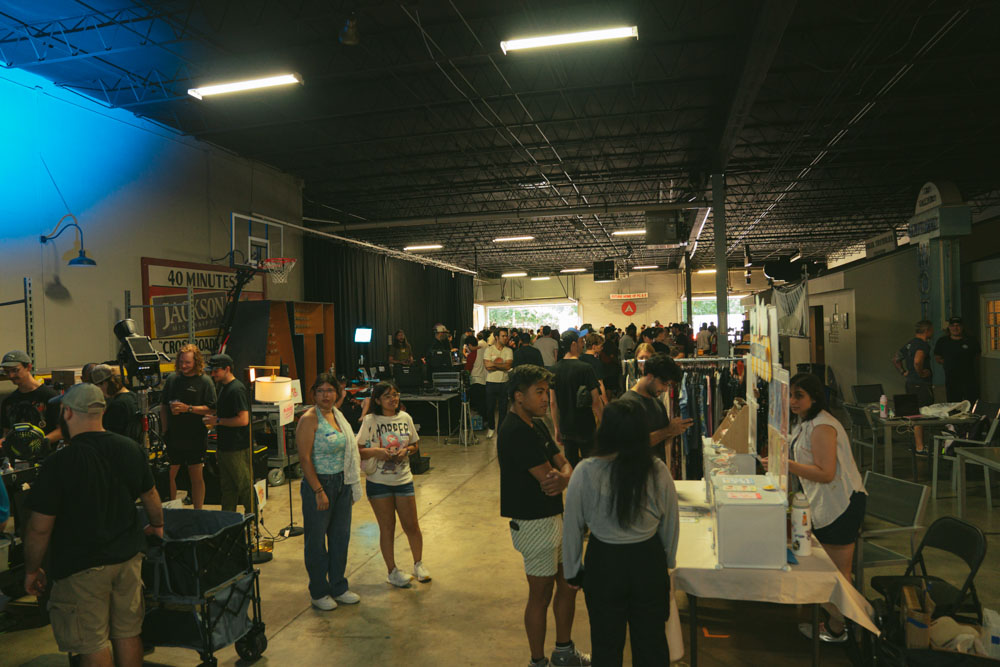
PC&E (Production Consultants & Equipment) became our venue for the event. Not only do they rent out a lot of film gear in the local film industry here, they also have an enormous sound stage that we would end up filling. And then some.

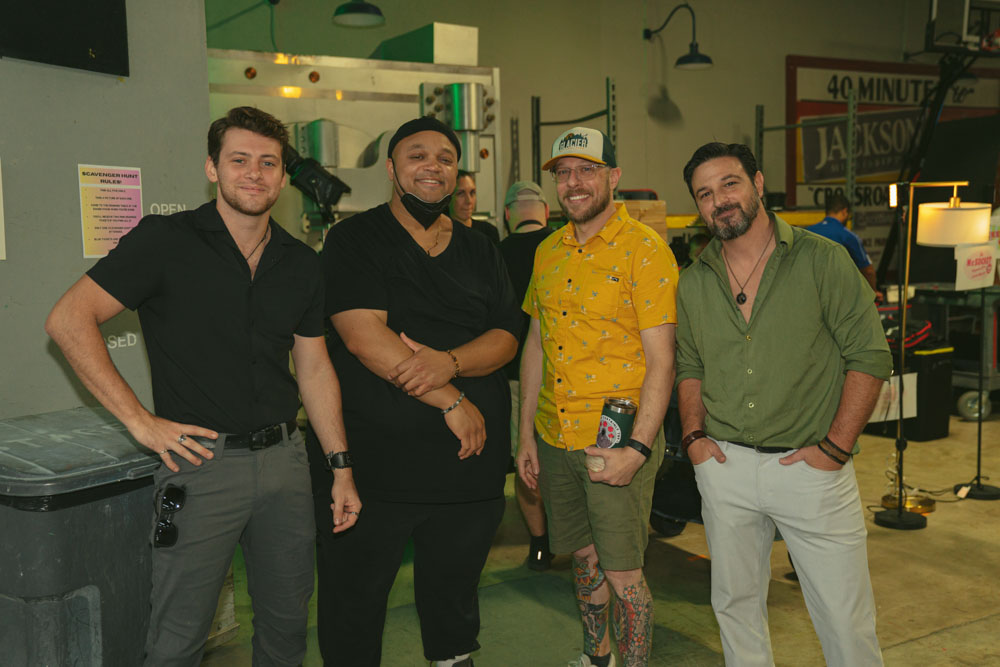
We filled every available space, from the entirety of Stage 1’s 9400 sq ft to the staging area leading to it and the outside. We had people everywhere! Plus food trucks. Plus activities like a scavenger hunt.

This year we were able to raise money for a cause that’s near and dear to a lot of members of the film industry, the Sarah Jones Film Foundation. The foundation honors the memory of 27 year old camera assistant Sarah Jones, who tragically lost her life in February 2014 due to an accident on the set of Midnight Rider. The foundation provides education and awareness, film safety grants, and even a wonderful film internship program. You can learn more about the foundation here.
Thanks to our donated items, our drawing prizes, our vendors and sponsors, we were able to raise $2500 for the foundation.

We also held demonstrations this year! As is typicaly with the film production life, we had a couple cancellations that had to be filled, and everyone who did a demonstration did an amazing job.

The demonstrations included an excellent “how to film stunts” demo with Good Slate Pictures. They also have a YouTube channel so you should definitely check out their stuff! Their YouTube is called Behind the Stunts.

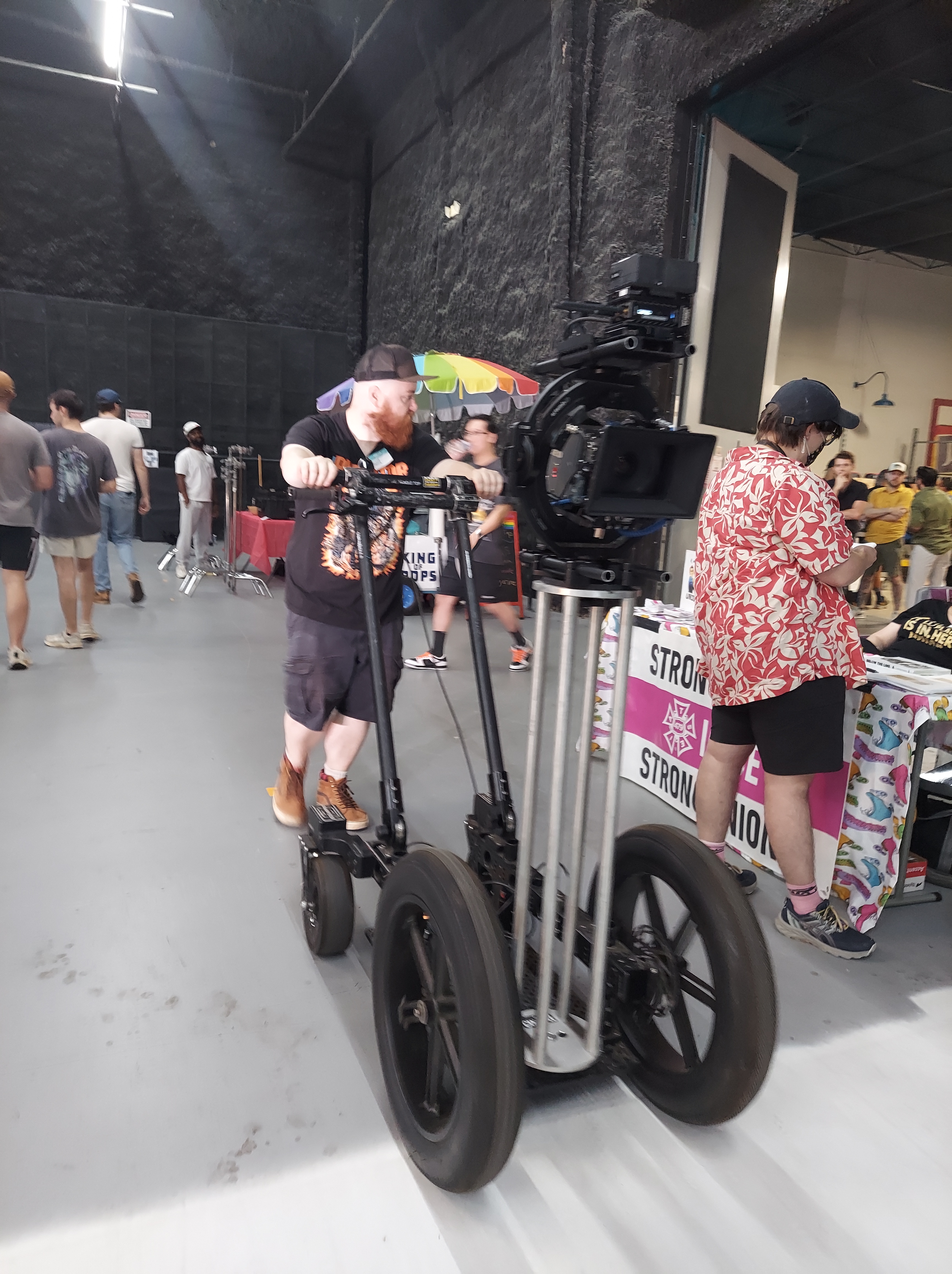
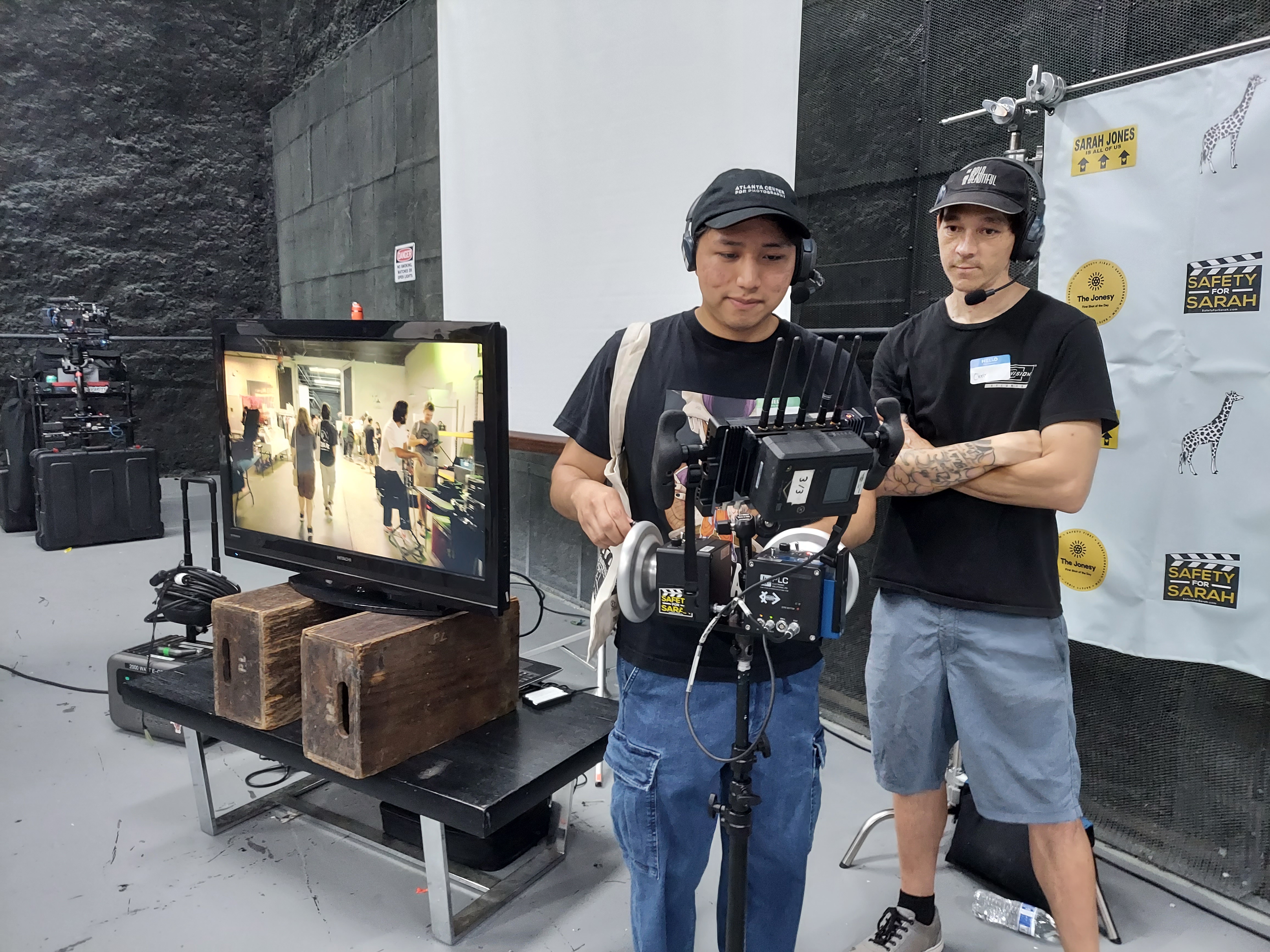
Chris Roe, ARRI Certified TRINITY Operator, Cinematographer and Steadicam Operator, brought his cool rickshaw with remote head! Folks got to try to remote head for themselves as the rickshaw roamed the space.
Kenya Campbell and Deanna Griffin did a DP/Gaffer fireside chat. It was great information to share with our audience as experience levels varied. Plus it is always great to learn new tips, tricks, and practical information to make you better at your job!

I can’t say enough about how this community came together! This, my friends, is what the film industry is all about. Working together towards a common goal. Sharing education and resources. Having a good time with your friends.

We’ll see you at the next one.
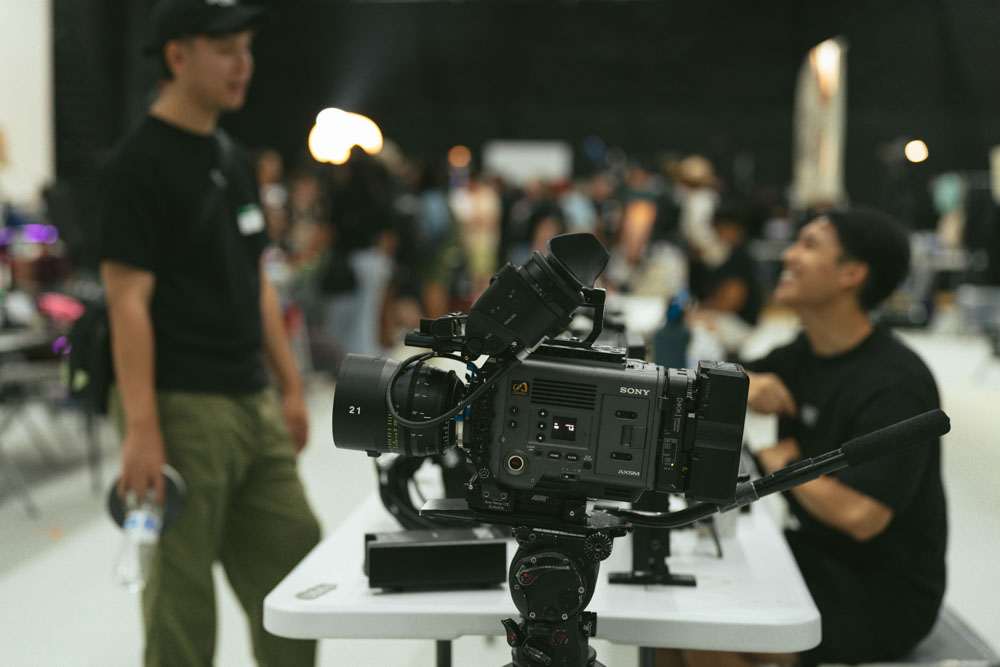
Photo Credit: Local 600 Still Photographer Josh Stringer
Not One Size Fits All – Easyrigs and You

I’ll never claim to know it all. I’m a camera operator and there’s always going to be gaps in knowledge, new technology to learn, or new techniques to master. And you too should never stop learning.

So when I entered season 3 of a reality show, I was definitely surprised when the Easyrig production provided for me just didn’t feel right.

For those not in the know yet (and that’s okay, remember what I said about learning?) – An Easyrig is a camera support system that helps reduce back strain especially when doing handheld with heavier cameras. You probably wouldn’t use one with a smaller camera, like a Lumix or A7s, but for your bigger cameras, it helps a lot to distribute the weight.

It’s sort of a vest thing – different from the Steadicam because it’s a lot softer material in the front – and it has an arm over top that carries the camera via a clip and string. Everything’s attached to a pulley system inside the hardshell on the back.

There’s straps and things to help you adjust it to your body but what I didn’t know… was that the Easyrig wasn’t one size fits all.

We started a scene in an office where a bunch of cast members were doing a meeting. It was going to be a long scene, we knew that. It would be difficult to stop and start again, so we prepared for the long haul.

But as I was operating, I felt the vest slipping lower and lower. I tightened it to the point where it was nearly suffocating, and it was still slipping. The lower portion of the vest where there was a hard point eventually rested on the top of my thigh, and I tried to push through the discomfort.

Of course, that’s when my leg began to go numb.

I kept trying to readjust my body and how I was holding the camera in order to find some relief and power through the rest of the scene. But it wasn’t working. My leg was tingling and going numb and I knew there was a problem.

I finally got on the walkie – something I try not to do during a scene unless it’s absolutely necessary – and called out to production that something was wrong and I needed to set down my cmaera.

Crickets.

Unfortunately for me, they either didn’t hear me or nobody knew who should answer. That’s a problem.

My leg was getting worse. I was probably just going to cave and set the camera down mid-scene, which was something I was loathe to do. I called over walkie again. No response. But then my DP came in and said “Hey, my B cam needs a break. We’ve got to stop now.”

And we did. I took everything off, re adjusted again, took a mini-breka, and went back into it. The rig was slightly better after the break but… it was still starting to cut into my thigh. I found myself hiking up the bottom of it just to keep going with the scene. It was rough. I knew something was wrong.

I ended up calling 16×9 Inc for help. 16×9 Inc is an authorized Easyrig dealer, and the guy on the phone (I’m so sorry I don’t remember your name) walked me through what I needed to know about Easyrig fits. We decided that the right size for me would be a different model, the Easyrig Gimbal Flexvest.

When I got the new Easyrig it was like the clouds finally parted and I could see the sun.

So now I’m the first person who will tell female and smaller-framed operators “Make sure you get the right fit. Easyrigs are not all created equally. They are not one-size-fits-all.”

Putting the Easyrig on

The Easyrig slides on sort of like an awkward, top-heavy backpack. Whenever putting on or using the Easyrig, you need to be aware of your surroundings and of the people around you. You are now taller and bulkier, plus you have a camera that could swing free and hit someone if you’re not actively controlling it.

I usually adjust the waist straps first to get the rig situated properly on my hips, then clip on the chest harness part. Tighten straps for the chest harness so it’s snug, and do the same for straps that are connecting the top to the bottom.

Test the fit by grabbing the vest and seeing if it moves. If it does, you’re not tight enough. Then also test the length of the vest by seeing if your legs can move freely up and down without hitting the bottom of the vest. If anything moves, tighten stuff up. If’s its all the way tight and things still move (especially when you put weight on it) it’s time to consider a different rig or a different method to operate the camera.

It it absolutely not worth hurting yourself to accomplish any shot.

Instructional Video

Dom from LensProToGo goes over how to fit the Easyrig on your body in this video:

Be safe while operating, friends!

Podcast update

We’ve been hard at work bringing Lights, Camera, Remake to life. We are currently up to 11 episodes on Spotify and I’m slowly uploading the episodes to Youtube as well.

We will be looking for sponsors as we grow.

In the meantime you can support us by following on your podcast streaming platform of choice and sharing the episodes or reels we put out. This is a labor of love and we enjoy sharing it with everyone. The response has been wonderful so far.

Instagram: https://www.instagram.com/lightscameraremakepodcast/

Youtube: https://www.youtube.com/@LightsCameraRemakePodcast

Lights, Camera Remake! A Podcast about Hollywood Unoriginality

Yet another person with a podcast. Oh my goodness. But let me explain.

One of the age-old complaints about movies and Hollywood in general is that there’s no originality left. We see endless remakes, reboots (slightly different), sequels, spinoffs and adaptations. Can’t they come up with anything new?

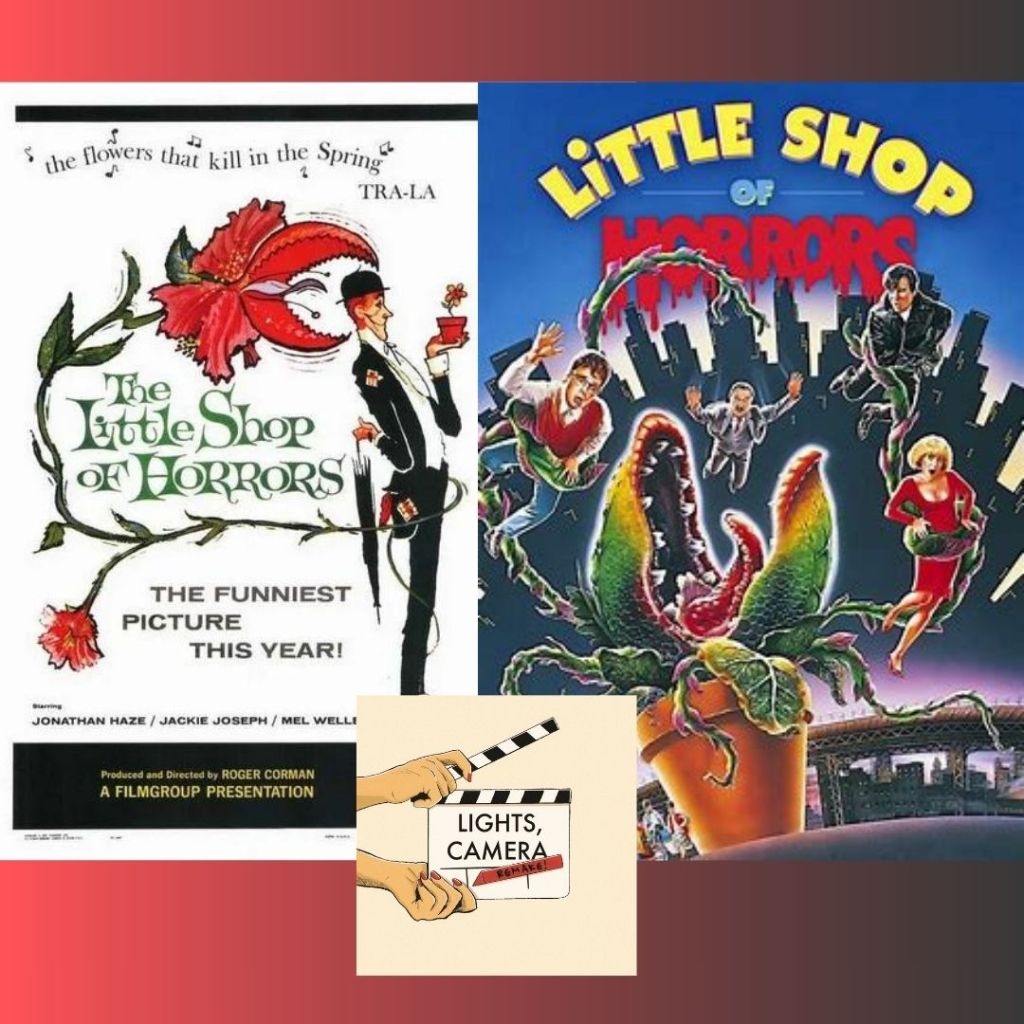
As I began to dig into this idea, I found some surprising things. Like the fact that Little Shop of Horrors -the musical comedy horror starring Rick Moranis and Ellen Greene? – was actually a remake of a low budget movie from 1960. Did you know that Martin Scorsese’s The Departed is based on a 2002 Hong Kong film Internal Affairs? 1998’s You’ve Got Mail is a remake of The Shop Around the Corner (1940). Ocean’s Eleven (2001) is a remake of Ocean’s Eleven (1960).

A remake of an old movie can bring a classic story to a new audience… and also sometimes make audiences really angry.

That passionate knee-jerk reaction is worth discussing.

I’d love to see more originality in the movie theater. The problem is — those movies have a harder time finding an audience.

Hollywood studios and executives are running a business, and they want to make money. And working with something that has established IP (like a Marvel movie, or a book adaptation, a remake) somewhat guarantees an audience will attend. At the end of the day, they just want to make money and make their shareholders happy. And they want to keep their jobs.

Anyway, my friend Erica Strout and I got talking, usually at work in between setups or at lunch. We met on a reality show TV show with myself working as the camera operator and Erica as my camera assistant. We became fast friends. And then we watched movies together. And had a lot of discussions about film in general.

Now we’re doing the Lights, Camera, Remake! Podcast.

This amazing artwork created by Taylor Rebyanski!

Is it always a bad thing to see a remake of a classic (or possibly unknown) movie? Our podcast looks to break it down and see if there’s merit to Hollywood shirking an original idea for a retelling.

On each episode we’ll look at a movie and its remake, or sometimes a movie and its sequel, to determine if Hollywood rehashed it for a reason or for a cash grab.

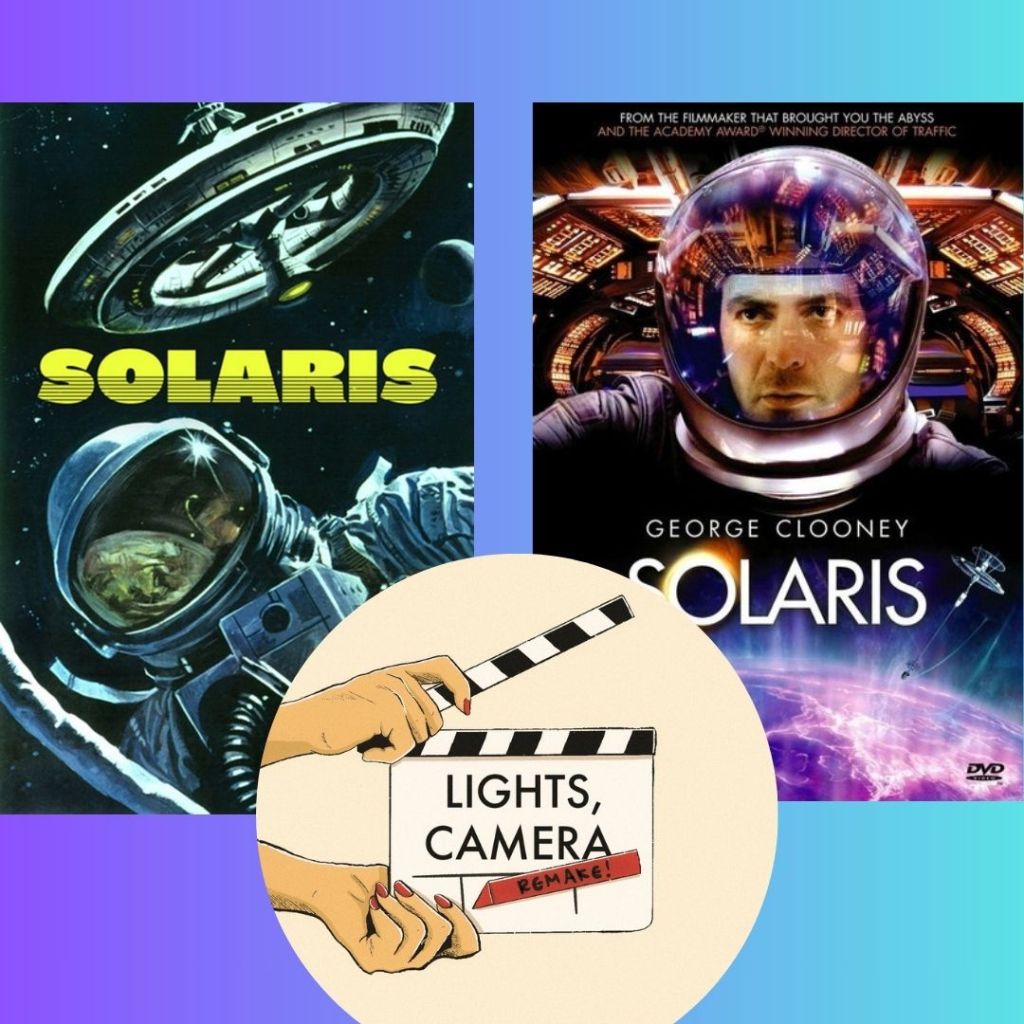
Episode 1 is about Solaris (1972) and Solaris (2002).

Solaris is an atmospheric Russian science fiction film based on a book. It was later remade in 2002 starring George Clooney.

You can listen to the episode on Spotify or right here:

Episode 2 is Little Shop of Horrors (1960) and (1986).

Next up this week is Weekend at Bernie’s! The episode will be uploaded on Wednesday, Jan 22.

Follow us on Spotify, Instagram and Facebook!

https://www.instagram.com/lightscameraremakepodcast/

https://www.facebook.com/profile.php?id=61560111332548

We’ve also got an email you can submit ideas, comments or random concerns too. We understand you have those.

LightsCameraRemakePodcast@gmail.com

http://www.screenrant.com/movies-secretly-remakes-surprising/

theenemyofaverage.com/movies-that-are-remakes/

The Evils of the Rolling Take and Reset

Let’s dig into a pet peeve of many on set: the rolling take.

A rolling take is when you keep shooting and keep repeating the action. Like an actor walking in to a room who flubs a line and goes back to start it over again. That can be a valid reason for a rolling take. No need to re-slate and re-call action. Just try it again.

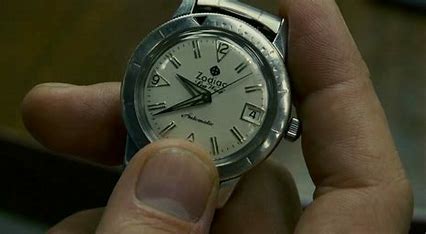
An Insert Shot: A watch being picked up and brought into the frame is a valid reason to do a series of the same action without cutting in between.

A rolling or series take might be done on a particular insert shot to get it right. Let’s say your actor needs to throw a letter to land on a desk just right. The director might ask for a series or rolling take in order to keep attempting that throw to get it the way they want. No fuss, no muss, and no wasting extra setup time to get that insert shot that you’ll see for two seconds on screen.

Directors don’t work the slate but I’ll allow this since it’s clipart.

Imagine this scenario: It’s after lunch. The Assistant Director is informing everyone for the third time that you are now an hour and a half behind on the schedule. You have several more scenes to light and shoot and somehow you have to make up a significant amount of time. Hence the anxiety that leads inexperienced directors to try shortcuts. One of those shortcuts is overusing a rolling take.

After experiencing this on a number of films, I’ve observed that green directors love to overuse the rolling take. They’re feeling the pressure and just trying to get footage in the can. The AD, meanwhile, is just trying to make their day. Now suddenly, you’re filming scene coverage as a rolling take, not cutting when you reach the end of the action, but waiting for the actor to reset and just going with it, maybe for multiple “takes.”

A rolling take going on and on is more trouble than it’s worth.

Time = Money

First, what should be obvious — you’re using up footage. This became less of a crisis when most of us went from actual film stock to digital, which is a much cheaper alternative, but digital does not mean free.

Film costs include the film stock, developing, processing, and digitizing so you can edit on a computer.

But just because you can hit “record” on a camera doesn’t mean that doesn’t cost money. Each card needs to be purchased, and you need to have enough available media to get through the day’s shooting without having to write over those cards with additional footage. Ideally, you want your DIT or media manager making backups throughout the day. That means the production also needs to purchase storage and backup storage for that media.

So let’s say you think you know the costs and you’re still cool with doing 40 minute takes instead of a few 5 minute takes. All that footage needs to be downloaded and viewed, meaning you’re paying for the media manager’s time to download that footage and make copies, as well as the editor down the line. A single 40 minute clip is just going to take longer to download and transfer. And you might be paying overtime to the media manager who is staying late dumping all that footage.

Wear and Tear on Cast/Crew

In the moment, if you abuse the rolling take, you’re quickly using up the energy reserves and physical strength of your cast and crew.

You’re also using up your camera operators and 1st ACs and boom ops and everyone doing something physical for that scene that no longer get that tiny bit of rest to reset themselves.

  • The cast has to stay in-the-moment and may get frustrated, flubbing lines more and more.
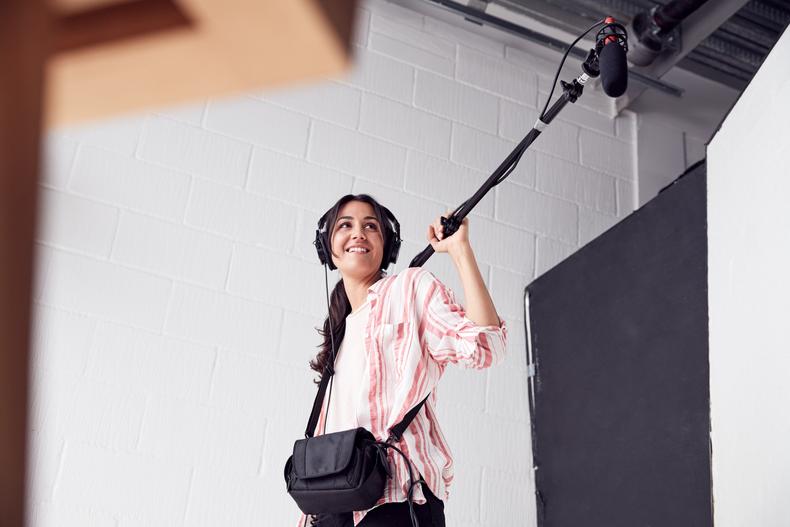
  • The boom op has to hold that boom pole and actively follow whoever is talking without getting that small break in between.
  • The camera operators might be doing handheld or Steadicam and are using up their muscles faster.
  • 1st ACs, staring at a screen for minute changes in focus, don’t get to rest their eyes.
  • Script supervisors’ notes get complicated as the same scene plays out multiple times in the same take.

When I’m doing Steadicam or handheld, my least favorite thing is a rolling take, especially if it’s long. I just need time to reset. Sometimes there’s an adjustment needed in a handgrip on a shoulder rig or I need to fix the balance on the Steadicam.

Other concerns? Using up batteries! You might be playing beat the clock with what battery you have left in the camera or on the mic packs.

Closing Thoughts

Using a series or a rolling take can be done with purpose. It’s just another tool in your kit. Abusing it can lead you to creating an uncomfortable work environment for your crew. So before you panic and decide to just “roll on everything” look at it critically and see if a rolling take is necessary or if you need to re-evaluate and be more concise with your time.

Steadicam 101: Balancing and Operating

We’ve learned why we use a Steadicam…

We’ve covered what pieces make up the Steadicam…

Now it’s time to balance and actually use the thing!

Balance

A Steadicam cannot work properly if the rig is not balanced.

Again, this is a simplified version of balancing. To really learn, you gotta get your hands on a rig, or at least observe a Steadicam operator as they prep.

First of all, you need to find the center of gravity, or cg, of the camera. After the camera is built (i.e. it has all the accessories and lens you’re going to use for the shot) you can find the cg by rolling the camera body on a rail. Where the camera is balanced on that rail, mark with a piece of tape or just remember where it is.

  • The camera is placed on the sled via the cheeseplate on top.
  • The post is lengthened to the appropriate length. This is in relation to how much weight is on the camera at the top.
  • On the top stage are the adjustment knobs to move the camera right and left or front and back. This is the fine adjustment.
  • If the rig is perfectly balanced while stationary, you’ve achieved “Static balance.” If there’s time, proceed to:
  • Dynamic Balance.” Spin the post on the balancing peg and see if the camera tilts any direction. You then make corrective adjustments with the fine adjustment knobs, moving the monitor in/out and moving the battery in/out.
  • adjust the tension on the arm so the camera floats where you want it.
  • the vest is adjusted to the operator’s body so it doesn’t slip and pressure is exerted evenly across it.

Operating

Actually operating the Steadicam requires a lot of physical and internal adjustments.

The operator has to have good posture. They walk forward, smoothly, making minor adjustments as needed. They avoid accidentally cross stepping, so they don’t trip.

While the operator’s feet carry them where they need to go, their hands are busy making sure the camera is where it needs to be pointed. The left hand is on the gimbal, in charge of panning, while the right hand lives on the handle that connects to the arm, moving the rig up and down as needed.

For more in depth information about Steadicam operating, check out the Steadicam Operator’s Handbook by Jerry Holway and Laurie Hayball.

Steadicam 101: What Components Make a Steadicam

When the Steadicam operator walks on set and starts setting up their gear, it can look pretty impressive. Here’s this guy or gal with cases of specialized equipment that looks like it belongs to Robocop.

Or maybe Alien.

Contrary to this picture, Steadicams are not all that great at eradicating alien threats.

So what part is the Steadicam?

Ah, not an easy answer actually.

I’ve worked with a number of newer directors, and there’s a bit of a learning curve I often have to help with there. Sometimes I’m asked “So you have a Steadicam? What camera is on there?” And I answer, cautiously, “Whatever camera you want within the weight limit.” But then I figured out…some folks don’t know the camera is actually not part of the Steadicam. The Steadicam is the device that moves the camera around. It’s a dolly if it had feet and shock absorbers instead of wheels and rails. It’s a tripod with an ego. And it’s also not those things.

The Steadicam mainly consists of 3 major components: The Sled, The Vest and the Arm.

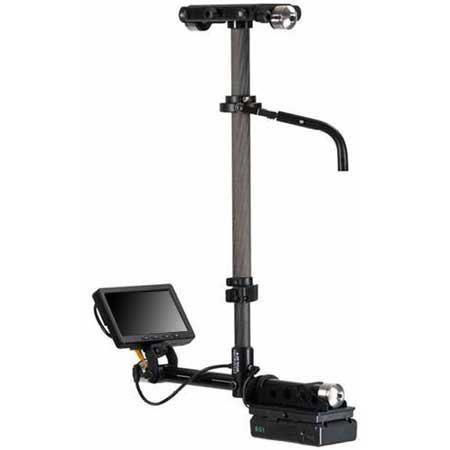
Pictured are parts of the Steadicam M-2.

Sled

Pictured is a Steadicam Pilot, a smaller rig for DSLR sized cameras.

The Sled is the post you see here. The camera is mounted on top, there’s a monitor at the bottom, and batteries power everything from the bottom. This is where the electronics live. There’s wires inside that travel from the top of the top stage to the very bottom where the batteries and monitor reside.

Arm

Pictured is a G-70x arm. This arm can handle 13-70lbs of weight.

The arm is really where a lot of the magic happens. The arm has sections and springs that compress or expand to lift or lower the rig with ease. The arm also isolates movement, taking away the natural bounce of a human’s walk and translating it into smooth moving video.

Vest

Two types of vests pictured above: A Fawcett Exovest and a GPI Pro vest. There are several varieties.

The Vest is where this contraption connects to a human body. The vest takes the weight and distributes it across the body. They are quite adjustable. Only in certain cases will an operator need to get a specific type of vest, due to small size or even just preference.

Let’s take a look at the top of the sled

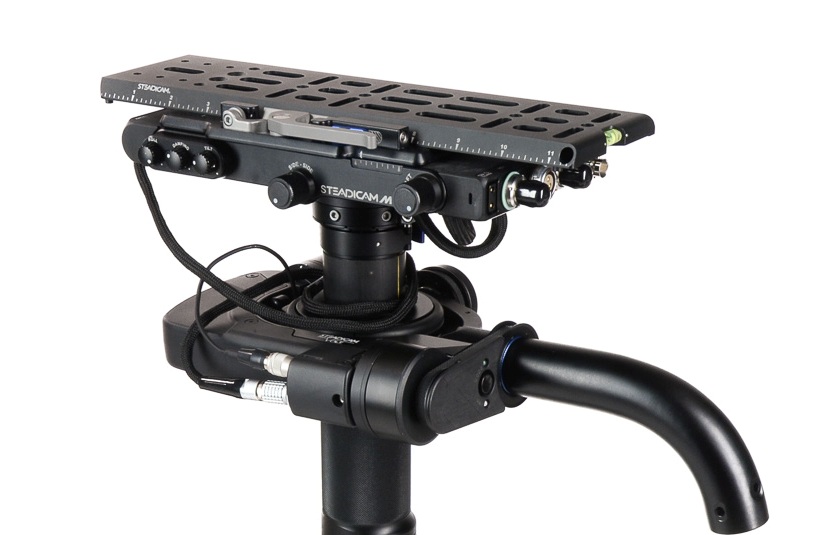
Here’s an example of the top stage (top platform where the camera ends up being mounted). There’s a plate that goes on the very top that you screw the camera into. Adjustment knobs on the sides move that plate either left and right or front and back. This will serve in helping balance the camera.

Also on the top stage are all sorts of places to plug in wires! Several of these inputs are to get power from the battery at the bottom into the camera or to power the accessories. Why not just leave a battery on the camera when you put it up there? Well, you can, but anything you put on the Steadicam will add more weight. Sometimes, you gotta remove as much weight as possible.

You can also see the SDI inputs (pictured right, at the short end of that top stage). This is how you get the video feed from the camera to the monitor at the bottom of the sled.

The Gimbal

This is the handle that sticks out from the sled post and connects to the arm.

The gimbal is 3-axis, meaning it moves freely in three directions for pans, tilts and roll. The gimbal handle that connects to the arm is where the right hand goes, and the handgrip below on the post itself is where the left hand goes. This can be reversed for left-handed users who operate “goofy footed.”

Other Accessories

Plenty of other accessories and mounting devices enable the Steadicam operator to work in different conditions. There are mounts so they can operate from a car, more advanced gimbal technology in the form of the Volt, and things like rickshaws and the Trinity to change the possibilities of what operating can offer.

But this is an intro series and you’ll have to dig into all that when you decide you want to learn more.

Part 3: Balancing and Operating, is coming next.

Steadicam 101: Why Use a Steadicam?

I had the honor of co-hosting a Steadicam workshop for the Women in Focus Summit alongside fellow operator Kurush Bakhtiari. The event run by Ladibug Studios and ColourCo Rentals had several informational panels on camera, lighting and directing with a focus on getting more women and non-binary folks into production.

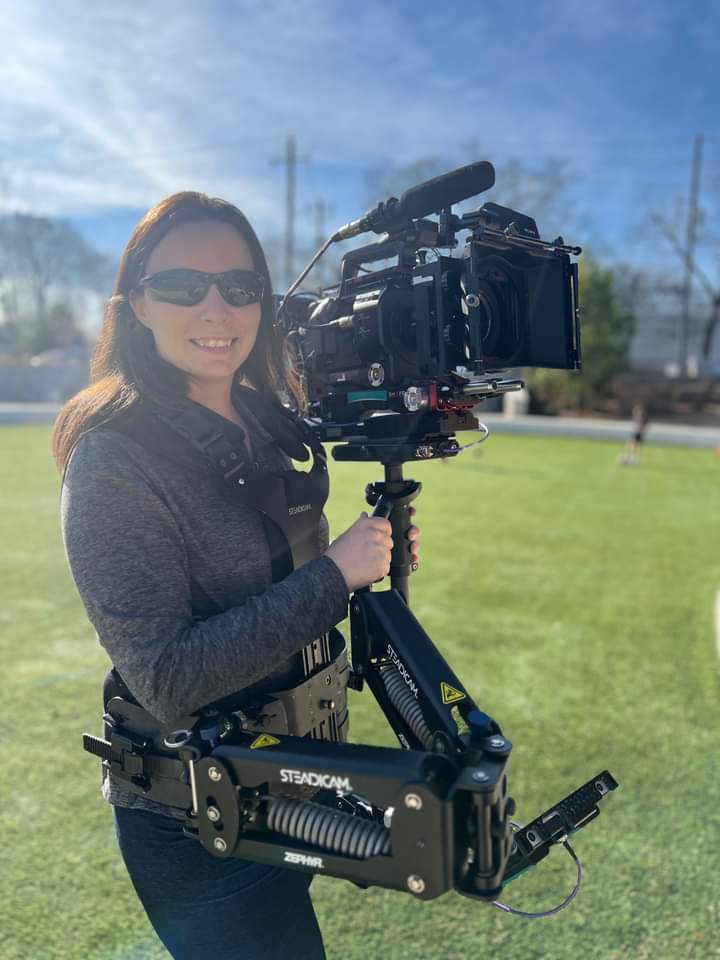
Kurush with his Archer and Klassen vest, me with a Zephyr kit.

I didn’t expect all of our attendees to take up the mantle of Steadicam. Sure, maybe we inspired a person or two who was curious or knew nothing about the skill, but learning about Steadicam is not just for the people who will wear the vest.

Plenty of crew members interact with the Steadicam operator: The AC who builds the camera to go on the rig, the grip who takes the rig off the operator when they need a break, the other grip who acts as a spotter for safety. Widen your parameters also to the 1st AD who is trying to keep a schedule and time transitions between sticks and camera accordingly, and to the director and DP who will be asking the Steadicam operator to bring their vision to life.

Understanding the roles, responsibilities and limitations of other positions on set just makes you better at your own job.

This will be a 3 part series to go over the basics.

What is a Steadicam?

Pictured: The Arm, Sled, Docking Station and Vest of a M2 model Steadicam.

A Steadicam is a tool used to create fluid dynamic shots unlike any other camera movement apparatus. It consists of a vest worn by the operator connected to an articulating arm and a post that holds the camera and electronic components. The arm does the job of evening out the natural bounce of a body walking, smoothing out the shot. If you were to attempt the same with handheld, it couldn’t be as smooth. Even if I breathe with a camera on my shoulder, the movement translates to the image.

Examples

Popular Steadicam examples include the stairs run from Rocky, the hallway shot in The Shining, and the Copacabana scene in Goodfellas. If you haven’t seen those, by all means click the links and watch the clips. Since those are the most commonly used examples, I wanted to show some fresh ones. Kurush and I put together a video of examples of a handful of other movies that have inspired us.

What we can learn from these examples:

Point Break: The camera expertly follows a high energy scene in a police station, whipping between characters and moments to carry the scene forward. This is a more interesting take on the typical police station scene without being static and stoic. This clip gives a real sense of space in the station, from the character’s entrance to how he moves around the bullpen. This shot switches between framing the main two characters from behind, getting a wide shot of the entire place, and returning to frame the main characters from the front. There’s a nice variety of shots without ever needing to break away for coverage.

Snake Eyes: In this example, we see how perspective changes as the Steadicam moves around the scene. At one point, the Steadicam becomes the point of view for one character, the boxer. When we reveal who it is, the Steadicam backs up to include him physically in the scene.

Birdman: The movie is depicted as if it is a single camera following characters around for a continuous shot. Since that is the technique, shots are constructed by the camera moving closer or farther away from speaking characters, moving around the stage to reveal things and traveling between locations around the theater by following one character at a time.

Baby Driver: This is near the beginning of the film, introducing Baby and his connection to music in the film. This is a well choreographed and timed performance between the camera operator and actor. See how things are revealed as Baby walks how each element of the scene adds to the soundtrack (honking cars, a trumpet player on the street, pedestrians). Pay attention to the background on a second watch of the scene.

Last Night in Soho: In this thriller, Eloise is experiencing flashbacks to the 60s to a vivacious woman named Sandie and a connection to a series of murders. Eloise sees herself in Sandie’s perspective, sometimes in the mirror, and sometimes replacing her in the scene. This is another well choreographed number. In the video I included the behind the scenes clip showing the Steadicam operator. Note how Eloise waits for her turn to cut in to the dance, and how moments are revealed as the Steadicam travels around the main characters. You can also see a spotter helping the Steadicam out. There’s a lot of moving parts and nobody wants to have a camera run into them!

In Part 2, we’ll talk about the components of the Steadicam and why balance is so important.

Why Aren’t There More Women Directors?

Women have got to realize something:

We’re not funny…

We can’t do action…

We certainly can’t direct…

Maybe we should go truly old school and just have castrated men play all the parts? Worked in Shakespeare’s day, didn’t it?

Obviously the above is satire from my part, but it’s not satire on some corners of the Internet. When a movie does well, suddenly it’s “Oh my gosh, women can be funny!? What a good director! Amazing!” but when a movie goes bad, suddenly it’s “This is what happens when you cater to women. This was a bad female director, actor, writer, etc.” We’ve all heard the Madame Web jokes at this point.

I personally love the part where she says, “It’s Madame Webbin’ time.”

I too did not see that movie. But I probably will because I’m a glutton for punishment.

A 2024 Guardian article pointed out the discrepancy of proposed diversity and inclusion promises and what actually happened.

USC’s Annenberg Inclusion Initiative called out the major studies who claimed they would promote more diversity in their hiring practices after 2020 as “performative.” The study didn’t show any actual progress towards pushing for that change.

Women comprised 16% of directors on the 250 top grossing films in 2023, according to the study conducted by the Center for the Study of Women in Television and Film at San Diego State University. That’s down from 18% the year before.

I’m sorry, down?! Aren’t we more inclusive, more diverse than ever? Nope.

Of the 116 directors attached to the 100 top grossing films of 2026, only 14 were women. Look at those numbers again. That’s 12%.

These numbers are in direct contrast to the women dominated juggernaut of 2023, Greta Gerwig’s Barbie which was a $1 billion success.

By the way, only 4 of those directors were women of color.

Diversity and inclusion are — spoiler alert — not a bad thing. I work in the Atlanta film industry. I work with some of the most diverse crews you’ll see, and yet I still see so many sets that are primarily white and/or male.

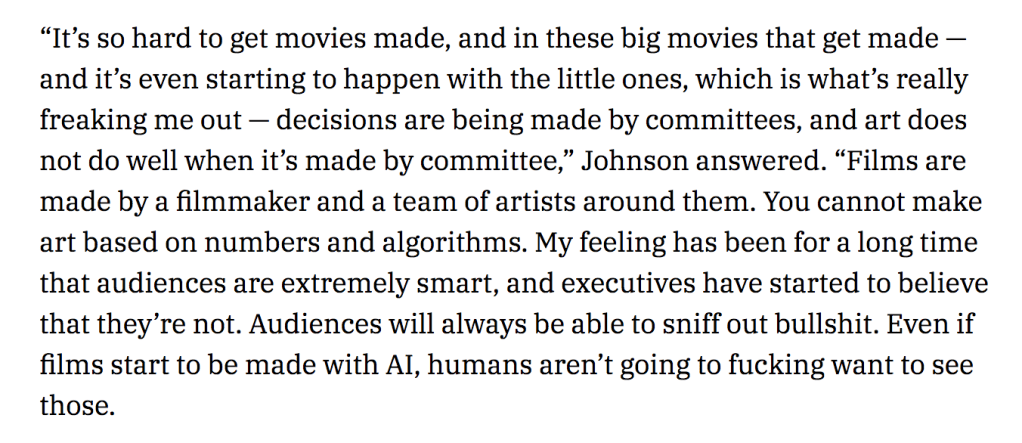
As people complain about superhero fatigue or girly movies just not appealing to mass audiences (The Marvels, Madame Webb) I want to share this piece of a statement from Dakota Johnson, the titular Madame Webb herself:

Dakota Johnson survived everything about Fifty Shades of Gray, she can surely shake this off too.

“Decisions are made by committees….art based on numbers and algorithms.” This hits hard because the shadier businessmen of Hollywood are surely looking to A.I. to pump out algorithm-satisfying garbage in order to save a buck. But for years it’s people sticking their fingers in where they probably don’t belong.

Film is a collaborative medium, and that’s a beautiful thing. I’ve seen my work in a whole new light after an editor or colorist has done their job, and I’ve seen scripts blossom through the work of careful critique and notes. Where it falls apart is when execs or producers or whoever start trying to make their mark and just doing arbitrary things they think the audience will want. Or they want. Like a giant mechanical spider in Wild, Wild West, which was originally pitched for the unproduced Superman Lives script. I don’t even have time to get into that one. Read about it here.

One of those arbitrary things is hiring someone like themselves to direct a film. Men in power tend to hire men that remind them of themselves.

This Variety article references a study about how first time directors get fewer offers, but even experienced directors are more likely to be hired if they are white and male. The stat speaks for itself:

  • 4.8% of experienced directors are female. 95.2% of experienced directors are male.
  • 16.3% of experienced directors are BIPOC, the rest are white.

“The results of this study are eye-opening. For underrepresented groups, there remain obstacles, structures and processes that stand in the way of getting that critical first shot. I’m encouraged that first-time directors get equal results, but they just need to be given equal opportunities,” said Dr. Yalda T. Uhls, founder of the Center for Scholars & Storytellers at UCLA.

It’s 2024. The time for arguing about more inclusivity seems to be falling on deaf ears. So let’s shout it a little louder. And in the meantime, keep your mind open about who to hire on your next film. You may be surprised by the incredible artists you connect with.

Sources:

Study shows ‘catastrophic’ 10-year low for female representation in film

First-Time Directors Still Have Limited Opportunities in Hollywood, New UCLA Study Reports (EXCLUSIVE)

Giant Spiders, Giant Flops: The Enduring Awfulness of ‘Wild Wild West’

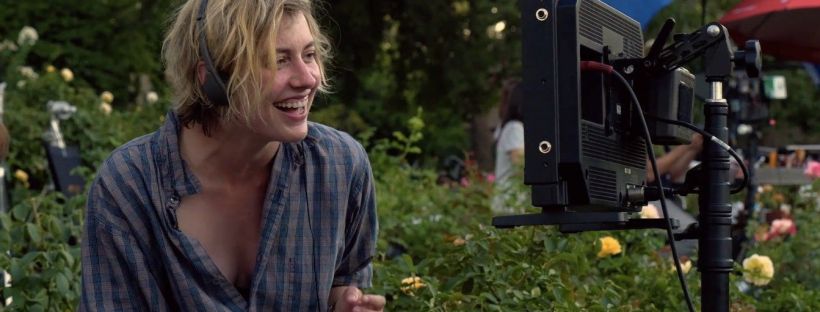
Featured Image: Greta Gerwig directing Ladybird.

How to Avoid Film Job Scams – Take Four

I really hate that this has become a recurring theme I have to address. I really just want to teach about the fun stuff. Instead, I have to keep drudging up the fact that there are many people out there taking advantage of the film community.

Things are not good right now. The SAG-AFTRA/WGA strikes combined with corporate studio greed has contributed to a painfully difficult year to work in film. 2023 has brought major career changes, such as layoffs and unemployment and the need for survival jobs to many creatives affected by the strikes.

Facebook film groups are rife with scammers taking advantage of people desperate for work and green people trying to get their start in the film industry.

Here’s some of the latest scams and suspicious posts that I and several community members have come across.

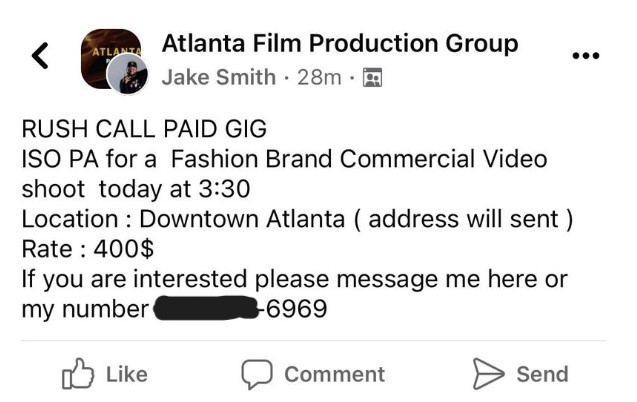
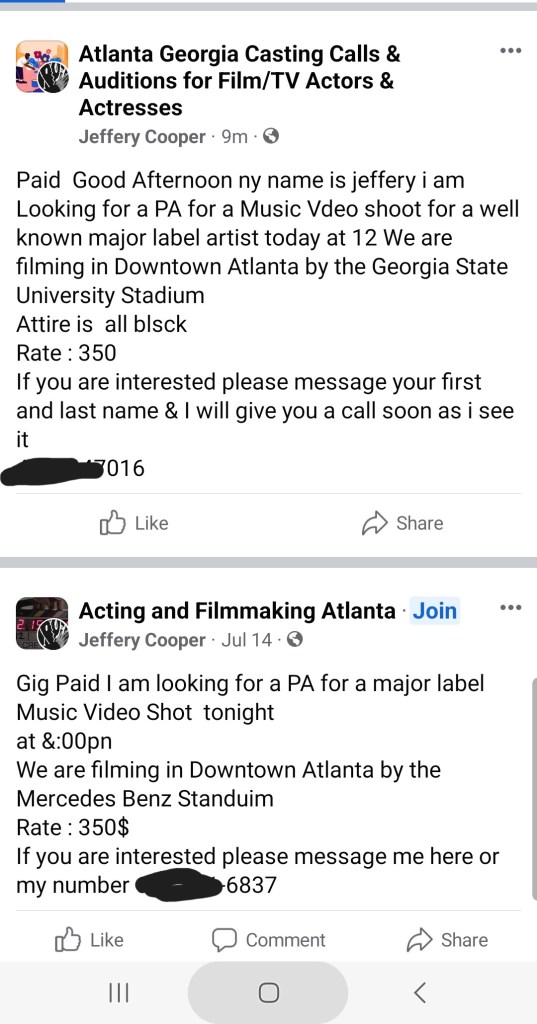
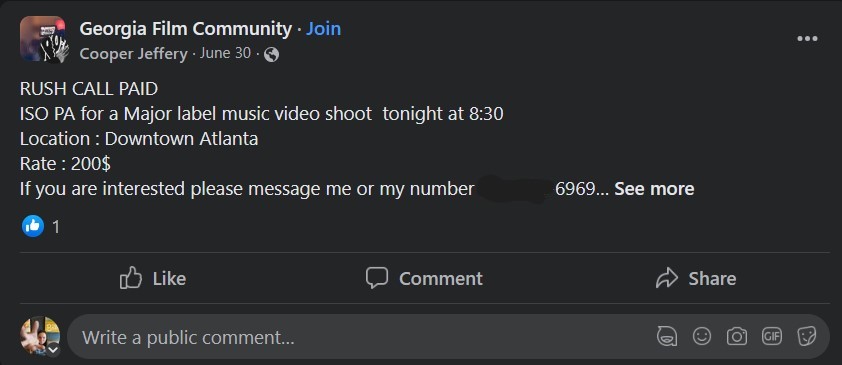
Jake Smith/Jeffery Cooper

This is likely not this guy’s real name. For one, he went from Jake Smith to Jeffery Cooper to Cooper Jeffery. Also a quick Google and both names show up as actors. Maybe they’re just common names, and that helps lure in an unsuspecting individual.

Bad grammar is often a dead giveaway on scams.

“Address will sent.” “400$”

Jeffery/Jake’s posts are rife with spelling and grammar issues. Normally that points to an overseas scammer unfamiliar with English. He appears to be in Atlanta though, because people have worked with him in the Atlanta market before. And one or two of the disposable phone numbers he’s used come back to Marietta, GA.

Be highly suspicious of jobs that are taking place “in a few hours” or the same day. Honestly, it can happen that a production needs last minute help. Someone got sick, had an emergency and couldn’t come in, your feature realizes they don’t have enough extras for a party scene (saw that one happen in person).

But be very suspicious of a job that needs you to throw all caution out the window and immediately jump in head first. They are banking on your desperation, and you will pay for it. Literally.

Yes, I blanked out the phone numbers so nobody makes the mistake of calling him.

One person, who we will call Mary, worked with “Jake Smith” on a rush call gig offering $400 for a PA on a music video. Although Mary had some concerns about it seeing like a high rate for a PA, she took the job. On this gig, she spent over $100 of her own money and was told that someone would pay within two weeks.

What followed was several weeks of ghosted phone calls. No $400 pay or $100 reimbursement. Later when she looked at Jake Smith’s profile, she found he’d changed his name to Jeffery Cooper. His profile pic also changed.

That was weeks ago. Recently, another Atlanta based film worker we’ll call Frank talked to me about the same individual, though now he uses the name Cooper Jeffery. The man sounded very shady on the phone. Frank told me that Jake/Jeffery was asking for a transport PA (Uh, okay?) to use their own car and gas and food and be reimbursed later. Jake/Jeffery then hesitated to give a name of a production, didn’t know what a COI (Certificate of Insurance) was, and soon hung up on the job seeker since they asked too many questions.

The spelling/grammar have gotten even worse. Note that the phone number changed too.

Do your due diligence. Ask questions. Know exactly what you’re getting into.

As I was writing this post, this one popped up:

These “jobs” were posted on different days, on different Facebook groups, and always last minute. This latest one was posted at 10pm, for a rush call “at 12”. So…midnight?

A Data Entry Scam Targets Women in Film

Many people who work in film are turning to survival jobs to get by right now. That includes looking into work from home opportunities. Don’t worry, the scammers have you covered there as well.

I blocked this one’s name because it’s possible this name and profile pic were stolen.

A community member I’ll call Haley alerted me to a somewhat legit looking data entry job targeting women film groups. When she asked for more information, the “employer” asked for her bank information to give her funds in order to purchase equipment.

This is a play on a standard scam that targets film people, so it’s interesting that they re-skinned it as a data entry job. The scam asks a production assistant (usually) to purchase film equipment and then get reimbursed later. It’s not real. If they send you a check, it bounces, and you’re out ALL the money.

Do not use your own money to purchase film equipment or supplies for a job, even if it seems like a legit job. In a real production, they’ll give you petty cash or a P-card in order to purchase supplies, and a PA should never be purchasing equipment at all. A PA could purchase crafty, office supplies, etc, with the production’s funds, but never equipment and never with their own money.

The Huge Paragraphs of Doom

Yet another community member contacted me about a scam she came across from someone we’ll call O. I blocked out the name because I can’t be sure if this name was also stolen.

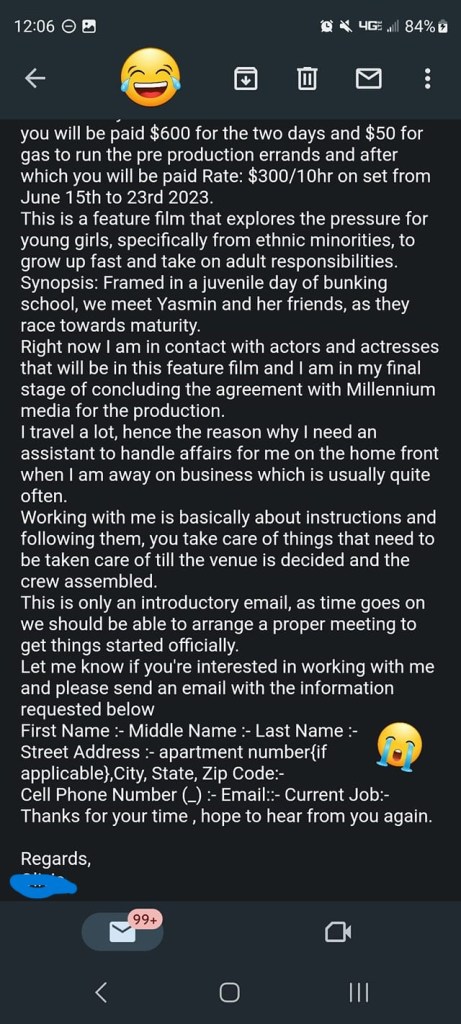
This is an example I’ve covered before — the word vomit job offer. Honestly, just the giant block of text in enough to provide you pause before you give any info.

The TLDR version of our analysis is this:

  • over explanation of what a PA does
  • Duties that a PA doesn’t do, like check processing and booking travel.
  • “I travel a lot…so I need an assistant there.” That’s a common scam tactic.
  • Requesting a ton of personal info right away. This exact same block of text appears in a number of scams I’ve covered before.
  • overall weird formatting

Most of my job e-mails are this:

“Hi, This is Insert-Name-Here from This Show. Got your name from So-and-So. Are you available to camera operate on a 6 week reality show starting May 7th?”

That’s it. Maybe even less. Producers know you know what a production assistant is. They aren’t interested in giving you a show synopsis. They’ll get your info when you’re officially hired and you sign a Deal Memo.

After this person posted her experience with the suspicious job poster, the job poster O, started sending threatening texts and promised to “destroy you …mess up your F-ing life.” I mean, seems legit, right?

RED FLAGS TO LOOK OUT FOR:

  • Name of famous producer or production company (for instance, just got one from “LucasFilmsLTD” recently.
  • Very short notice request for work.
  • Strangely high rate or strangely worded rate (“weekly pay” “1800 flat” “you get $600 for 2 days”)
  • Job poster doesn’t answer simple questions.
  • They want you to use your money to purchase something for the production.
  • They immediately ask for your banking info.
  • The Facebook account of the poster is new, and/or seems like it’s never used (no friends, no pics, etc).
  • The job poster meets any of these red flags and also just joined the Facebook group you saw the post in.

Where on Facebook did I see these posts?

The Facebook groups I saw these scams in were:

  • Film Production in GA
  • Georgia Film Production
  • Georgia Film Community
  • Atlanta Film Production Group
  • Atlanta Film & TV Casting & Jobs Board (CS)
  • Women in Film & Television Atlanta (WIFTA)
  • Acting and Filmmaking Atlanta

Some groups are less moderated and more prone to scam posts than others (lookin’ at you Film Production in GA). It doesn’t mean you can’t join any and all film related Facebook groups, but it does mean more of the work of identifying scams and bad jobs will fall on your shoulders.

What Can You Do To Avoid Scams?

Ah, that’s easy. Delete Facebook, unplug your internet, and throw your phone into the sea. Not an option?

Then you’re going to have to do more research than you want, but trust me, it’s worth it.

If something seems off about a job, start looking into it. Is the pay rate for the job too high? Are they asking for the wrong job duties for the job title, such as a PA operating a camera? Is the spelling and grammar all wonky?

Google can tell you a lot. Google the name of the employer, the production company they are associated with, or the email. If someone else has run into a scam, they might have shared that info online. Ask your fellow film professionals, “Hey, does this job look scammy to you?”

Look at the Facebook profile of the person posting the job. Is it a new Facebook account? That alone is a warning sign. Doubly so if they just joined the group they posted in. Even more so if they turn off comments on their posts in order to avoid people warning each other.

Be cautious if anyone is trying to pressure you into taking a job without getting all the details straight.

Sources

Layoffs begin in the film industry, as Hollywood strikes continue

Philadelphia film office warns filmmakers against scammers

Networking for Film Makers

I read a book on networking once and realized it didn’t have exactly the information I needed for my own career. But there was some sage advice that could be adapted.

Let’s look at several options for networking in the film industry.

Networking Events

Might seem obvious.

It does make a difference on which networking event you attend.

When I first moved to Georgia, I jumped at the chance to go to meet folks in the industry. I literally went to the first one I saw. It was at some studio and sounded legit. People were encouraged to go up to this microphone, introduce themselves, and mingle afterward. It was so awkward. Everyone there was someone who wanted a job, not anyone who could actually offer one. I ended up making one connection, who ended up humble bragging into making me believe he knew what he was doing. I wasted time prepping a film that fell apart the day before the shoot and I found out they lied and misled about everything. I had to block this person on every form of social media as they got a bit stalkery.

Lesson learned.

So choose accordingly. As a general rule, networking events shouldn’t charge much if anything to its participants. I was at an event that charged $10 to attendees which wasn’t bad. Look at the event, where it is held, and what exactly they’re offering. It may also be helpful to go to more specific events that cater to more narrow criteria, like one specifically for women film makers.

Here are a few upcoming networking events you may want to check out:

April 1 – Class In Session: Creative Industry Mixer & Panel – Free

March 23 – Atlanta Film Production Group – Film Mixer – $10

Other events to look out for in the future:

WIFTA open networking events (open to members and non-members)

Atlanta Film Society‘s Eat Drink and B- Indie Networking events.

Casual Meetups

It’s not all about networking, sometimes it’s just about making a connection.

Film Bar Mondays – Set at a different bar each week, Film Bar is an informal meetup.

Film Brunch Sundays – Another super informal meetup.

Atlanta Script Reading Club – A group of people get together to read and discuss scripts. It’s a new group but I like their chutzpah. They cover screenplays and plays.

Maybe check out some groups on something like Meetup.com as well!

Education

I know I’m not the only one who attended SCAD or a similar film school and referred to it as “Networking School” It really was a trial by fire situation. You quickly built your favored group of film people and made films together. Some of those connections would go on to last into your professional career.

But this isn’t a post about film school. You can see that post here.

Let’s talk about other educational opportunities. A simple Google search or Facebook event search will show you courses and panels you can attend either virtually or in person.

For an entry level course, I’ve heard really good things about both the PA Academy and the Georgia Film Academy, plus I’ve run into graduates on films I’ve worked. Clearly something is working.

Atlanta Film Society hosts a number of great events you can learn from, such as their writing classes, panel discussions and film screenings.

Film Festivals

https://www.filmimpactgeorgia.org/georgiafilmfestivals

Another great way to meet people is at film festivals or screenings! Talk to panelists after a discussion, research filmmakers and talk to them about their work, meet your fellow audience members, go to a social event connected to the film festival. Come equipped with business cards (yes I’m old school) or an easy to share Instagram or Facebook handle so you can connect with people after the event.

I got to DP The Night Courier because the director and I met at a film festival. We contacted each other outside the film festival and said, almost simultaneously, “Hey I liked your film!” and a connection was made. That led to another successful film for both of us.

Working on set

“But I’m trying to network in order to get on set!” You say. I know, it’s a real chicken-and-egg situation.

One great way to meet and network with people in the industry is to actually work on sets, big or small. I’m hard pressed to find a gig I did where I didn’t end up with a phone number, email or Instagram of someone who wanted to work together or connect again in the future.

“Wouldn’t it be cool if we worked together again? What’s your Instagram?”
“Quiet on set. And stand over there.”
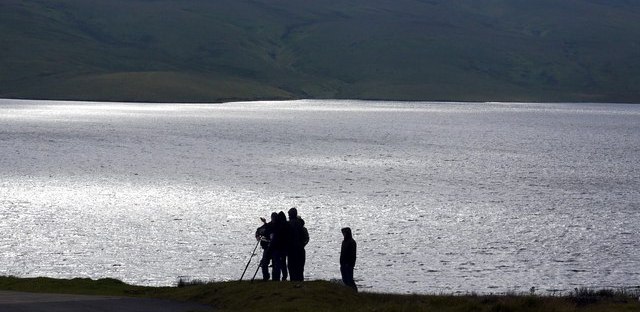
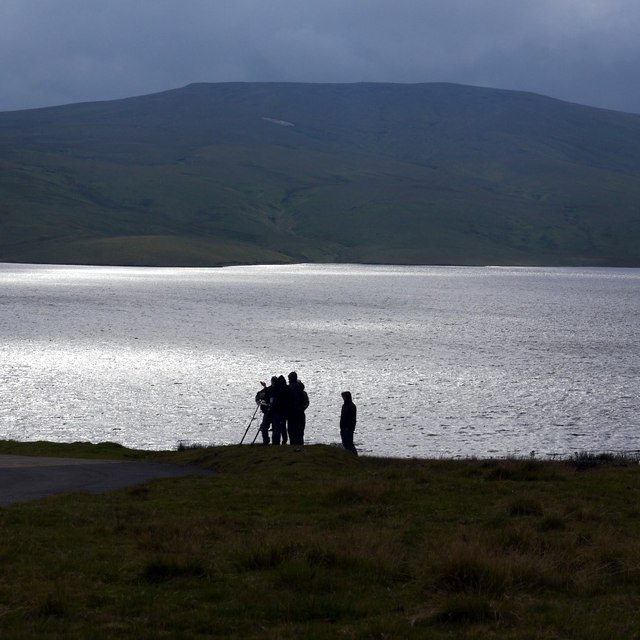
Film crew on location above Cow Green Reservoir by Andrew Curtis is licensed under CC-BY-SA 2.0

I did a lot of the work for you here. Now it’s your turn. Go out and make those connections!