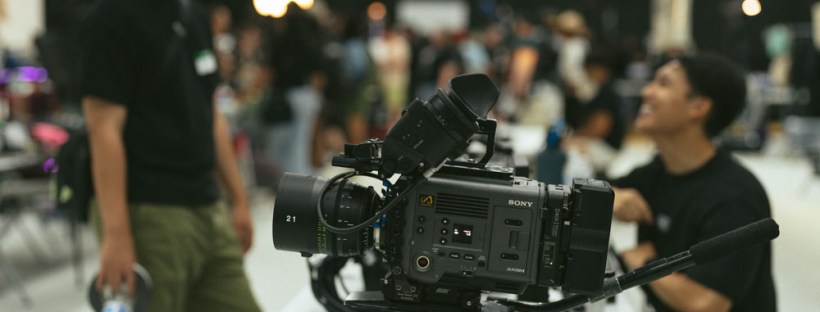
The Atlanta Film Yard Sale – Year 2!

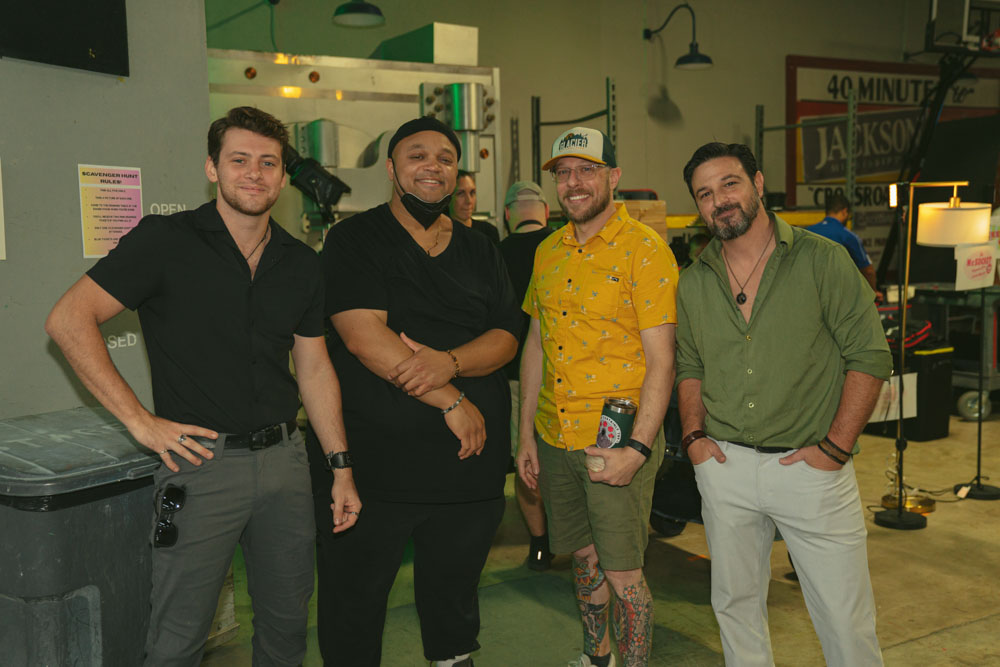
Last year, a group of three camera department women got together to plan a simple yard sale — that ballooned into the event of the year. Those women were Erin Zellers, Tina Somphone and myself. And we had to go bigger and better this year.

I wrote about the first one here: https://bridgetlamonica.com/2024/09/11/the-atlanta-film-yard-sale-and-building-a-film-community/

Being a filmmaker doesn’t mean you are an artist on an island, creating alone. Film production is the ultimate group project. (sorry kids in high school, you still have to get along with other people!) Just as you would make a film with a group of dedicated people, the yard sale event comes together thanks to a wide network of people, from the three organizers, to the volunteers, to the sponsors, to the vendors and the attendees.

There was a lot of well-intentioned pressure from Year 1 to keep going. We didn’t even finish having the event last year before people were asking us when we would do it again. “Twice a year?” some people suggested. We all turned pale. “Once a year is fine” we assured them.

As 2025 dawned, we got to work.

Looking at what we got right and what needed work last year, we started figuring things out. One biggie was that we needed more space. We absolutely packed 24ATL last year, the LED Volume Studio in Doraville GA. It was a great space (and that wall is super cool, you should really check it out) but we ended up shortchanging people on space and didnt’ want to do that again.

Plus the need was simply greater this year. I know I haven’t discussed it on the blog much but I have talked endlessly about this to folks in person. The film industry is not in a great place right now. People are making the decision to either transition out of the industry entirely, or are holding on with their fingertips and hoping things will pick up work-wise. For this reason, there’s a number of people who just need to make some money or want to transition their business to something else. We had plenty of people who wanted to sell at the event.

Our sponsors this year made it possible to get any further. You can’t host an event without money to organize it.

Tier 2 Sponsors

You can see Local 600’s writeup about the event here.

Tier 1

Yes, we had a lot of sponsors! They donated money, prizes for the drawing, and more. We also had a surprise bonus drawing prize from Panavision! Super awesome.

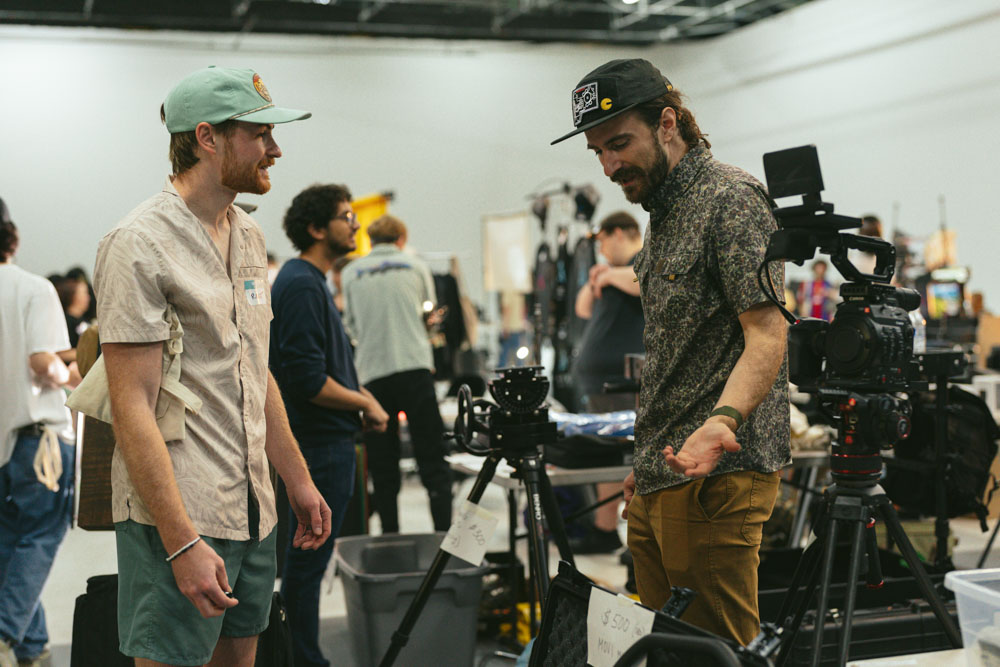
PC&E (Production Consultants & Equipment) became our venue for the event. Not only do they rent out a lot of film gear in the local film industry here, they also have an enormous sound stage that we would end up filling. And then some.

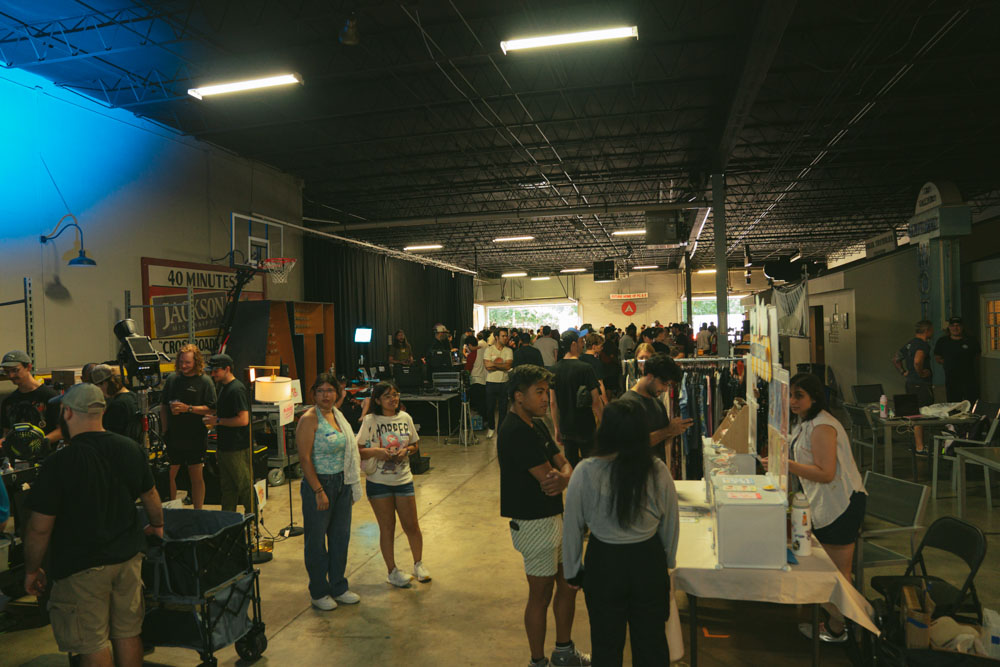
We filled every available space, from the entirety of Stage 1’s 9400 sq ft to the staging area leading to it and the outside. We had people everywhere! Plus food trucks. Plus activities like a scavenger hunt.

This year we were able to raise money for a cause that’s near and dear to a lot of members of the film industry, the Sarah Jones Film Foundation. The foundation honors the memory of 27 year old camera assistant Sarah Jones, who tragically lost her life in February 2014 due to an accident on the set of Midnight Rider. The foundation provides education and awareness, film safety grants, and even a wonderful film internship program. You can learn more about the foundation here.
Thanks to our donated items, our drawing prizes, our vendors and sponsors, we were able to raise $2500 for the foundation.

We also held demonstrations this year! As is typicaly with the film production life, we had a couple cancellations that had to be filled, and everyone who did a demonstration did an amazing job.

The demonstrations included an excellent “how to film stunts” demo with Good Slate Pictures. They also have a YouTube channel so you should definitely check out their stuff! Their YouTube is called Behind the Stunts.

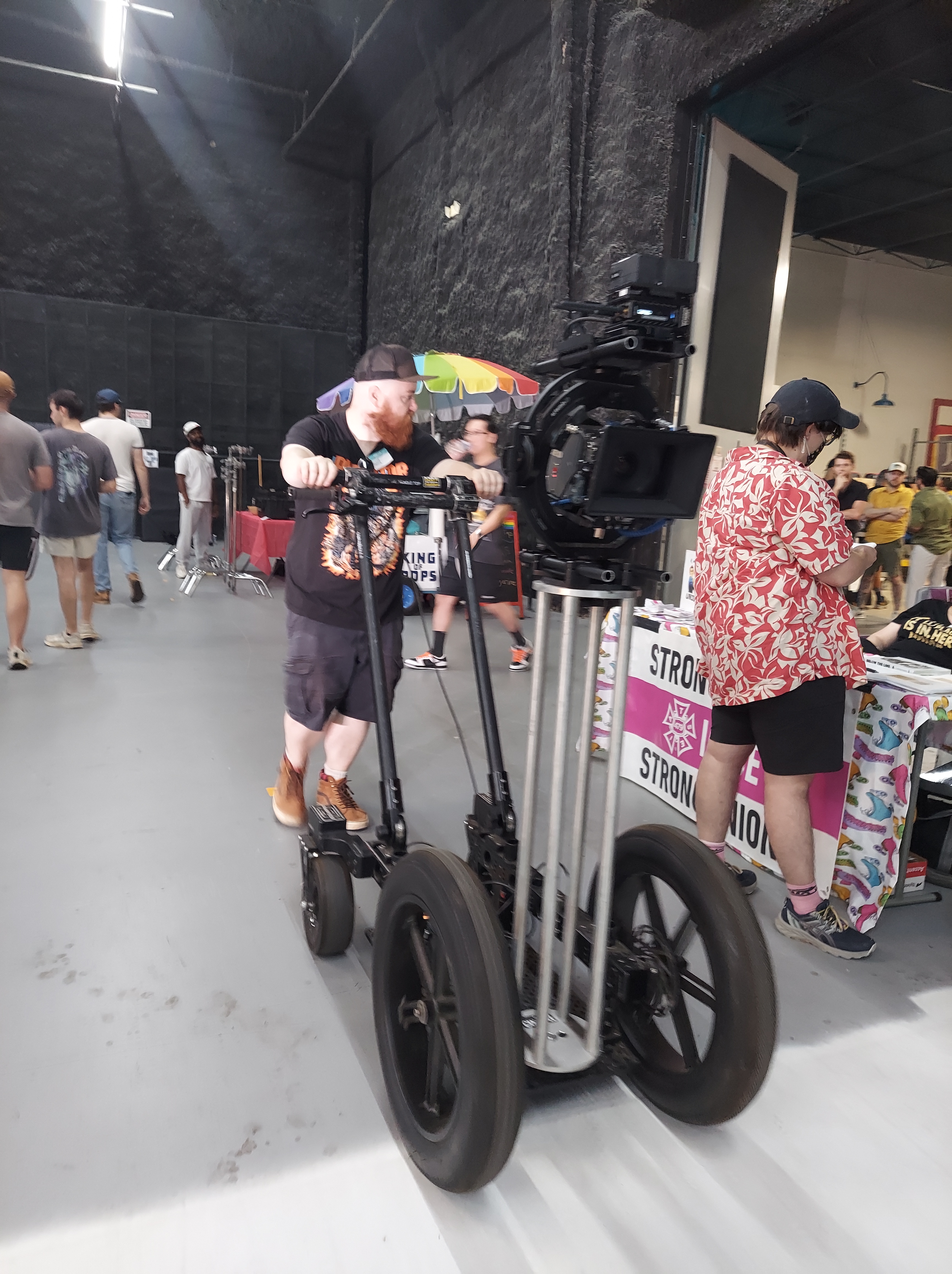
Chris Roe, ARRI Certified TRINITY Operator, Cinematographer and Steadicam Operator, brought his cool rickshaw with remote head! Folks got to try to remote head for themselves as the rickshaw roamed the space.
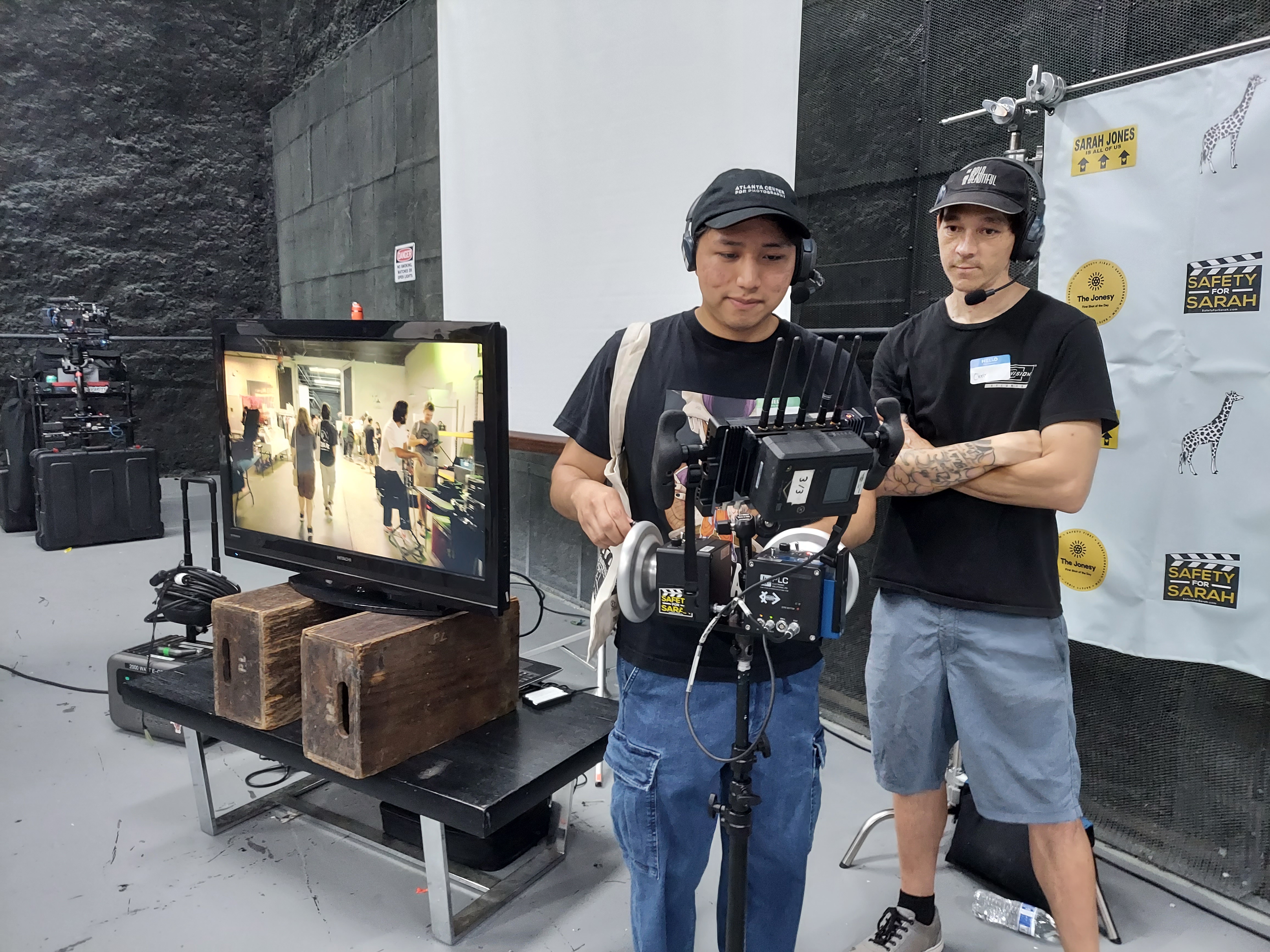
Kenya Campbell and Deanna Griffin did a DP/Gaffer fireside chat. It was great information to share with our audience as experience levels varied. Plus it is always great to learn new tips, tricks, and practical information to make you better at your job!

I can’t say enough about how this community came together! This, my friends, is what the film industry is all about. Working together towards a common goal. Sharing education and resources. Having a good time with your friends.

We’ll see you at the next one.
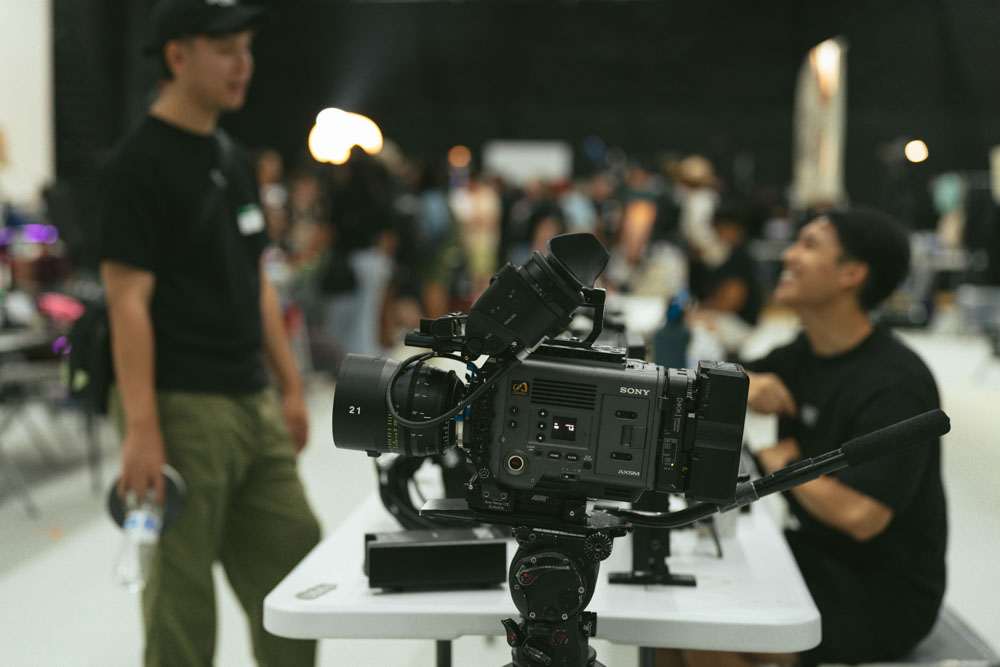
Photo Credit: Local 600 Still Photographer Josh Stringer
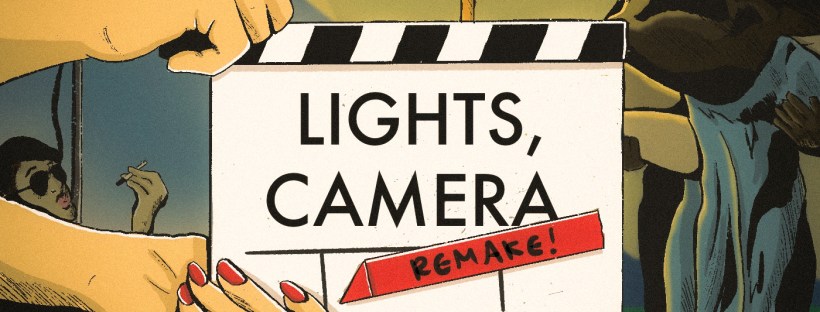
Lights, Camera Remake! A Podcast about Hollywood Unoriginality

Yet another person with a podcast. Oh my goodness. But let me explain.

One of the age-old complaints about movies and Hollywood in general is that there’s no originality left. We see endless remakes, reboots (slightly different), sequels, spinoffs and adaptations. Can’t they come up with anything new?

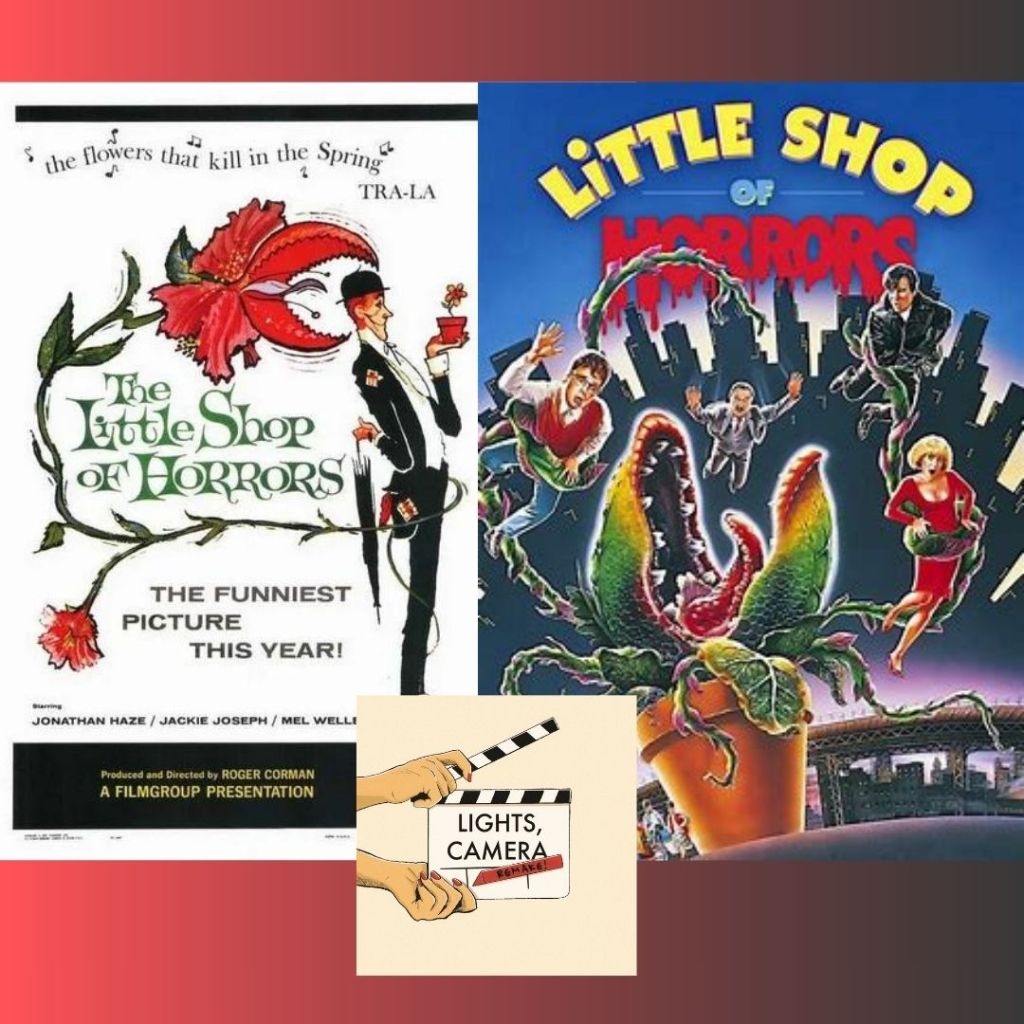
As I began to dig into this idea, I found some surprising things. Like the fact that Little Shop of Horrors -the musical comedy horror starring Rick Moranis and Ellen Greene? – was actually a remake of a low budget movie from 1960. Did you know that Martin Scorsese’s The Departed is based on a 2002 Hong Kong film Internal Affairs? 1998’s You’ve Got Mail is a remake of The Shop Around the Corner (1940). Ocean’s Eleven (2001) is a remake of Ocean’s Eleven (1960).

A remake of an old movie can bring a classic story to a new audience… and also sometimes make audiences really angry.

That passionate knee-jerk reaction is worth discussing.

I’d love to see more originality in the movie theater. The problem is — those movies have a harder time finding an audience.

Hollywood studios and executives are running a business, and they want to make money. And working with something that has established IP (like a Marvel movie, or a book adaptation, a remake) somewhat guarantees an audience will attend. At the end of the day, they just want to make money and make their shareholders happy. And they want to keep their jobs.

Anyway, my friend Erica Strout and I got talking, usually at work in between setups or at lunch. We met on a reality show TV show with myself working as the camera operator and Erica as my camera assistant. We became fast friends. And then we watched movies together. And had a lot of discussions about film in general.

Now we’re doing the Lights, Camera, Remake! Podcast.

This amazing artwork created by Taylor Rebyanski!

Is it always a bad thing to see a remake of a classic (or possibly unknown) movie? Our podcast looks to break it down and see if there’s merit to Hollywood shirking an original idea for a retelling.

On each episode we’ll look at a movie and its remake, or sometimes a movie and its sequel, to determine if Hollywood rehashed it for a reason or for a cash grab.

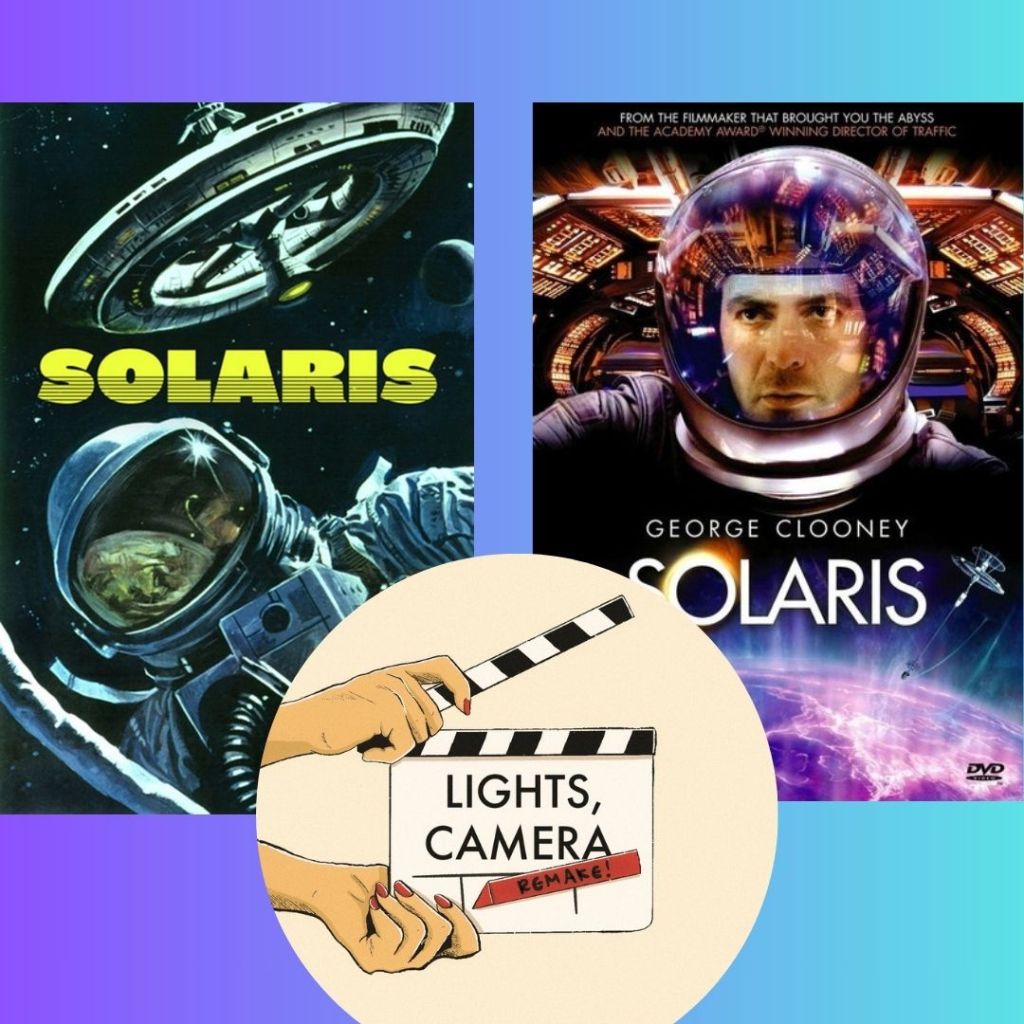
Episode 1 is about Solaris (1972) and Solaris (2002).

Solaris is an atmospheric Russian science fiction film based on a book. It was later remade in 2002 starring George Clooney.

You can listen to the episode on Spotify or right here:

Episode 2 is Little Shop of Horrors (1960) and (1986).

Next up this week is Weekend at Bernie’s! The episode will be uploaded on Wednesday, Jan 22.

Follow us on Spotify, Instagram and Facebook!

https://www.instagram.com/lightscameraremakepodcast/

https://www.facebook.com/profile.php?id=61560111332548

We’ve also got an email you can submit ideas, comments or random concerns too. We understand you have those.

LightsCameraRemakePodcast@gmail.com

http://www.screenrant.com/movies-secretly-remakes-surprising/

theenemyofaverage.com/movies-that-are-remakes/

The Evils of the Rolling Take and Reset

Let’s dig into a pet peeve of many on set: the rolling take.

A rolling take is when you keep shooting and keep repeating the action. Like an actor walking in to a room who flubs a line and goes back to start it over again. That can be a valid reason for a rolling take. No need to re-slate and re-call action. Just try it again.

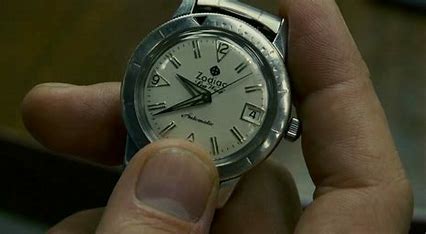
An Insert Shot: A watch being picked up and brought into the frame is a valid reason to do a series of the same action without cutting in between.

A rolling or series take might be done on a particular insert shot to get it right. Let’s say your actor needs to throw a letter to land on a desk just right. The director might ask for a series or rolling take in order to keep attempting that throw to get it the way they want. No fuss, no muss, and no wasting extra setup time to get that insert shot that you’ll see for two seconds on screen.

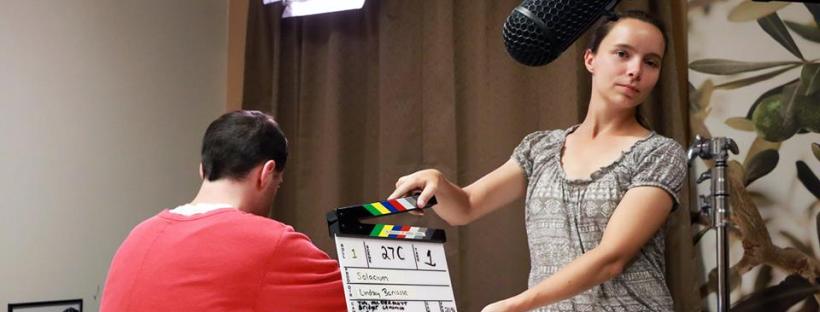
Directors don’t work the slate but I’ll allow this since it’s clipart.

Imagine this scenario: It’s after lunch. The Assistant Director is informing everyone for the third time that you are now an hour and a half behind on the schedule. You have several more scenes to light and shoot and somehow you have to make up a significant amount of time. Hence the anxiety that leads inexperienced directors to try shortcuts. One of those shortcuts is overusing a rolling take.

After experiencing this on a number of films, I’ve observed that green directors love to overuse the rolling take. They’re feeling the pressure and just trying to get footage in the can. The AD, meanwhile, is just trying to make their day. Now suddenly, you’re filming scene coverage as a rolling take, not cutting when you reach the end of the action, but waiting for the actor to reset and just going with it, maybe for multiple “takes.”

A rolling take going on and on is more trouble than it’s worth.

Time = Money

First, what should be obvious — you’re using up footage. This became less of a crisis when most of us went from actual film stock to digital, which is a much cheaper alternative, but digital does not mean free.

Film costs include the film stock, developing, processing, and digitizing so you can edit on a computer.

But just because you can hit “record” on a camera doesn’t mean that doesn’t cost money. Each card needs to be purchased, and you need to have enough available media to get through the day’s shooting without having to write over those cards with additional footage. Ideally, you want your DIT or media manager making backups throughout the day. That means the production also needs to purchase storage and backup storage for that media.

So let’s say you think you know the costs and you’re still cool with doing 40 minute takes instead of a few 5 minute takes. All that footage needs to be downloaded and viewed, meaning you’re paying for the media manager’s time to download that footage and make copies, as well as the editor down the line. A single 40 minute clip is just going to take longer to download and transfer. And you might be paying overtime to the media manager who is staying late dumping all that footage.

Wear and Tear on Cast/Crew

In the moment, if you abuse the rolling take, you’re quickly using up the energy reserves and physical strength of your cast and crew.

You’re also using up your camera operators and 1st ACs and boom ops and everyone doing something physical for that scene that no longer get that tiny bit of rest to reset themselves.

  • The cast has to stay in-the-moment and may get frustrated, flubbing lines more and more.
  • The boom op has to hold that boom pole and actively follow whoever is talking without getting that small break in between.
  • The camera operators might be doing handheld or Steadicam and are using up their muscles faster.
  • 1st ACs, staring at a screen for minute changes in focus, don’t get to rest their eyes.
  • Script supervisors’ notes get complicated as the same scene plays out multiple times in the same take.

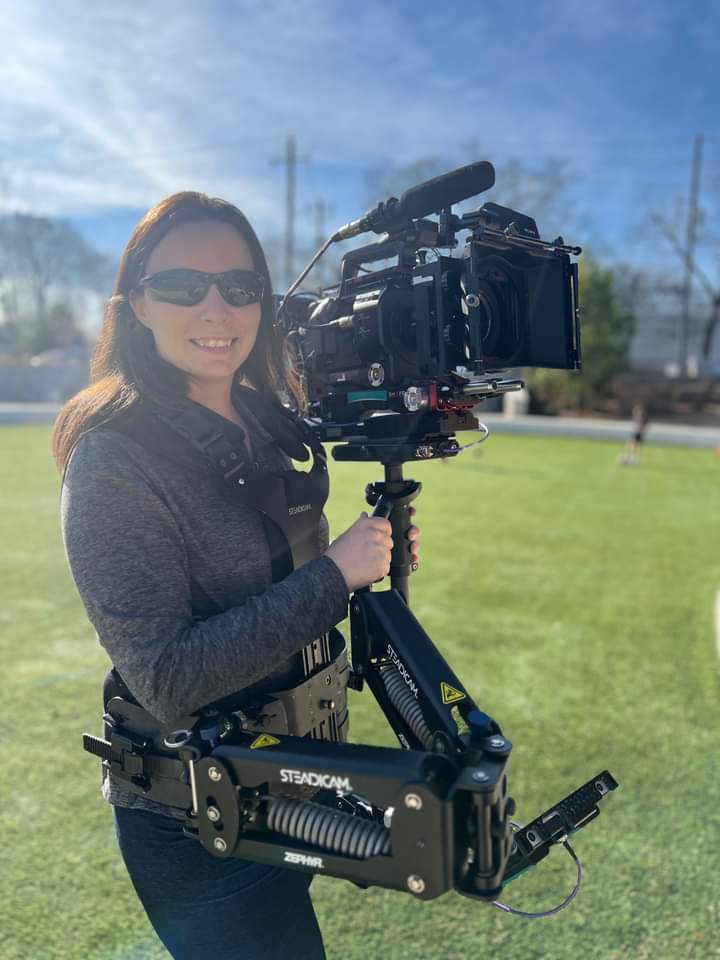
When I’m doing Steadicam or handheld, my least favorite thing is a rolling take, especially if it’s long. I just need time to reset. Sometimes there’s an adjustment needed in a handgrip on a shoulder rig or I need to fix the balance on the Steadicam.

Other concerns? Using up batteries! You might be playing beat the clock with what battery you have left in the camera or on the mic packs.

Closing Thoughts

Using a series or a rolling take can be done with purpose. It’s just another tool in your kit. Abusing it can lead you to creating an uncomfortable work environment for your crew. So before you panic and decide to just “roll on everything” look at it critically and see if a rolling take is necessary or if you need to re-evaluate and be more concise with your time.

How to Avoid Film Job Scams – Take Seven

This is the seventh installment of “Bridget gets way too wrapped up in calling out scammers.” You know what to expect.

Let’s look at some new examples:

Turning Off Comments

Scammers have gotten wise to us warning each other via the comments section whether something is amiss. If someone posted a job and imediately turned off the comments, I want you to be wary.

What other details can we see here? I marked a lot of stuff in blue in this screenshot.

  • Mixing up Production Assistant/Personal Assistant
  • Saying this production, which they haven’t filmed yet, will air next month. As if!
  • Veles Productions (I covered a similar one in another blog also pretending to be Veles Productions.
  • The Day rate. Oh boy we have to dig into that one.
  • Bad grammar, improper use of English: “driver’s license in effect,” “be conversant with terminology.”
  • Incorrect job duties: Asking a PA to “guard the set” and help with lighting, props and more miscellaneous stuff.
  • Calling the crew “staff.” I’ve never heard that used on a film set. Ever.
  • Claiming these are 3 hour shoot days. Even the jobs that claimed to me they’d be a few hours ended up being like 13 hours.

Veles Productions is a real production company. They’re based in Poland. But they’re not the ones behind this. Scammers steal real production company names, director names and more to pretend to be someone else in order to trick you.

That Day Rate:

$125.21 for 3 hours.

First off, a “day rate” is usually going to be for a larger chunk of time, like 10 or 12 hours, and after that there’s overtime. Occasionally you’ll see a live event job or a corporate gig that’s only a few hours.

But this fake job post is trying to lure you in with the promise of high return with little effort. They claim you’re working 3 hours a day, total of 12 hours in the week, for $1503.

Let’s not forget that this “day rate” of 125.21 for 3 hours equals about $42/hr. Which is astoundingly high for a PA. That is like a camera operator rate on some gigs. Then if you do the math, $42/hr x 12 hrs = $504. Again, like I’ve pointed out in a previous blog post, the math just isn’t mathing.

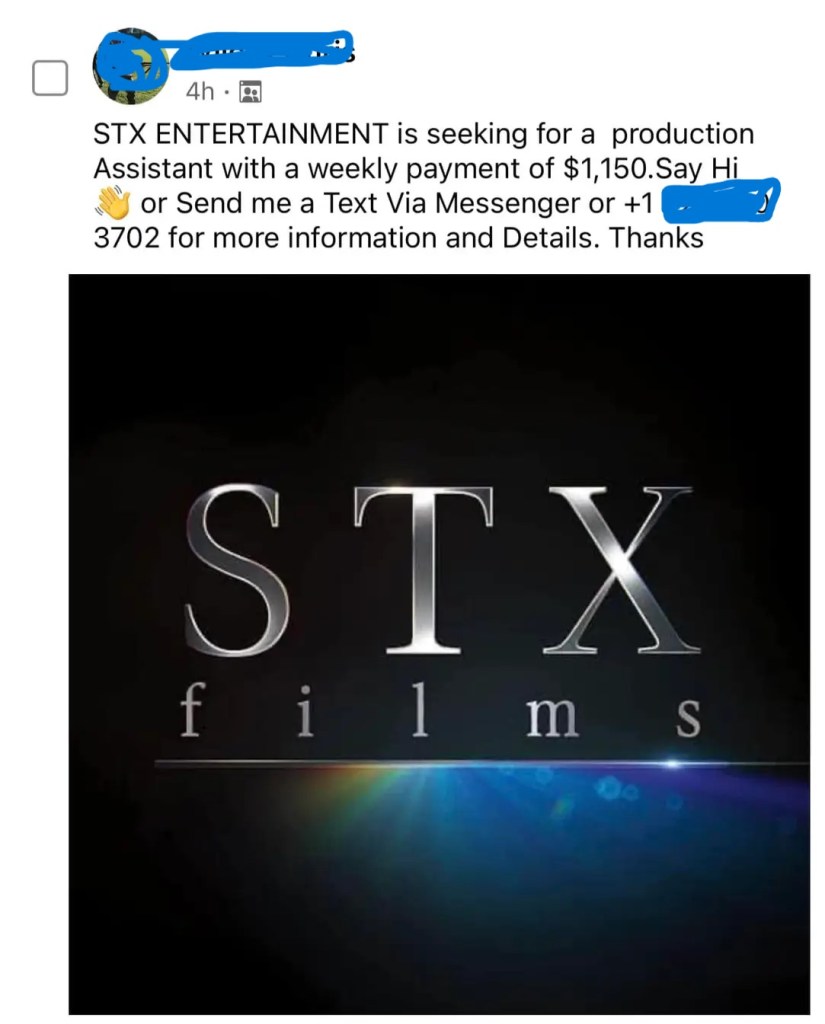
Say hi! Cutesy weekly payment scam

Here’s another one pretending to be a well known company.

This is the type of post that’s way too conversational and cutesy. I’ve seen this “Say hi!” post format a million times. Productions are not going to care if you “say hi.” Sorry not sorry.

Other red flags:

  • “is seeking for a production assistant” bad grammar
  • weekly payment
  • Say Hi + emoji
  • gives a clearly international-leaning number. The +1 is the US country code, but it’s possible this scam is meant to scam anyone in the world. And they could just buy a spoof number.

Scamming Models

This was one that graced the Atlanta Film Production Group for 4 hours before I was able to delete and ban the poster. First, I commented on the post, asking for clarification. Why were they asking for models to act? Wouldn’t you want actors? The poster claimed they wanted models and actors. it still didn’t make sense. Finally a community member came into the comments and said it was a scam. It had been posted in another city with the same dates and details. I did a quick search on Facebook to confirm, and deleted it.

Also look at the comments. The poster’s English is awkward. Saying for the other guy to “go to bed” and “Don’t rubbish another persons project and dream”. That last part feels like British English but even that seems wrong.

Would you like to PAY to WORK on a movie!?

This one is astounding. I covered a similar one in January with another Christian film who wants extras to pay to appear in the movie.


You want me to pay to work on your movie? I’m sorry hun, that’s not how this works!

  • Look at that AI generated image! They don’t have anything real to show.
  • claiming this is a hands on learning experience, hoping to take advantage of newbies.
  • Angling the post at teenagers. Wow that’s like extra illegal?

This screenshot was re-posted to Crew Stories (a pretty fun Facebook group if you haven’t seen it) and the comments have torn it apart. Apparently this Aaron guy has been trying to fund and make this film for like 10 years. Other commenters had personal experiences with the individual and presented their misgivings.

So, what did we learn?

The same old, same old. Look for weird numbers and unreal rates and job positions. Look for incorrect film terminology or a misunderstanding of job titles. Google search names or posts to see if it has been posted or called out elsewhere.

Stay safe out there folks.

How to Avoid Film Job Scams – Take Six

Okay, first thing — Thank you to everyone who shared the blog and reached out to tell me that they used my blogs on scams as a resource to keep themselves and their friends safe. It really warms my heart to see a difference being made.

I don’t only write about scams but since getting the word out has been useful, I’ll keep up the occasional update post on the topic.

Recently I spoke at another Atlanta Film Production Mixer about my career and what red flags to look out for. Again I had multiple people telling me about scams they encountered.

Lovely photo shot on actual film by one Marco Gutiérrez.

It’s time for an update. Here are a few more scams to look out for. Now, keep in mind how they are done, not necessarily the individual job itself. Most of these posts have dates that have passed now. It’s literally impossible for me to keep up with them. But if you note why these posts are scams and arm yourself with that in the future, you are less likely to become a victim.

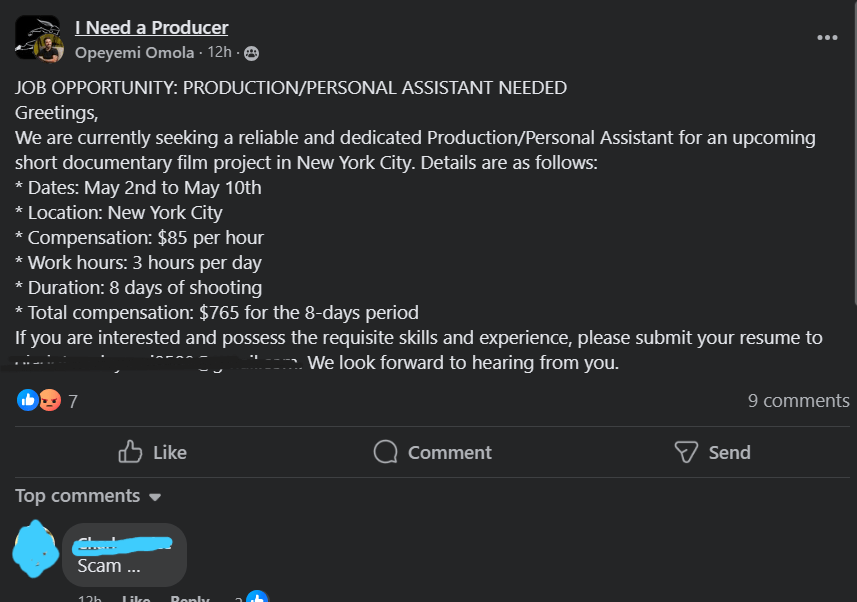
The Math isn’t Math-ing.

How can you tell this one is not a real job?

For one, some quick simple math will tell you something is up. They claim the job pays $85/hr. It’s 3 hours a day for 8 days. $85×3= $255/day. $255/day x 8 days = $2,040. The post claims the Personal Assistant PA is getting $765 for the entire job. Wow.

Also, a “personal assistant/production assistant”? Those are two different jobs.

For some reason I’m also seeing this “3 hours a day” grift a lot lately. Maybe it’s to entice people for a seemingly large reward for minimal work.

Another thing to do when considering if a job is a scam or not is to check the likes and comments. Here you can see one person who is familiar with this particular scammer and calls them out.

That’s…Not How This Works

This can be a scam or just a person who doesn’t know much about the film industry. Sometimes that’s the same person.

I’ve seen multiple jobs asking for “two DPs” or a media manager who is actually acting as an editor assistant.

The two DP’s thing I want to elaborate on quickly: a project typically has one Director of Photography. That’s the lead guy or gal in charge of the camera department. You don’t want too many cooks in the kitchen. You may find multiple DPs on very large Hollywood style projects or big features, because you might have a second unit DP in charge of stunts and other scenes. You would also have multiple DPs for different episodes of TV shows.

But if you see a post for a small project looking for multiple DP’s, they are either misunderstanding what a camera operator is or …

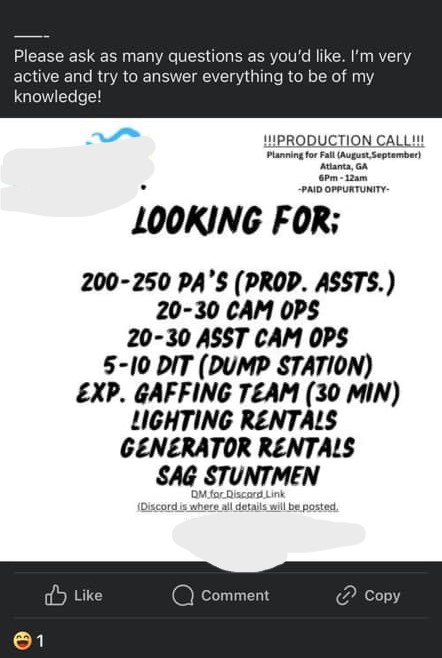
200 PA’s and 20+ camera operators and assistants? Either this is a huge show or…

Maybe just see that they want you to join a Discord for more information and realize what the problem is.

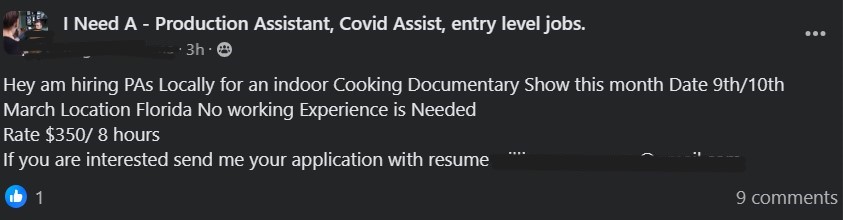
“No Experience Necessary!”

Be very wary of any film job that says “no experience necessary.” I’ve seen that on a lot of scams too.

Truth be told, production assistant is an entry level position. A job can ask for a more experienced PA or one who has worked on certain shows, but the understand is that sometimes this is a PA’s first job.

But how about a job offering a suspiciously high rate for a first time PA?

Yeah, stay away from these.

Steadicam 101: Balancing and Operating

We’ve learned why we use a Steadicam…

We’ve covered what pieces make up the Steadicam…

Now it’s time to balance and actually use the thing!

Balance

A Steadicam cannot work properly if the rig is not balanced.

Again, this is a simplified version of balancing. To really learn, you gotta get your hands on a rig, or at least observe a Steadicam operator as they prep.

First of all, you need to find the center of gravity, or cg, of the camera. After the camera is built (i.e. it has all the accessories and lens you’re going to use for the shot) you can find the cg by rolling the camera body on a rail. Where the camera is balanced on that rail, mark with a piece of tape or just remember where it is.

  • The camera is placed on the sled via the cheeseplate on top.
  • The post is lengthened to the appropriate length. This is in relation to how much weight is on the camera at the top.
  • On the top stage are the adjustment knobs to move the camera right and left or front and back. This is the fine adjustment.
  • If the rig is perfectly balanced while stationary, you’ve achieved “Static balance.” If there’s time, proceed to:
  • Dynamic Balance.” Spin the post on the balancing peg and see if the camera tilts any direction. You then make corrective adjustments with the fine adjustment knobs, moving the monitor in/out and moving the battery in/out.
  • adjust the tension on the arm so the camera floats where you want it.
  • the vest is adjusted to the operator’s body so it doesn’t slip and pressure is exerted evenly across it.

Operating

Actually operating the Steadicam requires a lot of physical and internal adjustments.

The operator has to have good posture. They walk forward, smoothly, making minor adjustments as needed. They avoid accidentally cross stepping, so they don’t trip.

While the operator’s feet carry them where they need to go, their hands are busy making sure the camera is where it needs to be pointed. The left hand is on the gimbal, in charge of panning, while the right hand lives on the handle that connects to the arm, moving the rig up and down as needed.

For more in depth information about Steadicam operating, check out the Steadicam Operator’s Handbook by Jerry Holway and Laurie Hayball.

Steadicam 101: What Components Make a Steadicam

When the Steadicam operator walks on set and starts setting up their gear, it can look pretty impressive. Here’s this guy or gal with cases of specialized equipment that looks like it belongs to Robocop.

Or maybe Alien.

Contrary to this picture, Steadicams are not all that great at eradicating alien threats.

So what part is the Steadicam?

Ah, not an easy answer actually.

I’ve worked with a number of newer directors, and there’s a bit of a learning curve I often have to help with there. Sometimes I’m asked “So you have a Steadicam? What camera is on there?” And I answer, cautiously, “Whatever camera you want within the weight limit.” But then I figured out…some folks don’t know the camera is actually not part of the Steadicam. The Steadicam is the device that moves the camera around. It’s a dolly if it had feet and shock absorbers instead of wheels and rails. It’s a tripod with an ego. And it’s also not those things.

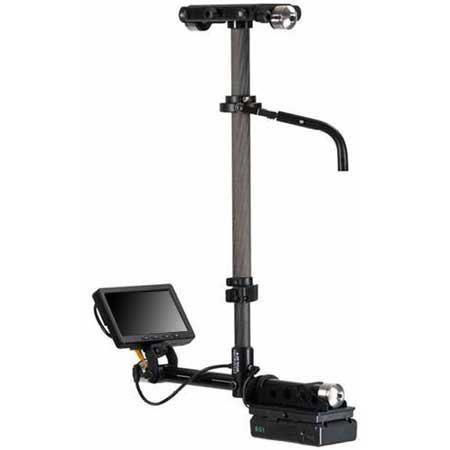
The Steadicam mainly consists of 3 major components: The Sled, The Vest and the Arm.

Pictured are parts of the Steadicam M-2.

Sled

Pictured is a Steadicam Pilot, a smaller rig for DSLR sized cameras.

The Sled is the post you see here. The camera is mounted on top, there’s a monitor at the bottom, and batteries power everything from the bottom. This is where the electronics live. There’s wires inside that travel from the top of the top stage to the very bottom where the batteries and monitor reside.

Arm

Pictured is a G-70x arm. This arm can handle 13-70lbs of weight.

The arm is really where a lot of the magic happens. The arm has sections and springs that compress or expand to lift or lower the rig with ease. The arm also isolates movement, taking away the natural bounce of a human’s walk and translating it into smooth moving video.

Vest

Two types of vests pictured above: A Fawcett Exovest and a GPI Pro vest. There are several varieties.

The Vest is where this contraption connects to a human body. The vest takes the weight and distributes it across the body. They are quite adjustable. Only in certain cases will an operator need to get a specific type of vest, due to small size or even just preference.

Let’s take a look at the top of the sled

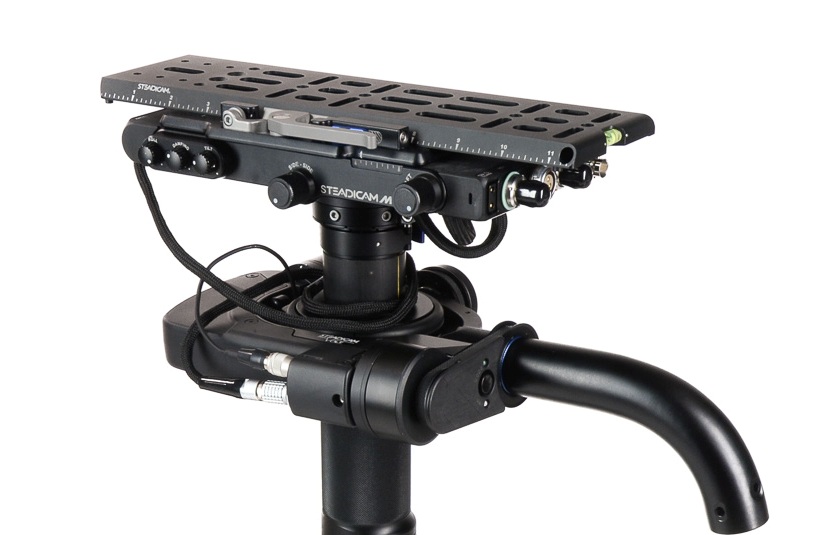
Here’s an example of the top stage (top platform where the camera ends up being mounted). There’s a plate that goes on the very top that you screw the camera into. Adjustment knobs on the sides move that plate either left and right or front and back. This will serve in helping balance the camera.

Also on the top stage are all sorts of places to plug in wires! Several of these inputs are to get power from the battery at the bottom into the camera or to power the accessories. Why not just leave a battery on the camera when you put it up there? Well, you can, but anything you put on the Steadicam will add more weight. Sometimes, you gotta remove as much weight as possible.

You can also see the SDI inputs (pictured right, at the short end of that top stage). This is how you get the video feed from the camera to the monitor at the bottom of the sled.

The Gimbal

This is the handle that sticks out from the sled post and connects to the arm.

The gimbal is 3-axis, meaning it moves freely in three directions for pans, tilts and roll. The gimbal handle that connects to the arm is where the right hand goes, and the handgrip below on the post itself is where the left hand goes. This can be reversed for left-handed users who operate “goofy footed.”

Other Accessories

Plenty of other accessories and mounting devices enable the Steadicam operator to work in different conditions. There are mounts so they can operate from a car, more advanced gimbal technology in the form of the Volt, and things like rickshaws and the Trinity to change the possibilities of what operating can offer.

But this is an intro series and you’ll have to dig into all that when you decide you want to learn more.

Part 3: Balancing and Operating, is coming next.

Steadicam 101: Why Use a Steadicam?

I had the honor of co-hosting a Steadicam workshop for the Women in Focus Summit alongside fellow operator Kurush Bakhtiari. The event run by Ladibug Studios and ColourCo Rentals had several informational panels on camera, lighting and directing with a focus on getting more women and non-binary folks into production.

Kurush with his Archer and Klassen vest, me with a Zephyr kit.

I didn’t expect all of our attendees to take up the mantle of Steadicam. Sure, maybe we inspired a person or two who was curious or knew nothing about the skill, but learning about Steadicam is not just for the people who will wear the vest.

Plenty of crew members interact with the Steadicam operator: The AC who builds the camera to go on the rig, the grip who takes the rig off the operator when they need a break, the other grip who acts as a spotter for safety. Widen your parameters also to the 1st AD who is trying to keep a schedule and time transitions between sticks and camera accordingly, and to the director and DP who will be asking the Steadicam operator to bring their vision to life.

Understanding the roles, responsibilities and limitations of other positions on set just makes you better at your own job.

This will be a 3 part series to go over the basics.

What is a Steadicam?

Pictured: The Arm, Sled, Docking Station and Vest of a M2 model Steadicam.

A Steadicam is a tool used to create fluid dynamic shots unlike any other camera movement apparatus. It consists of a vest worn by the operator connected to an articulating arm and a post that holds the camera and electronic components. The arm does the job of evening out the natural bounce of a body walking, smoothing out the shot. If you were to attempt the same with handheld, it couldn’t be as smooth. Even if I breathe with a camera on my shoulder, the movement translates to the image.

Examples

Popular Steadicam examples include the stairs run from Rocky, the hallway shot in The Shining, and the Copacabana scene in Goodfellas. If you haven’t seen those, by all means click the links and watch the clips. Since those are the most commonly used examples, I wanted to show some fresh ones. Kurush and I put together a video of examples of a handful of other movies that have inspired us.

What we can learn from these examples:

Point Break: The camera expertly follows a high energy scene in a police station, whipping between characters and moments to carry the scene forward. This is a more interesting take on the typical police station scene without being static and stoic. This clip gives a real sense of space in the station, from the character’s entrance to how he moves around the bullpen. This shot switches between framing the main two characters from behind, getting a wide shot of the entire place, and returning to frame the main characters from the front. There’s a nice variety of shots without ever needing to break away for coverage.

Snake Eyes: In this example, we see how perspective changes as the Steadicam moves around the scene. At one point, the Steadicam becomes the point of view for one character, the boxer. When we reveal who it is, the Steadicam backs up to include him physically in the scene.

Birdman: The movie is depicted as if it is a single camera following characters around for a continuous shot. Since that is the technique, shots are constructed by the camera moving closer or farther away from speaking characters, moving around the stage to reveal things and traveling between locations around the theater by following one character at a time.

Baby Driver: This is near the beginning of the film, introducing Baby and his connection to music in the film. This is a well choreographed and timed performance between the camera operator and actor. See how things are revealed as Baby walks how each element of the scene adds to the soundtrack (honking cars, a trumpet player on the street, pedestrians). Pay attention to the background on a second watch of the scene.

Last Night in Soho: In this thriller, Eloise is experiencing flashbacks to the 60s to a vivacious woman named Sandie and a connection to a series of murders. Eloise sees herself in Sandie’s perspective, sometimes in the mirror, and sometimes replacing her in the scene. This is another well choreographed number. In the video I included the behind the scenes clip showing the Steadicam operator. Note how Eloise waits for her turn to cut in to the dance, and how moments are revealed as the Steadicam travels around the main characters. You can also see a spotter helping the Steadicam out. There’s a lot of moving parts and nobody wants to have a camera run into them!

In Part 2, we’ll talk about the components of the Steadicam and why balance is so important.

Pay or Play – Some Movies Don’t See the Light of Day

Imagine working months, a year plus, on a project. Planning and outlining a story. Script revisions and rewrites. Storyboarding. A music score with full orchestra. Fighting and stunt choreography. Filming ninety percent of the movie.

Only to have HBO Max (I refuse to call it Max) shelve it for a tax write off.

This happened last year to Batgirl. Yes I’m still mad about this.

The movie starred Leslie Grace as Barbara Gordon/Batgirl, Brendan Fraser as Firefly and J.K. Simmons as Commissioner Gordon. Michael Keaton was reprising his role as Batman. And it looked awesome.

Filming began November 30, 2021. In January 2023, DC Studios Co-head Peter Safran deemed the film “not releasable.”

But, the real reasoning may just be because The Artist Formerly Known as HBO Max was rebranding, and no longer wanted the direct-to-streaming movie in its library. And it would make a fantastic tax write off.

I was going to write about this a long time ago. I mulled it over, got mad about it, and decided too much time had passed and I didn’t want to bring it up again.

But then we have Disney+ cancelling The Spiderwick Chronicles series adaptation this week. This is only one cancelation of many, as Disney+ and Hulu downsize for their fiscal third quarter.

This year, Disney+ deleted Crater, a $54 million feature that only lasted on the streamer for seven weeks! They also removed the Willow spinoff, Y: the Last Man, and The World According to Jeff Goldblum. Last year, HBO Max removed the likes of The Witches (2020), MoonshotLocked Down, Superintelligence, Charm City Kings, An American Pickle and a veritable pile of animated and live action series.

And since my blog lately has become “here’s a bunch of thoughts about the writer and actor’s strikes” you can only imagine how much Disney and Hulu and all these other streamers are saving on their barely existent residuals.

The Not So Fantastic 4

All this insanity reminds me of The Fantastic Four movie.

No, not that one.

Certainly not that one.

Yep, that one.

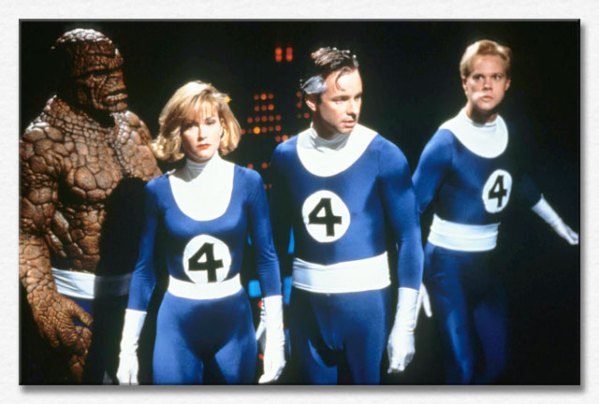
Not familiar with it? I’m not surprised. It’s technically a movie you can’t watch (unless cough cough bootleg DVD at Comic-Con cough cough).

The story behind this Fantastic Four is interesting, because it was a movie made specifically to never be seen. Why?

The 1994 film was made just to retain the rights to the characters. Although this Looper article claims otherwise.

A paltry $1 million dollar budget was set. A music video director was hired to direct the film. Cast and crew were hired at breakneck speed. This was definitely a race against the clock. Principal photography ended just three days before the contract would expire. The movie was edited in 28 days, and soon after it was served with a cease and desist from the producers.

Producer Berd Eichinger claimed it wasn’t his intention not to release the film, but Marvel exec Avi Arad was the one who stopped the movie in its tracks. In fact, Arad did buy the movie for several million dollars and order the prints destroyed. But still, it persisted, and bootleg versions exist out there for people to see the film in all its awkward B movie glory.

Pay or Play

Some movie contracts have a Pay or Play clause.

a pay or play clause guarantees that someone will get paid, even if they end up not doing the job that they were contracted to get paid for in the first place. They either get paid or they “play” and get paid. 

-Wrapbook

A good example was when the American The X Factor initially hired Cheryl Cole to judge two seasons of the show. Problem was, they didn’t think American audiences would understand her accent, so she was let go after the pilot episode. Cheryl Cole eventually had to sue, after she was paid for only one season. Her contract guaranteed her two seasons of pay, even though she didn’t work out as a judge.

This clause is also how Johnny Depp got paid $16 million after being fired from Fantastic Beasts 3 and replaced by Hannibal‘s Mads Mikkelsen. He had a pay or play, and the contract, as the IndieWire article points out, “did not have a morality clause.” This was after the highly publicized U.K. libel trial regarding the story of abuse with his wife Amber Heard. Mikkelsen was a better villain anyway. But still, $16 million is a lot to lose to an actor not appearing on screen.

I personally have worked on movies that have never, and will never, be seen. These are typically due to issues with finances at the indie budget level. I’ve worked on pilots that were never picked up by a network. I know several people who worked on The CW’s live action Powerpuff Girls show. I can’t imagine working on something so huge that it cost $50-80 million — and it never gets to be seen.

The cancelation of Powerpuff, from what I heard, might have been an act of mercy.

Pay or Stream?

We’ve got to a sticky situation in which titles are being deleted off of servers and shows and movies cease to exist. Actors, writers and show creators can’t earn residuals off that creative work, and not even DVD sales can save the day because…well, there’s not a lot of DVD sales going on. Personally, I’d love to see some streaming shows hit the DVD market. I don’t want Apple TV but I do want to see Silo. Why should I have Peacock in order to watch the Twisted Metal adaptation? Frankly, it would be beneficial to have an on-demand physical or digital download of content like this.

That’s enough for now.

Release Batgirl you cowards!

…and don’t get me started on New Warriors.

Sources

Disney Plus movie deleted just seven weeks after it premiered

Disney+ Not Moving Ahead With Completed ‘Spiderwick Chronicles’ Series Adaptation

HBO Max removes even more original content

Producer’s Guide: Pay or Play Clauses

Johnny Depp Exposé Reveals His Destructive Set Habits and $16M ‘Fantastic Beasts 3’ Payday

Podcasts that put the strike in perspective

One way I’ve stayed in tune with the impact of the WGA and SAG-AFTRA strikes is through podcasts.

I wanted to share several selections from podcasts I’ve listened to recently that stress the necessity for the strikes in the spotlight. I’m on the crew side, so hearing from writers and actors helps put things in perspective.

I listen through Audible, but I imagine you can find most if not all of these on Apple Podcasts and Spotify.

Scam Goddess -“The Film that Hid Fraud”

Laci Mosley (Lopez vs Lopez) and her guests started this episode talking about the insanity of the markup on wedding things – also known as the wedding tax — and it ended up making commentary on film worker’s lives.

Naomi Ekperigin (actor Mythic Quest  and writer Mrs. Fletcher): “Someone’s like ‘Oh yeah, I’ve seen you on TV.’ Just because I’m on TV… doesn’t mean I want to spend all the money I have on this. You don’t know my life. You don’t know my circumstance. We work in a business too where — okay yeah, it was a good year but we don’t know if it will be next year.”

Mosley: “We up on a whole strike right now! It’s up and down. You never know how long you’re gonna need to save your money.”

The episode then covered an interesting story about the fraudulent film production of A Landscape of Lies, so check out that episode. Laci and her guests are very entertaining.

Listen here.

Deadline Strike Talk – Week Sixteen with guests Gale Anne Hurd and Glen Basner

On this episode, host Billy Ray talked with producer Gale Anne Hurd (Terminator) and Glen Basner (FilmNation CEO), and the talk inevitably turned to the problem of AI.

Gale Anne Hurd pointed out that the concept of AI (like ChatGPT) writing scripts would be just a rehashing of what’s been done before. AI can “theoretically formulate box office successes” that are just copies of what was popular before. “The great age of cinema and television series,” Hurd stated, “was always when there was innovation.”

Basner: “If you look at a distributor like A24, Neon, Bleeker Street — they may be great theatrical distributors and there may be an audience at the theatrical level for those movies, but if they can’t sell their movies to paid TV or streamers, at the levels that they currently are, then the whole economic model upends itself and we have to readjust to say well creatively these may make sense but we may need to make them for 60% of the cost that we have been beforehand and that’s not sustainable in the long term to keep reducing the cost structure of each film.”

Hurd: “There’s gonna be continued consolidation.”

Billy: “If streamers add ads, wouldn’t they have to be transparent about their numbers with their advertisers?”

Hurd: “There have been lawsuits about fake data. About just how many people are actually seeing ads on those platforms. I’m always concerned that metrics will not be reliable. I can’t tell you the number of times I’ve had to sue for profits on my films. Some of my most successful films are still not profitable. If they’re not sharing that data with us accurately, I think they will share unreliable data with advertisers.”

Listen here.

Scam Goddess – The Fake Film for… Feminism?

Laci Mosley’s podcast gets a second mention because of her episode with Abbott Elementary writer Brittani Nichols.

Mosley: “I think that regular everyday people look at the strike and think ‘Oh these are Hollywood writers who live in Hollywood mansions and then have millions of dollars and they want even more?! They’re so greedy!’ Where in truth most writers aren’t super duper rich.”

Nichols: “Correct. Our guild is largely working class.”

Mosley: “And the middle class has been shrinking all our guilds because in SAG you used to make residuals and now streaming’s like ‘We’re not going to tell you how many people watched it.’ “

Nichols: “The entire industry has shifted. Streaming has put a squeeze on the middle class writer and made it harder to move up the ranks. Made it harder for people to have a sustainable career.”

Mosley made the example of an actor who did a voiceover line for Friends and still gets a $300 check each month as it re-airs. with streaming, it’s $0.

Their talk then shifted to AI, another major sticking point for both actors and writers during strike negotiations.

Mosley: “We get paid for ADR [sessions] but with AI, they could do it without us.”

Nichols also countered that the AMPTP (or at least streamers like Netflix) doesn’t want a traditional writer’s room. They want to pay the bare minimum and make it a freelance, gig based environment.

The pay for writers and actors may look high at first glance, but it also takes into account the fact that they might not work again for a very long time. It’s the nature of the business, so if a line isn’t drawn in the sand now, it’ll only get harder for that shrinking middle class actor/writer to survive.

Listen here.

Movies in Focus – $34. Filmmaker Joe Russo Gives Insight Into the WGA Strike

Podcast host Niall Browne invited writer/director Joe Russo (Au Pair Nightmare, Nightmare Cinema) onto the podcast to talk about how streamers treat their libraries, and therefore impact the discussion of residuals. Have you ever wondered why a show just up and disappears? Why a show gets canceled for seemingly no reason?

Russo: “What’s happening with streamers is they’ll run a show for one, two, three seasons maybe and as soon as they decide, as soon as that algorithm decides that show is not bringing in new subscribers, they cancel it. And so the chance to make those residual payments over dozens and dozens of episodes, that’s gone away. They’ll replace it with a new show, a new shiny bauble, to try to bring in new subscriber growth.”

Joe Russo went on to describe that the idea of any long term success is fleeting when streamers can just delete a show off their platform like this. Sometimes they barely get a release.

Russo: “They’ve been pulling things off the platform. There was a Disney movie that was released on Disney+ in May and it came down June 30th. It was on the platform 6 weeks. That’s hundreds of people’s labor, time, 1-2 years of their life invested into this thing for 6 whole weeks. And who knows if it’ll ever be seen again.”

Listen here.

Feel free to check out these podcasts and others to learn more about the strike from the perspective of those walking the picket line.