The Basic Equipment for Podcasting

I recently led a workshop about podcasting at the local library. I thought it might be useful to go over the basics of the tech needed to record and edit a podcast. As far as coming up with the ideas and recording schedule and artwork and marketing – you’re on your own.

The Equipment

Depending on how deep you want to go into this hobby will determine how much you want to spend on the equipment to make this happen.

Basic
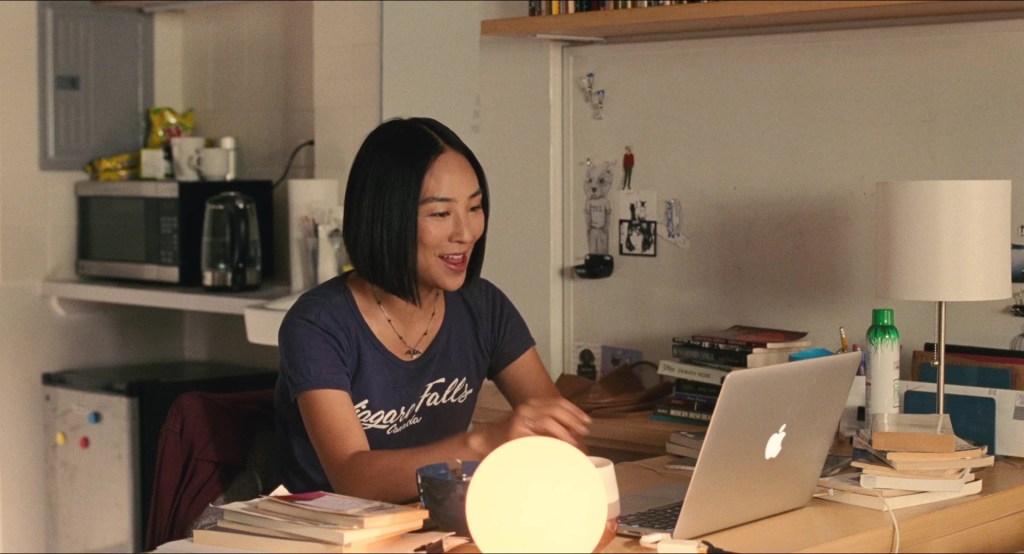
The simplest thing is to use your phone or computer to record. This will be the most unpolished version as the sound quality from your laptop’s built in microphone or your phone won’t be as good as a “real” microphone.

At this stage you can decide if you want to heavily edit or upload as is. Some editing is probably going to be necessary just so your sound and content is clean and organized. Nobody wants to hear you setting up your microphone or arguing with the cat who hopped on your lap. Or maybe they do. Who knows what makes good content these days?

Simple
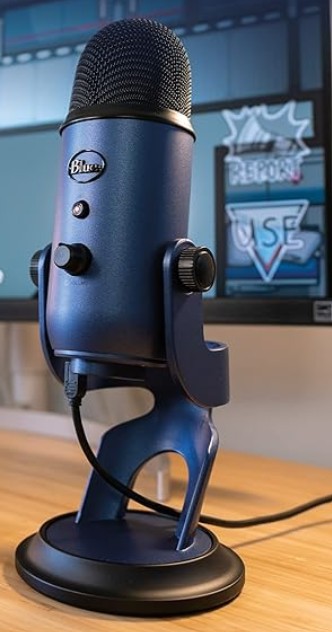
At this stage, you’re looking into getting a separate mic from your computer. This will be the consumer friendly USB style mic. Some examples below.

USB mics are fine, but the sound quality is not as good as a better (read: more expensive) mic. I liken it to a “hollow” sound.

The USB makes up for its basic sound quality with its ease of use. You simply plug it into the computer, maybe download whatever driver the computer requires to use it, and off you go.

Moderate

The XLR mic is the more professional microphone. I’ll leave it to the sound professionals to explain the numbers associated with a mic’s quality. I found this article that helps explain microphone quality.

The back of this mic is where the XLR cable plugs in.

Basically, your better microphones will be able to record clear sound with minimal background noise.

The downside is that in order to use the XLR mic with a laptop, you’re going to need a device that connects the two. You’ll notice there is no XLR input on a computer.
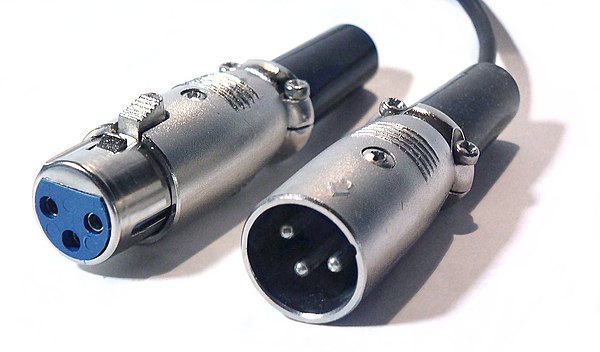
This is what an XLR cable looks like.

An example of an audio interface. Note the two plug in ports for XLR cables, the separate knobs to control levels, etc.

To use the XLR mic with a laptop, you need an interface. This device provides a place for me to plug in an XLR mic, adjust the levels, and then it goes to a USB that plugs into the computer.
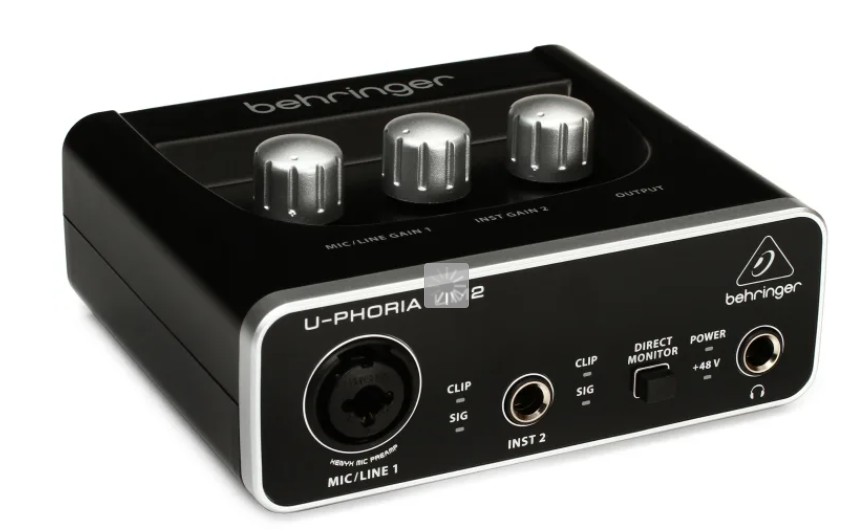
The interface I’ve been using is more suited for the music world and I’ve run into issues trying to accurately keep track of levels, so I’m on my way to the next step (The interface I was using was the Behringer UM2. Cheap at $40 but too simple for my needs now).

Advanced

Separate Audio!

The first versions I talked about involved recording directly to your computer. One of the issues I’ve noted while using my interface has been that I cannot accurately monitor audio in the computer while recording. There’s a second or so of delay. This makes it difficult for me to monitor the audio as I’m recording because I’m hearing my own voice echo back at me. It’s very disorienting.

So I’m going to the next method, the method I should have thought of first, which is recording to a separate audio recorder. In film production, we typically record separate sound. That’s why we use the slate (often mistakenly called a “clapper board”) in order to sync up the video and audio. You use the image of the slate clap with the audio in order to match up the audio and video. Of course there’s some tools out there to help you automate this process, but I’m more of a camera person than an editor. And an amateur podcaster.
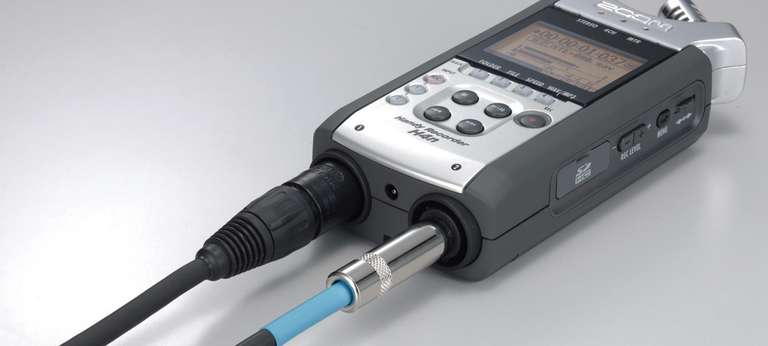
So, to record separate audio at this stage with better mics, you need a decent audio recorder. The H4n Zoom is a solid choice. It has 2 XLR inputs, so you could plug in two mics at once, plus a headphone jack to listen in and all the control over the levels. With this piece of equipment you record to an SD card.

Recording Program

If you’re recording to the computer, use whatever you have to start. There’s likely a built-in audio recorder on your computer.

I use Audacity, which is a free program. The free version doesn’t have a lot of options these days, so I only use it to record now, no editing.

There are some podcast hosting sites like Podbean, Descript and even Spotify (with Riverside) that will enable you to record and upload in the same place.

Editing Program

Use whatever you want to edit! As long as you can cut your audio files up, you’re editing.

I use the Adobe Creative Suite programs, so I’m editing my podcast in the same program I edit video in: Adobe Premiere. It’s not the typical use of that program, but I know all the hot keys, I can adjust levels and apply filters and effects, and I can export as an audio-only file. If there’s an editing program you already use that you are comfortable with, start there.

Podcast Hosting

You’ll want to upload your podcast to a host website.

There’s quite a few hosts to choose from, but some options include:

  • Buzzsprout
  • Podbean
  • Resonate
  • SoundCloud
  • Audioboom
  • Spotify for Creators

There’s many to choose from! Just check out this list of popular podcast hosting sites.

I’ve been using Spotify, but looking into some other options in order to extend my reach. At this time, Spotify cross posts to Spotify, Amazon and Apple.
Lights, Camera Remake! A Podcast about Hollywood Unoriginality

Yet another person with a podcast. Oh my goodness. But let me explain.

One of the age-old complaints about movies and Hollywood in general is that there’s no originality left. We see endless remakes, reboots (slightly different), sequels, spinoffs and adaptations. Can’t they come up with anything new?

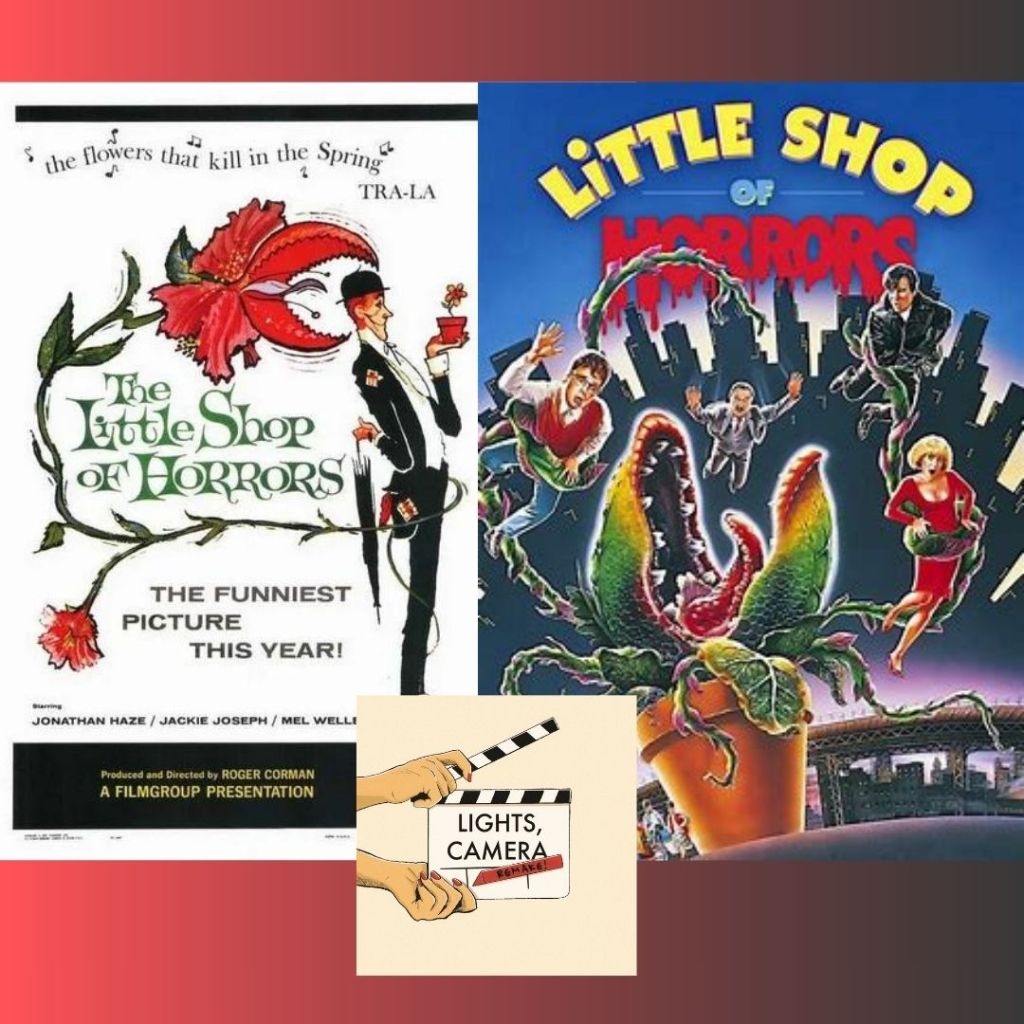
As I began to dig into this idea, I found some surprising things. Like the fact that Little Shop of Horrors -the musical comedy horror starring Rick Moranis and Ellen Greene? – was actually a remake of a low budget movie from 1960. Did you know that Martin Scorsese’s The Departed is based on a 2002 Hong Kong film Internal Affairs? 1998’s You’ve Got Mail is a remake of The Shop Around the Corner (1940). Ocean’s Eleven (2001) is a remake of Ocean’s Eleven (1960).

A remake of an old movie can bring a classic story to a new audience… and also sometimes make audiences really angry.

That passionate knee-jerk reaction is worth discussing.

I’d love to see more originality in the movie theater. The problem is — those movies have a harder time finding an audience.

Hollywood studios and executives are running a business, and they want to make money. And working with something that has established IP (like a Marvel movie, or a book adaptation, a remake) somewhat guarantees an audience will attend. At the end of the day, they just want to make money and make their shareholders happy. And they want to keep their jobs.

Anyway, my friend Erica Strout and I got talking, usually at work in between setups or at lunch. We met on a reality show TV show with myself working as the camera operator and Erica as my camera assistant. We became fast friends. And then we watched movies together. And had a lot of discussions about film in general.

Now we’re doing the Lights, Camera, Remake! Podcast.

This amazing artwork created by Taylor Rebyanski!

Is it always a bad thing to see a remake of a classic (or possibly unknown) movie? Our podcast looks to break it down and see if there’s merit to Hollywood shirking an original idea for a retelling.

On each episode we’ll look at a movie and its remake, or sometimes a movie and its sequel, to determine if Hollywood rehashed it for a reason or for a cash grab.

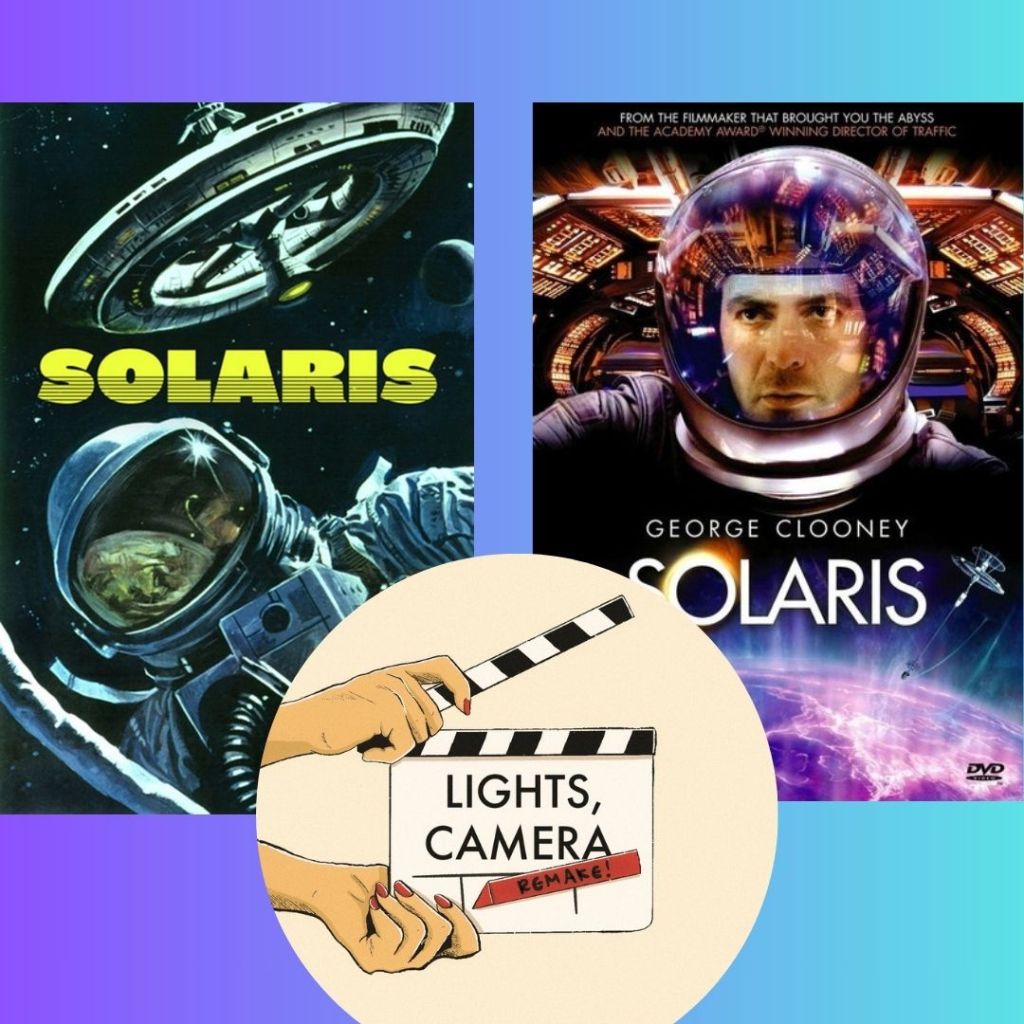
Episode 1 is about Solaris (1972) and Solaris (2002).

Solaris is an atmospheric Russian science fiction film based on a book. It was later remade in 2002 starring George Clooney.

You can listen to the episode on Spotify or right here:

Episode 2 is Little Shop of Horrors (1960) and (1986).

Next up this week is Weekend at Bernie’s! The episode will be uploaded on Wednesday, Jan 22.

Follow us on Spotify, Instagram and Facebook!

https://www.instagram.com/lightscameraremakepodcast/

https://www.facebook.com/profile.php?id=61560111332548

We’ve also got an email you can submit ideas, comments or random concerns too. We understand you have those.

LightsCameraRemakePodcast@gmail.com

http://www.screenrant.com/movies-secretly-remakes-surprising/

theenemyofaverage.com/movies-that-are-remakes/

Podcasts that put the strike in perspective

One way I’ve stayed in tune with the impact of the WGA and SAG-AFTRA strikes is through podcasts.

I wanted to share several selections from podcasts I’ve listened to recently that stress the necessity for the strikes in the spotlight. I’m on the crew side, so hearing from writers and actors helps put things in perspective.

I listen through Audible, but I imagine you can find most if not all of these on Apple Podcasts and Spotify.

Scam Goddess -“The Film that Hid Fraud”

Laci Mosley (Lopez vs Lopez) and her guests started this episode talking about the insanity of the markup on wedding things – also known as the wedding tax — and it ended up making commentary on film worker’s lives.

Naomi Ekperigin (actor Mythic Quest  and writer Mrs. Fletcher): “Someone’s like ‘Oh yeah, I’ve seen you on TV.’ Just because I’m on TV… doesn’t mean I want to spend all the money I have on this. You don’t know my life. You don’t know my circumstance. We work in a business too where — okay yeah, it was a good year but we don’t know if it will be next year.”

Mosley: “We up on a whole strike right now! It’s up and down. You never know how long you’re gonna need to save your money.”

The episode then covered an interesting story about the fraudulent film production of A Landscape of Lies, so check out that episode. Laci and her guests are very entertaining.

Listen here.

Deadline Strike Talk – Week Sixteen with guests Gale Anne Hurd and Glen Basner

On this episode, host Billy Ray talked with producer Gale Anne Hurd (Terminator) and Glen Basner (FilmNation CEO), and the talk inevitably turned to the problem of AI.

Gale Anne Hurd pointed out that the concept of AI (like ChatGPT) writing scripts would be just a rehashing of what’s been done before. AI can “theoretically formulate box office successes” that are just copies of what was popular before. “The great age of cinema and television series,” Hurd stated, “was always when there was innovation.”

Basner: “If you look at a distributor like A24, Neon, Bleeker Street — they may be great theatrical distributors and there may be an audience at the theatrical level for those movies, but if they can’t sell their movies to paid TV or streamers, at the levels that they currently are, then the whole economic model upends itself and we have to readjust to say well creatively these may make sense but we may need to make them for 60% of the cost that we have been beforehand and that’s not sustainable in the long term to keep reducing the cost structure of each film.”

Hurd: “There’s gonna be continued consolidation.”

Billy: “If streamers add ads, wouldn’t they have to be transparent about their numbers with their advertisers?”

Hurd: “There have been lawsuits about fake data. About just how many people are actually seeing ads on those platforms. I’m always concerned that metrics will not be reliable. I can’t tell you the number of times I’ve had to sue for profits on my films. Some of my most successful films are still not profitable. If they’re not sharing that data with us accurately, I think they will share unreliable data with advertisers.”

Listen here.

Scam Goddess – The Fake Film for… Feminism?

Laci Mosley’s podcast gets a second mention because of her episode with Abbott Elementary writer Brittani Nichols.

Mosley: “I think that regular everyday people look at the strike and think ‘Oh these are Hollywood writers who live in Hollywood mansions and then have millions of dollars and they want even more?! They’re so greedy!’ Where in truth most writers aren’t super duper rich.”

Nichols: “Correct. Our guild is largely working class.”

Mosley: “And the middle class has been shrinking all our guilds because in SAG you used to make residuals and now streaming’s like ‘We’re not going to tell you how many people watched it.’ “

Nichols: “The entire industry has shifted. Streaming has put a squeeze on the middle class writer and made it harder to move up the ranks. Made it harder for people to have a sustainable career.”

Mosley made the example of an actor who did a voiceover line for Friends and still gets a $300 check each month as it re-airs. with streaming, it’s $0.

Their talk then shifted to AI, another major sticking point for both actors and writers during strike negotiations.

Mosley: “We get paid for ADR [sessions] but with AI, they could do it without us.”

Nichols also countered that the AMPTP (or at least streamers like Netflix) doesn’t want a traditional writer’s room. They want to pay the bare minimum and make it a freelance, gig based environment.

The pay for writers and actors may look high at first glance, but it also takes into account the fact that they might not work again for a very long time. It’s the nature of the business, so if a line isn’t drawn in the sand now, it’ll only get harder for that shrinking middle class actor/writer to survive.

Listen here.

Movies in Focus – $34. Filmmaker Joe Russo Gives Insight Into the WGA Strike

Podcast host Niall Browne invited writer/director Joe Russo (Au Pair Nightmare, Nightmare Cinema) onto the podcast to talk about how streamers treat their libraries, and therefore impact the discussion of residuals. Have you ever wondered why a show just up and disappears? Why a show gets canceled for seemingly no reason?

Russo: “What’s happening with streamers is they’ll run a show for one, two, three seasons maybe and as soon as they decide, as soon as that algorithm decides that show is not bringing in new subscribers, they cancel it. And so the chance to make those residual payments over dozens and dozens of episodes, that’s gone away. They’ll replace it with a new show, a new shiny bauble, to try to bring in new subscriber growth.”

Joe Russo went on to describe that the idea of any long term success is fleeting when streamers can just delete a show off their platform like this. Sometimes they barely get a release.

Russo: “They’ve been pulling things off the platform. There was a Disney movie that was released on Disney+ in May and it came down June 30th. It was on the platform 6 weeks. That’s hundreds of people’s labor, time, 1-2 years of their life invested into this thing for 6 whole weeks. And who knows if it’ll ever be seen again.”

Listen here.

Feel free to check out these podcasts and others to learn more about the strike from the perspective of those walking the picket line.