Stranger Things and the Movie Theater Experience

I was one of the lucky 1.1 million people who saw the Stranger Things finale at the movie theater New Years Eve. Screenings were sold out around the country to celebrate the culmination of 9 years of a popular Netflix show. This also got me thinking about the theater experience and what is needed to get butts in seats in a time when people morbidly declare the movie theater is dead.

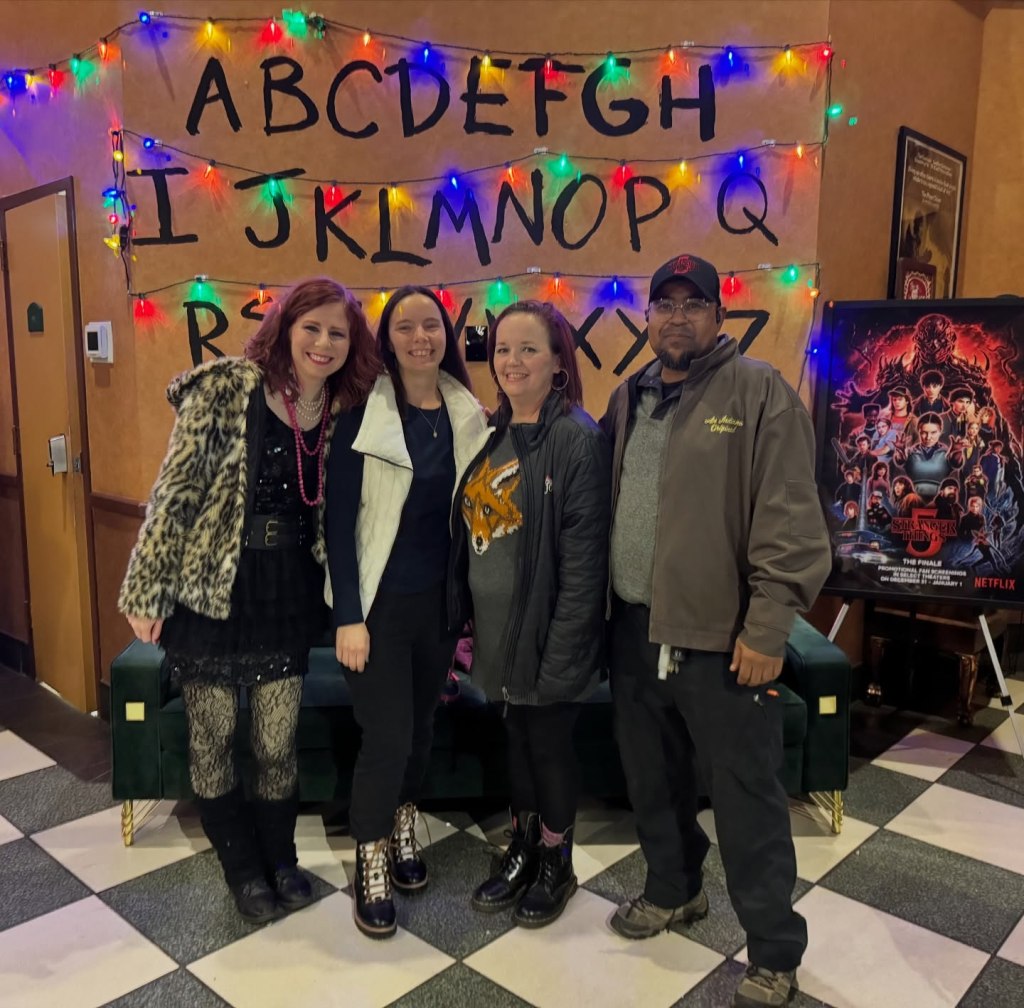
I went with a group of friends to the historic Tara Theatre. The Tara is an Atlanta landmark, an arthouse theater featuring 4 screens, independent showings, and old school charm. The Tara was one of approximately 600 theaters that did this special Netflix screening over New Years. It was also the location of a scene between Lucas and Max near the end of the finale. The Tara even gifted free movie passes to the lucky two who sat in those seats. Thanks to my friend Charles who came up with the idea.
The showing I went to at the Tara Theatre was a whopping $7 for a ticket. Seven dollars!? In THIS economy? Considering many movie ticket prices in Atlanta average around $15-20 for a basic showing, that was a steal. Tickets sold out in advance of the screening date, and from what I heard, that was the case around the country. Folks wanted to see this in theaters with their fellow fans.

The two-day screening over New Years netted theaters $25-30 million in sales – though not necessarily in ticket sales. According to Deadline, the actor’s residuals for the Netflix show kept them from selling actual tickets, so they sold ticket vouchers. It’s a loophole.

Netflix and movie theaters did a similar collab in August 2025 when they rereleased K POP Demon Hunters to the tune of $19m, and got Netflix its first No 1 at the box office.

Streaming culture has changed the way we do TV. Many stories are tailored to the bingeable short seasons of streaming television. But the lines are becoming blurred as streamers like Netflix, Apple TV and HBO put out their streaming content in movie theaters. Partly to gain an audience, and also partly to take part in those award ceremonies.

But this culture has also contributed to less folks going to the movie theater. You can argue with me about this, but why should folks go see something in the theater if it’s going to be on their TV in a month or two?

Fall Guy, a movie I really enjoyed, barely got to get its legs up under itself before it was pulled from theaters and thrust onto the streamers. It was actually getting good reviews and word of mouth, but wasn’t given the chance it needed. Fall Guy was released May 3, 2024, made $180 million against its $125-150 million budget, and was pulled from theaters for “underperforming” its opening week. It was on the streaming service just 17 days after its release. When the film was uploaded to Peacock, it set a streaming record, becoming that platform’s biggest film debut.

Folks have been trying to predict the end of the movie theater experience for years.
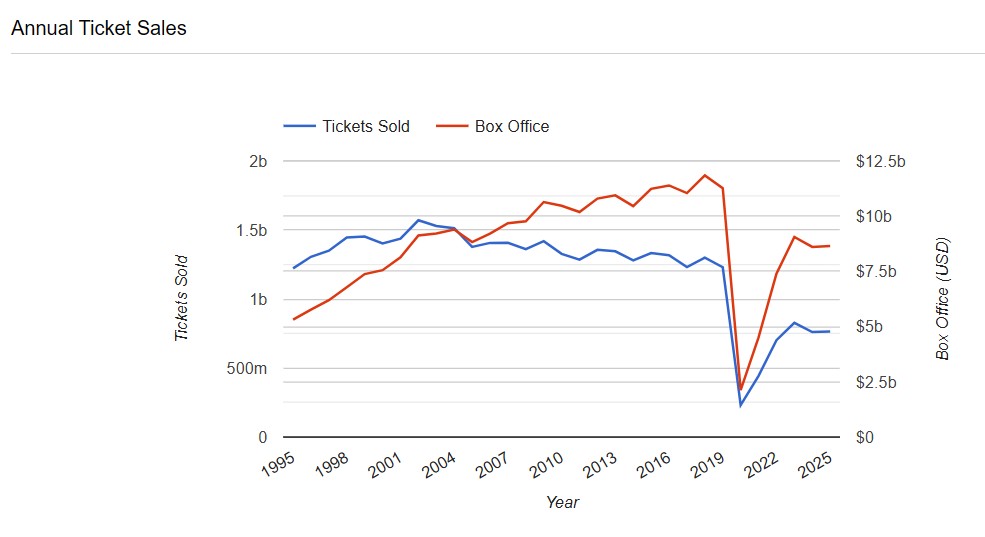
This graph from The Numbers (great resource for these stats) shows that sharp decline into 2020 (we all know what happened there) and then a slow climb back up to where things stand now, which is quite a bit below where the numbers were headed in 2019. And this can be scary to those who make movies and to those who cherish them.

Audiences do enjoy the experience of being in a movie theater. For the most part. I mean you could listen to some of my friends who critique how oppressively loud the sound is or how rude their fellow patrons are. But for the right screening, people will put butts in seats.

Where’s the incentive to do so when tickets are pricey and you only have to wait a month or two (or 17 days) and it’ll be out on any one of the streaming services you have?

Speaking of price, here’s the cost for two adults and 1 child to see the new Zootopia film:
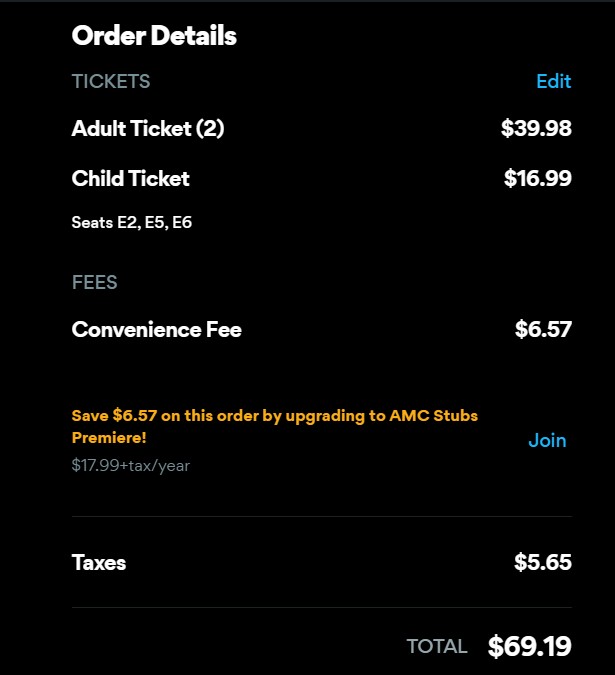
This is the cost for AMC Madison Yards for 6pm on 1/3/2026

Almost $70?! And a convenience fee for using the website. That’s just silly.

For a deal, you can sign up for AMC Stubs or Movie Pass or Regal Crown Club or just go on discounted Tuesdays… but the point still stands. Going to the movies can be expensive, especially for families.

In 2022 National Cinema Day was celebrated with a $3 movie ticket day, which was honored by numerous theater chains. People flocked to the movie theaters, seeing multiple movies in a day and finally watching movies they’d missed earlier in the year. It was a great promotion, and I’m sad that when I search for it now, I haven’t seen it done in years.

There’s a way to keep the movie theater business alive. I think we’re still searching for the correct recipe for success, but special exclusive screenings certainly don’t hurt.

Sources:

The Tara Theatre: https://www.taraatlanta.com/about–contact

The Numbers – Domestic Movie Theatrical Market Summary 1995 to 2025

https://www.the-numbers.com/market/

‘The Fall Guy’ is now streaming after just 17 days in theaters. Are summer movies in trouble?
https://www.fastcompany.com/91128501/the-fall-guy-streaming-after-j17-days-in-theaters-are-summer-movies-in-trouble

The Atlanta Film Yard Sale – Year 2!

Last year, a group of three camera department women got together to plan a simple yard sale — that ballooned into the event of the year. Those women were Erin Zellers, Tina Somphone and myself. And we had to go bigger and better this year.

I wrote about the first one here: https://bridgetlamonica.com/2024/09/11/the-atlanta-film-yard-sale-and-building-a-film-community/

Being a filmmaker doesn’t mean you are an artist on an island, creating alone. Film production is the ultimate group project. (sorry kids in high school, you still have to get along with other people!) Just as you would make a film with a group of dedicated people, the yard sale event comes together thanks to a wide network of people, from the three organizers, to the volunteers, to the sponsors, to the vendors and the attendees.

There was a lot of well-intentioned pressure from Year 1 to keep going. We didn’t even finish having the event last year before people were asking us when we would do it again. “Twice a year?” some people suggested. We all turned pale. “Once a year is fine” we assured them.

As 2025 dawned, we got to work.

Looking at what we got right and what needed work last year, we started figuring things out. One biggie was that we needed more space. We absolutely packed 24ATL last year, the LED Volume Studio in Doraville GA. It was a great space (and that wall is super cool, you should really check it out) but we ended up shortchanging people on space and didnt’ want to do that again.

Plus the need was simply greater this year. I know I haven’t discussed it on the blog much but I have talked endlessly about this to folks in person. The film industry is not in a great place right now. People are making the decision to either transition out of the industry entirely, or are holding on with their fingertips and hoping things will pick up work-wise. For this reason, there’s a number of people who just need to make some money or want to transition their business to something else. We had plenty of people who wanted to sell at the event.

Our sponsors this year made it possible to get any further. You can’t host an event without money to organize it.

Tier 2 Sponsors

You can see Local 600’s writeup about the event here.

Tier 1

Yes, we had a lot of sponsors! They donated money, prizes for the drawing, and more. We also had a surprise bonus drawing prize from Panavision! Super awesome.

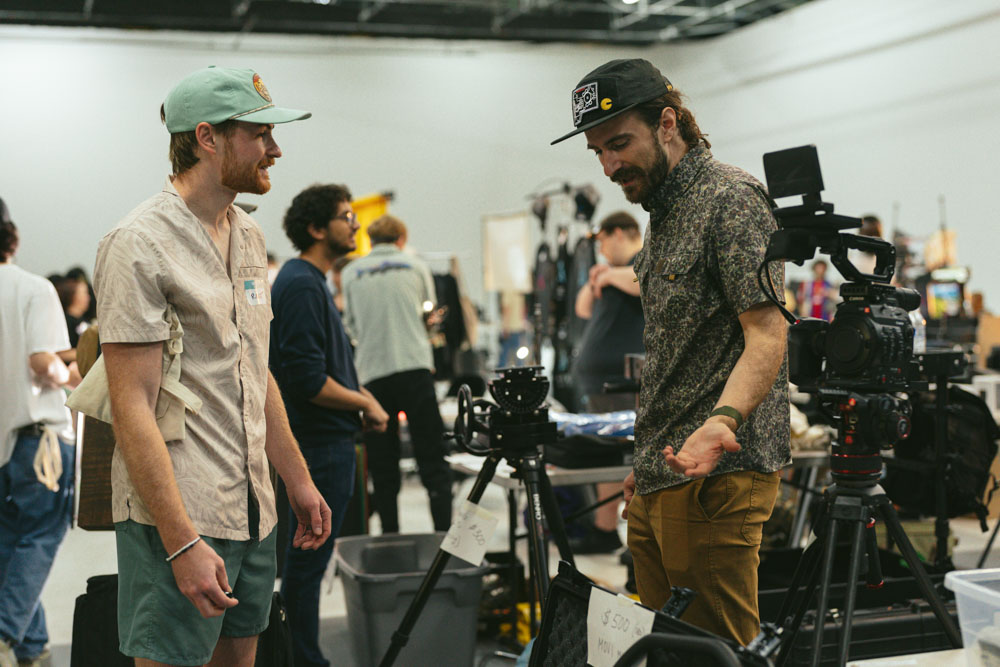
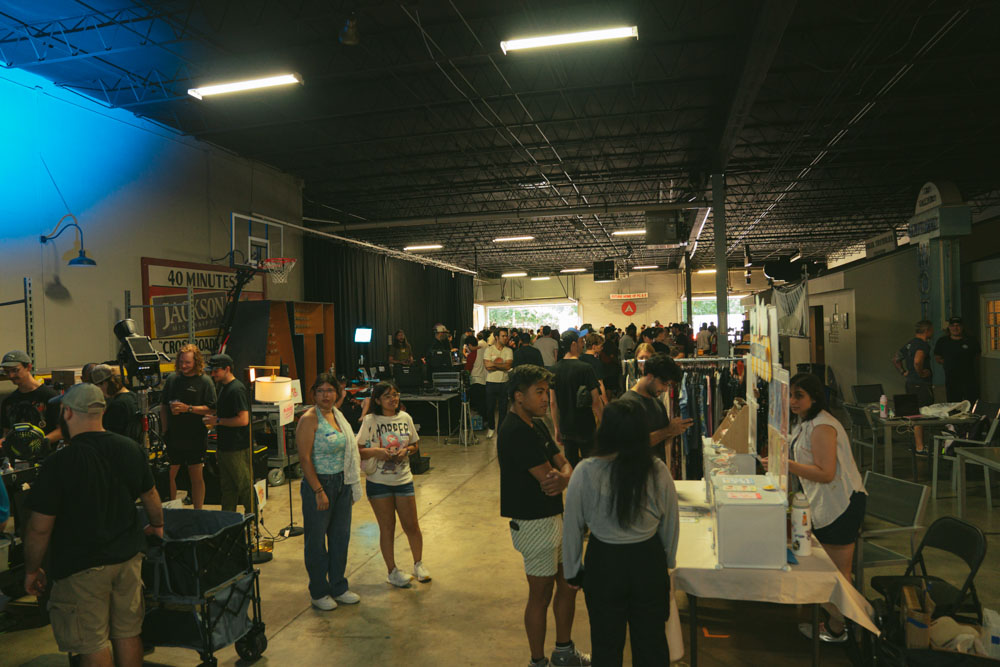
PC&E (Production Consultants & Equipment) became our venue for the event. Not only do they rent out a lot of film gear in the local film industry here, they also have an enormous sound stage that we would end up filling. And then some.

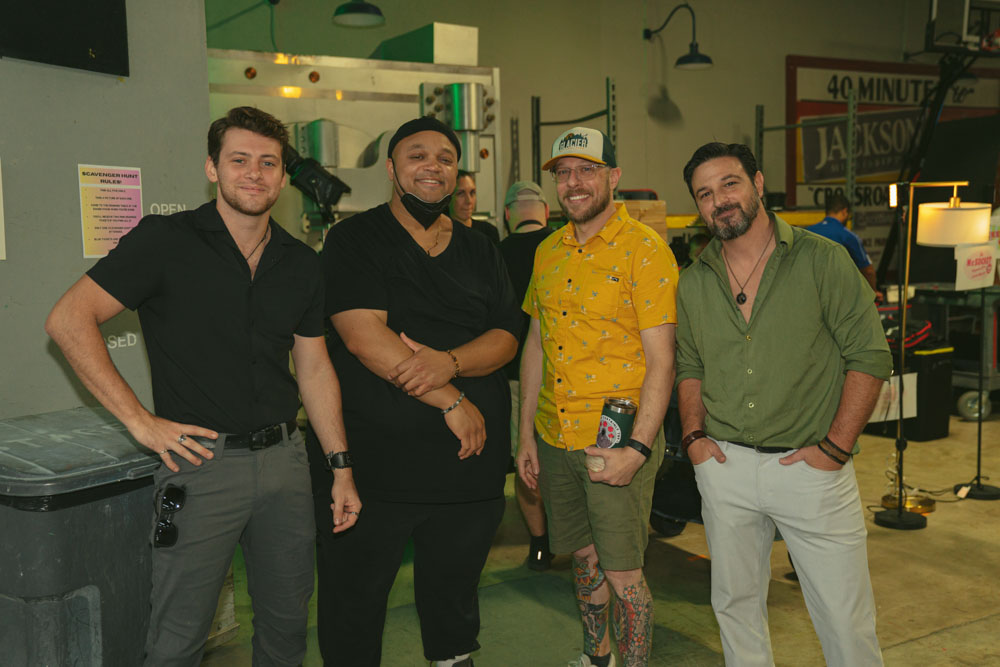
We filled every available space, from the entirety of Stage 1’s 9400 sq ft to the staging area leading to it and the outside. We had people everywhere! Plus food trucks. Plus activities like a scavenger hunt.

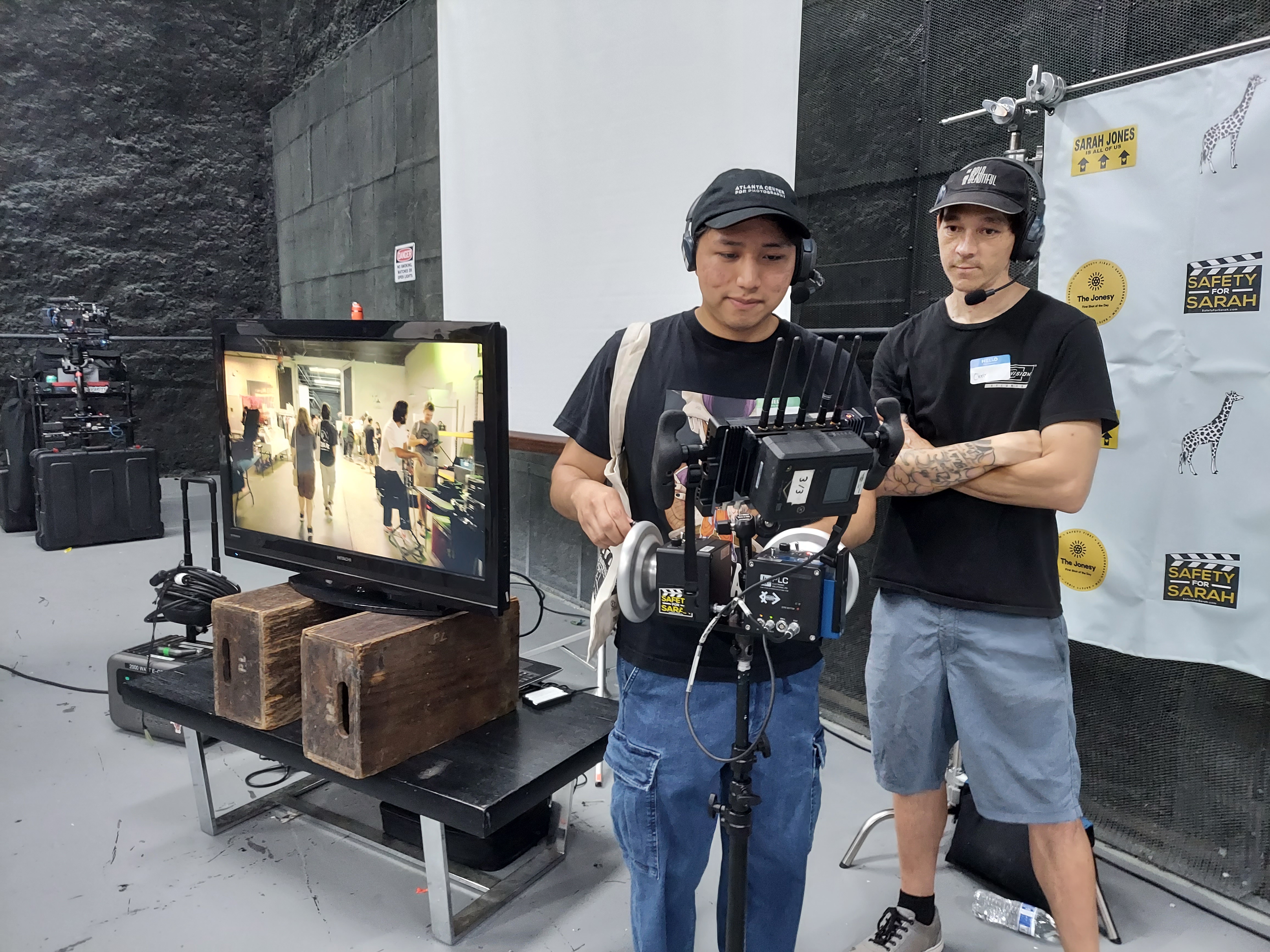
This year we were able to raise money for a cause that’s near and dear to a lot of members of the film industry, the Sarah Jones Film Foundation. The foundation honors the memory of 27 year old camera assistant Sarah Jones, who tragically lost her life in February 2014 due to an accident on the set of Midnight Rider. The foundation provides education and awareness, film safety grants, and even a wonderful film internship program. You can learn more about the foundation here.

Thanks to our donated items, our drawing prizes, our vendors and sponsors, we were able to raise $2500 for the foundation.

We also held demonstrations this year! As is typicaly with the film production life, we had a couple cancellations that had to be filled, and everyone who did a demonstration did an amazing job.

The demonstrations included an excellent “how to film stunts” demo with Good Slate Pictures. They also have a YouTube channel so you should definitely check out their stuff! Their YouTube is called Behind the Stunts.

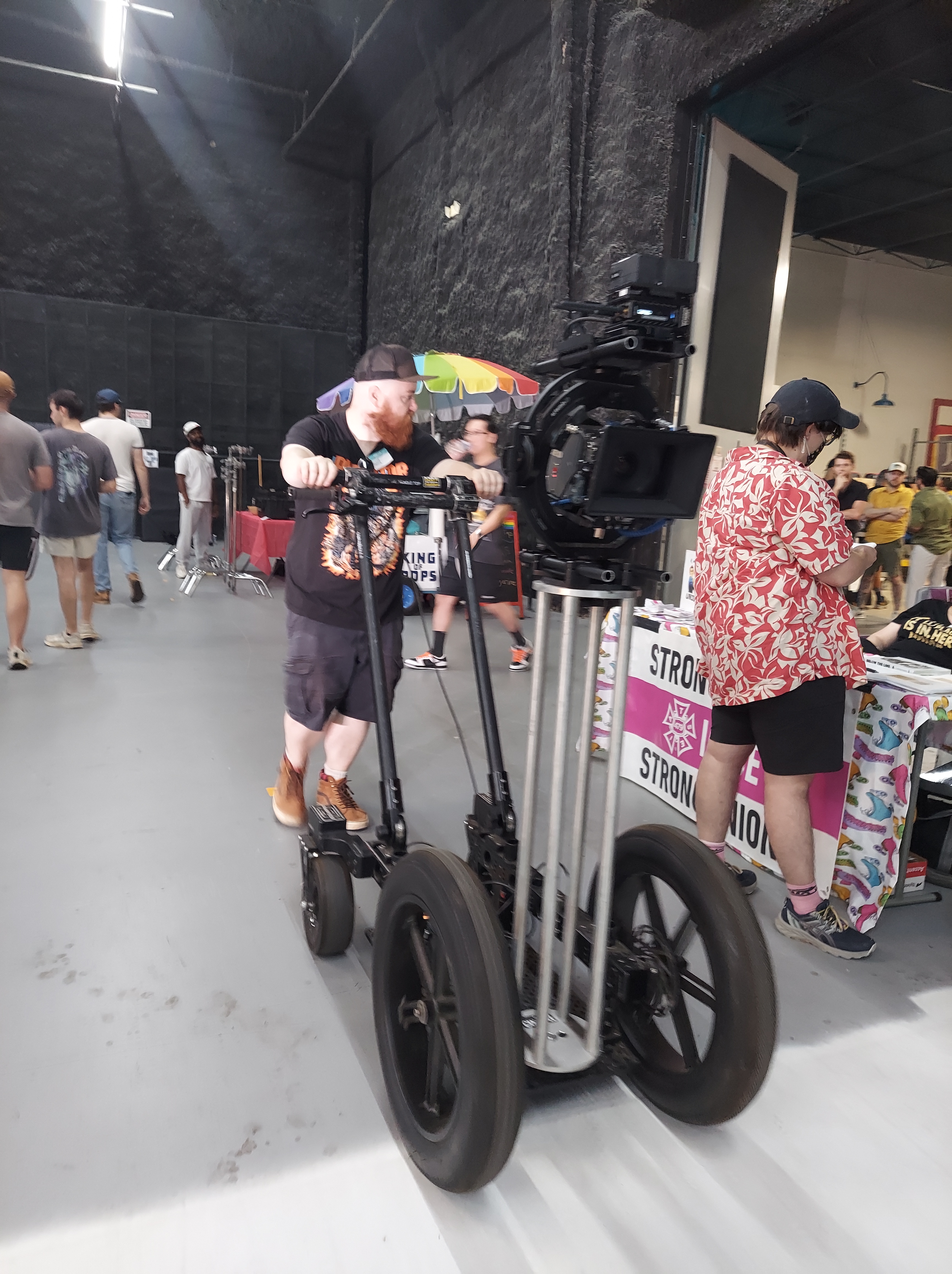
Chris Roe, ARRI Certified TRINITY Operator, Cinematographer and Steadicam Operator, brought his cool rickshaw with remote head! Folks got to try to remote head for themselves as the rickshaw roamed the space.

Kenya Campbell and Deanna Griffin did a DP/Gaffer fireside chat. It was great information to share with our audience as experience levels varied. Plus it is always great to learn new tips, tricks, and practical information to make you better at your job!

I can’t say enough about how this community came together! This, my friends, is what the film industry is all about. Working together towards a common goal. Sharing education and resources. Having a good time with your friends.

We’ll see you at the next one.

Photo Credit: Local 600 Still Photographer Josh Stringer

Lights, Camera Remake! A Podcast about Hollywood Unoriginality

Yet another person with a podcast. Oh my goodness. But let me explain.

One of the age-old complaints about movies and Hollywood in general is that there’s no originality left. We see endless remakes, reboots (slightly different), sequels, spinoffs and adaptations. Can’t they come up with anything new?

As I began to dig into this idea, I found some surprising things. Like the fact that Little Shop of Horrors -the musical comedy horror starring Rick Moranis and Ellen Greene? – was actually a remake of a low budget movie from 1960. Did you know that Martin Scorsese’s The Departed is based on a 2002 Hong Kong film Internal Affairs? 1998’s You’ve Got Mail is a remake of The Shop Around the Corner (1940). Ocean’s Eleven (2001) is a remake of Ocean’s Eleven (1960).

A remake of an old movie can bring a classic story to a new audience… and also sometimes make audiences really angry.

That passionate knee-jerk reaction is worth discussing.

I’d love to see more originality in the movie theater. The problem is — those movies have a harder time finding an audience.

Hollywood studios and executives are running a business, and they want to make money. And working with something that has established IP (like a Marvel movie, or a book adaptation, a remake) somewhat guarantees an audience will attend. At the end of the day, they just want to make money and make their shareholders happy. And they want to keep their jobs.

Anyway, my friend Erica Strout and I got talking, usually at work in between setups or at lunch. We met on a reality show TV show with myself working as the camera operator and Erica as my camera assistant. We became fast friends. And then we watched movies together. And had a lot of discussions about film in general.

Now we’re doing the Lights, Camera, Remake! Podcast.

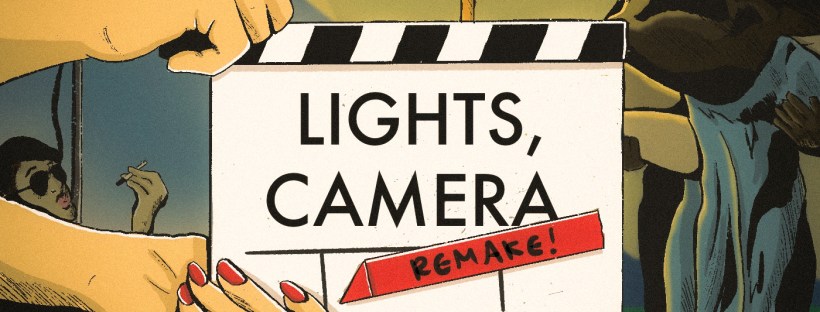
This amazing artwork created by Taylor Rebyanski!

Is it always a bad thing to see a remake of a classic (or possibly unknown) movie? Our podcast looks to break it down and see if there’s merit to Hollywood shirking an original idea for a retelling.

On each episode we’ll look at a movie and its remake, or sometimes a movie and its sequel, to determine if Hollywood rehashed it for a reason or for a cash grab.

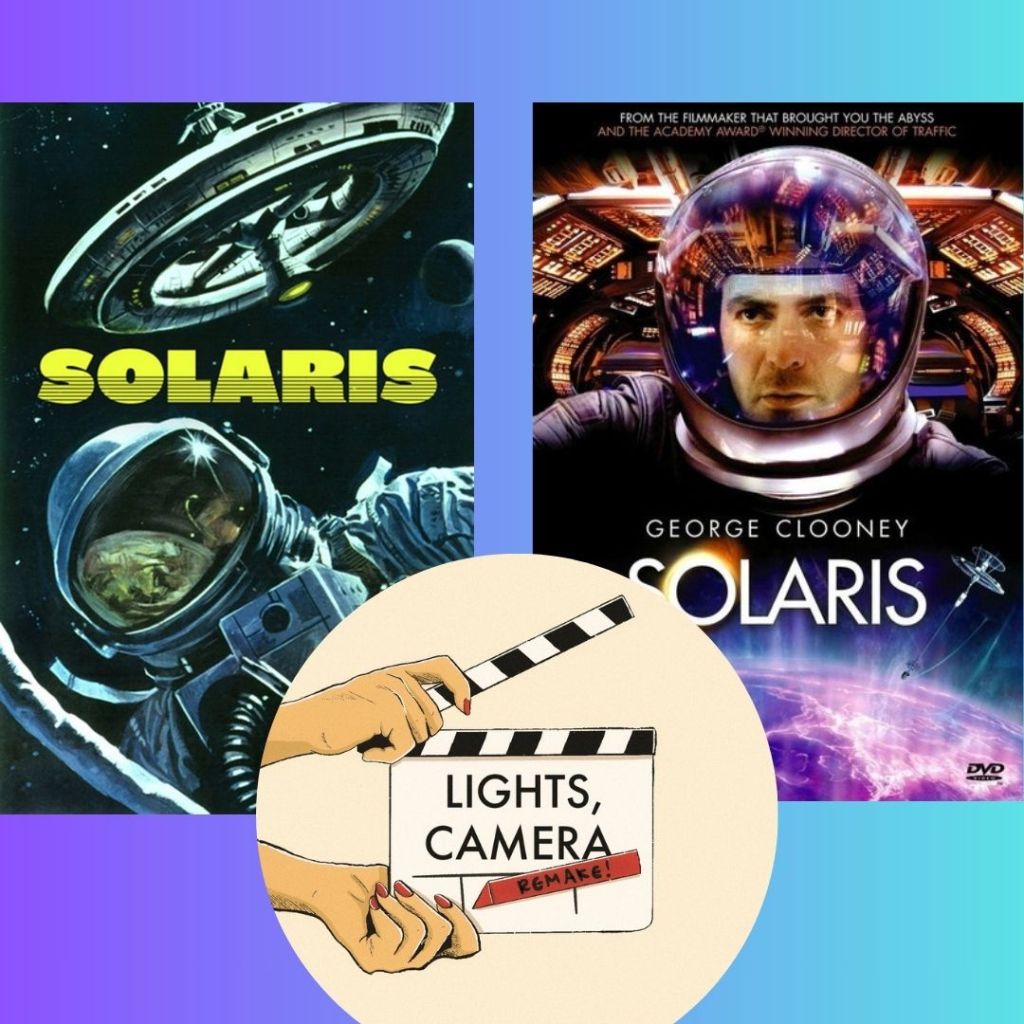
Episode 1 is about Solaris (1972) and Solaris (2002).

Solaris is an atmospheric Russian science fiction film based on a book. It was later remade in 2002 starring George Clooney.

You can listen to the episode on Spotify or right here:

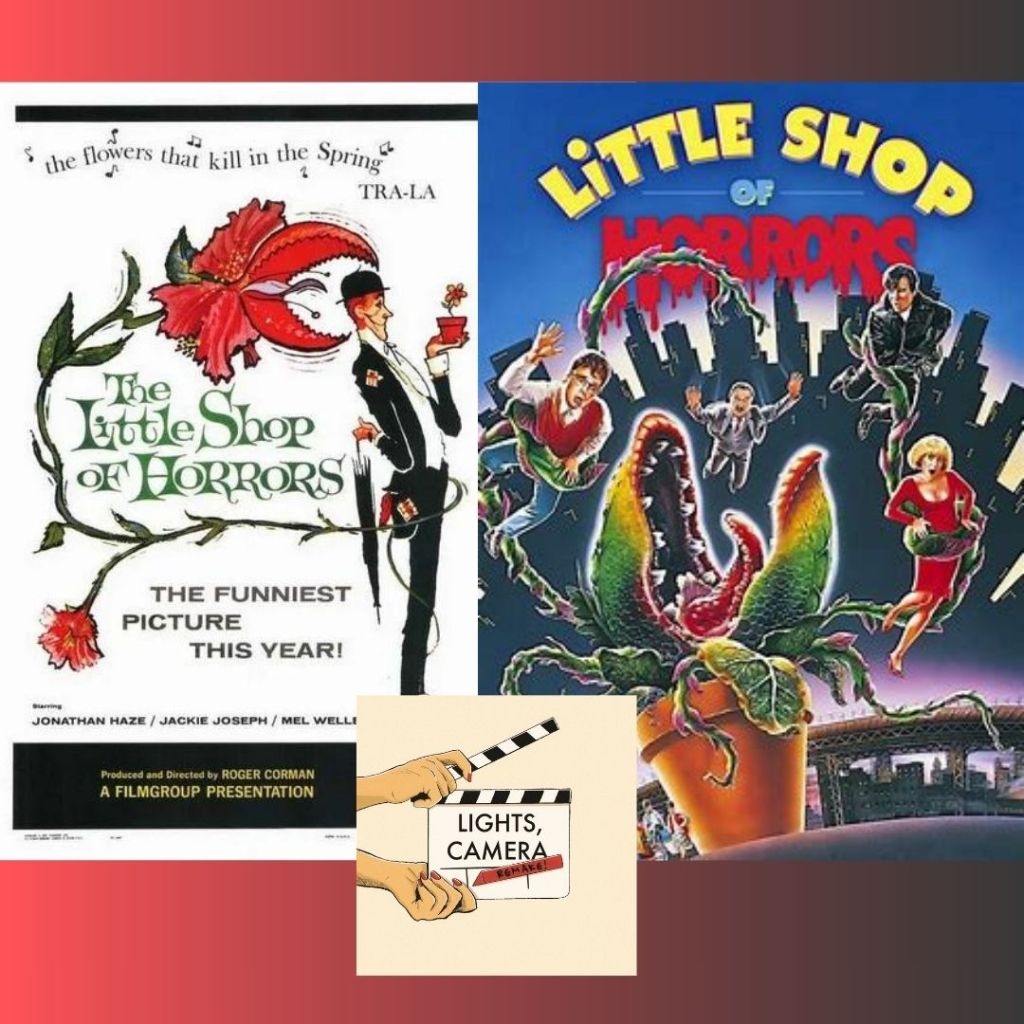
Episode 2 is Little Shop of Horrors (1960) and (1986).

Next up this week is Weekend at Bernie’s! The episode will be uploaded on Wednesday, Jan 22.

Follow us on Spotify, Instagram and Facebook!

https://www.instagram.com/lightscameraremakepodcast/

https://www.facebook.com/profile.php?id=61560111332548

We’ve also got an email you can submit ideas, comments or random concerns too. We understand you have those.

LightsCameraRemakePodcast@gmail.com

http://www.screenrant.com/movies-secretly-remakes-surprising/

theenemyofaverage.com/movies-that-are-remakes/

The Evils of the Rolling Take and Reset

Let’s dig into a pet peeve of many on set: the rolling take.

A rolling take is when you keep shooting and keep repeating the action. Like an actor walking in to a room who flubs a line and goes back to start it over again. That can be a valid reason for a rolling take. No need to re-slate and re-call action. Just try it again.

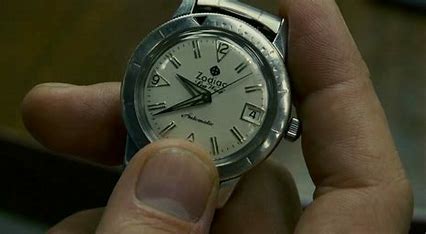
An Insert Shot: A watch being picked up and brought into the frame is a valid reason to do a series of the same action without cutting in between.

A rolling or series take might be done on a particular insert shot to get it right. Let’s say your actor needs to throw a letter to land on a desk just right. The director might ask for a series or rolling take in order to keep attempting that throw to get it the way they want. No fuss, no muss, and no wasting extra setup time to get that insert shot that you’ll see for two seconds on screen.

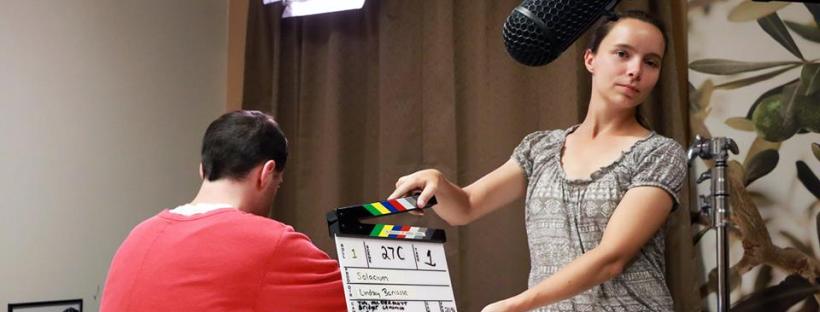
Directors don’t work the slate but I’ll allow this since it’s clipart.

Imagine this scenario: It’s after lunch. The Assistant Director is informing everyone for the third time that you are now an hour and a half behind on the schedule. You have several more scenes to light and shoot and somehow you have to make up a significant amount of time. Hence the anxiety that leads inexperienced directors to try shortcuts. One of those shortcuts is overusing a rolling take.

After experiencing this on a number of films, I’ve observed that green directors love to overuse the rolling take. They’re feeling the pressure and just trying to get footage in the can. The AD, meanwhile, is just trying to make their day. Now suddenly, you’re filming scene coverage as a rolling take, not cutting when you reach the end of the action, but waiting for the actor to reset and just going with it, maybe for multiple “takes.”

A rolling take going on and on is more trouble than it’s worth.

Time = Money

First, what should be obvious — you’re using up footage. This became less of a crisis when most of us went from actual film stock to digital, which is a much cheaper alternative, but digital does not mean free.

Film costs include the film stock, developing, processing, and digitizing so you can edit on a computer.

But just because you can hit “record” on a camera doesn’t mean that doesn’t cost money. Each card needs to be purchased, and you need to have enough available media to get through the day’s shooting without having to write over those cards with additional footage. Ideally, you want your DIT or media manager making backups throughout the day. That means the production also needs to purchase storage and backup storage for that media.

So let’s say you think you know the costs and you’re still cool with doing 40 minute takes instead of a few 5 minute takes. All that footage needs to be downloaded and viewed, meaning you’re paying for the media manager’s time to download that footage and make copies, as well as the editor down the line. A single 40 minute clip is just going to take longer to download and transfer. And you might be paying overtime to the media manager who is staying late dumping all that footage.

Wear and Tear on Cast/Crew

In the moment, if you abuse the rolling take, you’re quickly using up the energy reserves and physical strength of your cast and crew.

You’re also using up your camera operators and 1st ACs and boom ops and everyone doing something physical for that scene that no longer get that tiny bit of rest to reset themselves.

  • The cast has to stay in-the-moment and may get frustrated, flubbing lines more and more.
  • The boom op has to hold that boom pole and actively follow whoever is talking without getting that small break in between.
  • The camera operators might be doing handheld or Steadicam and are using up their muscles faster.
  • 1st ACs, staring at a screen for minute changes in focus, don’t get to rest their eyes.
  • Script supervisors’ notes get complicated as the same scene plays out multiple times in the same take.

When I’m doing Steadicam or handheld, my least favorite thing is a rolling take, especially if it’s long. I just need time to reset. Sometimes there’s an adjustment needed in a handgrip on a shoulder rig or I need to fix the balance on the Steadicam.

Other concerns? Using up batteries! You might be playing beat the clock with what battery you have left in the camera or on the mic packs.

Closing Thoughts

Using a series or a rolling take can be done with purpose. It’s just another tool in your kit. Abusing it can lead you to creating an uncomfortable work environment for your crew. So before you panic and decide to just “roll on everything” look at it critically and see if a rolling take is necessary or if you need to re-evaluate and be more concise with your time.

The Atlanta Film Yard Sale and Building a Film Community

Last Saturday was the Atlanta Film Community Yard Sale, and I’d like to gush about it a bit.

In a group chat, fellow camera department lady Erin Zellers made a slightly joking comment about us all getting together to have a yard sale. I did a similar event with Film Impact Georgia last year which was popular, so I heartily agreed and wanted to take part. Together, Erin, Tina Somphone and I started planning the event we had no idea would grow from a couple of folding tables on someone’s lawn to the event of the year.

The Venue

We started thinking along the lines of a traditional yard sale. Getting a group of film friends to sell their gear in one place. A lot of people seemed interested, and we realized we’d outgrow a front yard really fast. A studio rental was the ideal way to promote film in a place that shoots film while avoiding potential weather delays.

24ATL Studios, an LED Volumetric Wall Studio in Doraville, GA, took us up on our offer. Our challenge was coming up with the money for the rental. That’s where sponsorships came into play.

This image has an empty alt attribute; its file name is 24-studios-space-pic.png

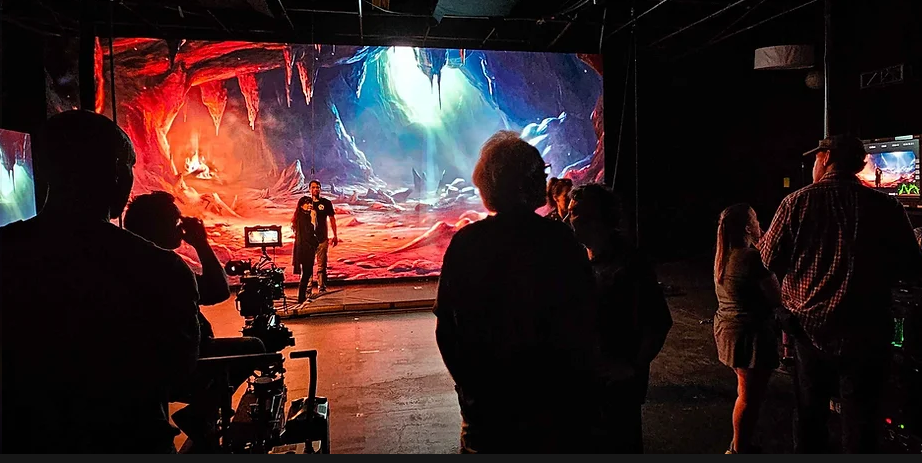
Here’s a still from a short film I worked on at the studio.

Sponsors

Our sponsors ran the gamut from traditional film to grip gear to beverage companies.

  • Cinder Lighting and Grip
  • Kodak Film Lab Atlanta
  • Image Engine/Elemental
  • Guerilla Gear
  • Hammerhead Wheels
  • Atlanta Film Co.
  • Local 600
  • Plaza Theatre
  • J.R. Crickets (food truck)
  • Topo Chico
  • Fontis Water

Our sponsors provided us not just with money to rent the studio and provide for our attendees, but also gifted items as prizes and even held free giveaways. Several of them held demos at their booths if they attended, like Hammerhead Wheels giving people the opportunity to test out the wheels or Kodak with their film loading demonstrations. Image Engine and Elemental owner Marque showed the set of wheels that controlled the rig on his impressive camera car. Cinder gave away tons of free expendables to grateful attendees.

Vendors

In addition to our sponsors, we needed vendors to sell their goods! The goal was to have an event specifically catering to the film industry. Only film, photography or related gear would be allowed.

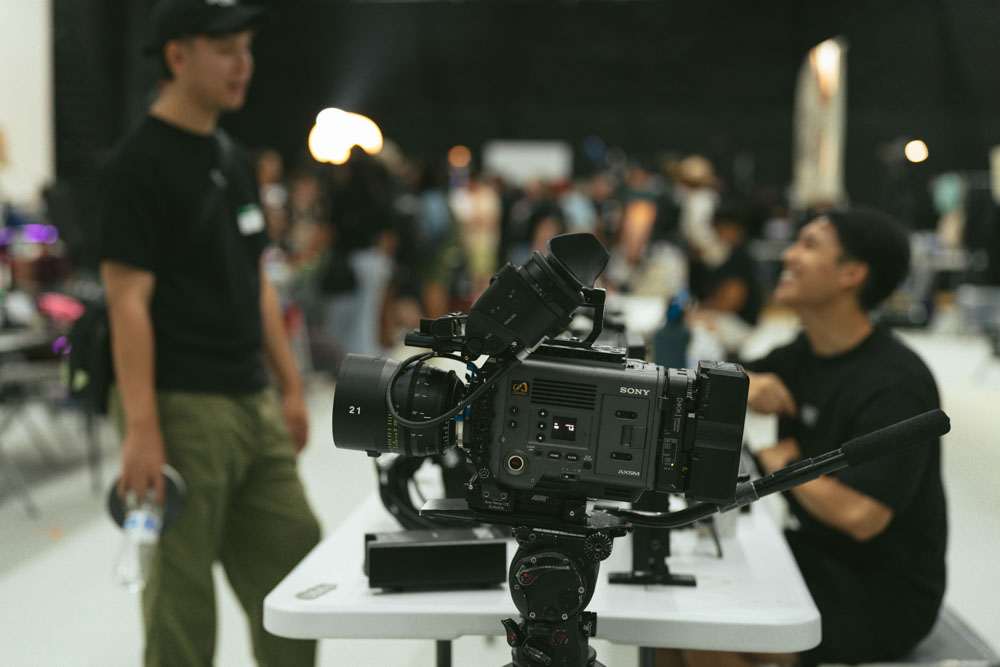
Our vendors were a mix of companies and individuals. We got a good selection of everything from digital cameras, lighting gear, sound equipment, Steadicam accessories, photo equipment and even a wardrobe seller. Next year we’d like to expand that and get some more variety in departments represented.

The Why of it All

The Atlanta Film Community Yard Sale put an emphasis on community.

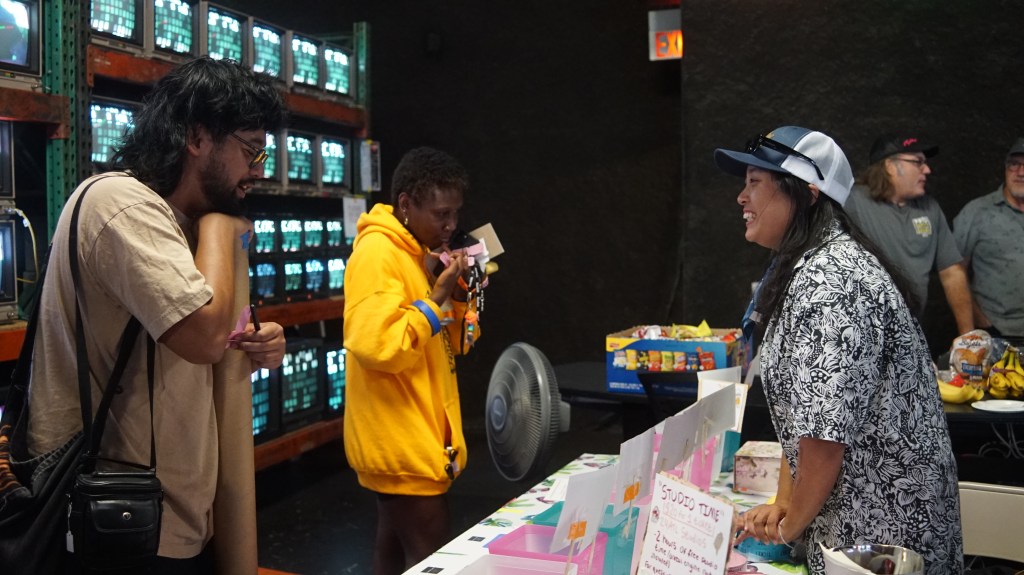
This event provided a safe place for people to buy and sell their gear while putting them in touch with the companies they’d interact with in Atlanta’s Film Industry. It was also an excellent networking opportunity. So many friends and colleagues were present, but so many new faces were added too. Folks went to tables and learned about different lenses or compared favorite video monitors or went over the finer points of certain lighting equipment, getting to know their fellow filmmaking professionals and learning some things in the process.

What I was happy to see what not just the sponsor’s support, but all the film industry folks who came just to attend the event and talked about how much they enjoyed it and wanted another.

We had to contact a lot of people to get the word out about this event and also to garner the support we needed. All those supply runs and sponsorship pitches and flyer distributions illuminated what should have been obvious in the beginning – Film is a community, and we were here to help support it.

Much like an event being organized, the film industry thrives on those connections and friendships built along the way.

So long for now from the 3 Gworls.

From left, Tina Somphone, Erin Zellers, Bridget LaMonica.

Steadicam 101: Why Use a Steadicam?

I had the honor of co-hosting a Steadicam workshop for the Women in Focus Summit alongside fellow operator Kurush Bakhtiari. The event run by Ladibug Studios and ColourCo Rentals had several informational panels on camera, lighting and directing with a focus on getting more women and non-binary folks into production.

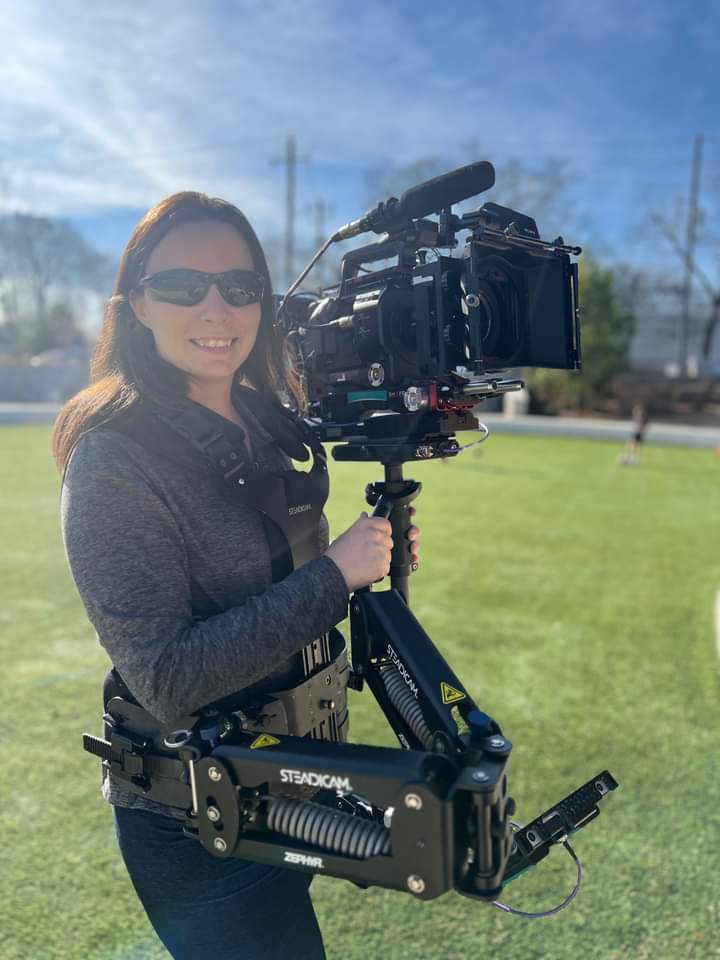
Kurush with his Archer and Klassen vest, me with a Zephyr kit.

I didn’t expect all of our attendees to take up the mantle of Steadicam. Sure, maybe we inspired a person or two who was curious or knew nothing about the skill, but learning about Steadicam is not just for the people who will wear the vest.

Plenty of crew members interact with the Steadicam operator: The AC who builds the camera to go on the rig, the grip who takes the rig off the operator when they need a break, the other grip who acts as a spotter for safety. Widen your parameters also to the 1st AD who is trying to keep a schedule and time transitions between sticks and camera accordingly, and to the director and DP who will be asking the Steadicam operator to bring their vision to life.

Understanding the roles, responsibilities and limitations of other positions on set just makes you better at your own job.

This will be a 3 part series to go over the basics.

What is a Steadicam?

Pictured: The Arm, Sled, Docking Station and Vest of a M2 model Steadicam.

A Steadicam is a tool used to create fluid dynamic shots unlike any other camera movement apparatus. It consists of a vest worn by the operator connected to an articulating arm and a post that holds the camera and electronic components. The arm does the job of evening out the natural bounce of a body walking, smoothing out the shot. If you were to attempt the same with handheld, it couldn’t be as smooth. Even if I breathe with a camera on my shoulder, the movement translates to the image.

Examples

Popular Steadicam examples include the stairs run from Rocky, the hallway shot in The Shining, and the Copacabana scene in Goodfellas. If you haven’t seen those, by all means click the links and watch the clips. Since those are the most commonly used examples, I wanted to show some fresh ones. Kurush and I put together a video of examples of a handful of other movies that have inspired us.

What we can learn from these examples:

Point Break: The camera expertly follows a high energy scene in a police station, whipping between characters and moments to carry the scene forward. This is a more interesting take on the typical police station scene without being static and stoic. This clip gives a real sense of space in the station, from the character’s entrance to how he moves around the bullpen. This shot switches between framing the main two characters from behind, getting a wide shot of the entire place, and returning to frame the main characters from the front. There’s a nice variety of shots without ever needing to break away for coverage.

Snake Eyes: In this example, we see how perspective changes as the Steadicam moves around the scene. At one point, the Steadicam becomes the point of view for one character, the boxer. When we reveal who it is, the Steadicam backs up to include him physically in the scene.

Birdman: The movie is depicted as if it is a single camera following characters around for a continuous shot. Since that is the technique, shots are constructed by the camera moving closer or farther away from speaking characters, moving around the stage to reveal things and traveling between locations around the theater by following one character at a time.

Baby Driver: This is near the beginning of the film, introducing Baby and his connection to music in the film. This is a well choreographed and timed performance between the camera operator and actor. See how things are revealed as Baby walks how each element of the scene adds to the soundtrack (honking cars, a trumpet player on the street, pedestrians). Pay attention to the background on a second watch of the scene.

Last Night in Soho: In this thriller, Eloise is experiencing flashbacks to the 60s to a vivacious woman named Sandie and a connection to a series of murders. Eloise sees herself in Sandie’s perspective, sometimes in the mirror, and sometimes replacing her in the scene. This is another well choreographed number. In the video I included the behind the scenes clip showing the Steadicam operator. Note how Eloise waits for her turn to cut in to the dance, and how moments are revealed as the Steadicam travels around the main characters. You can also see a spotter helping the Steadicam out. There’s a lot of moving parts and nobody wants to have a camera run into them!

In Part 2, we’ll talk about the components of the Steadicam and why balance is so important.

New Year, Same Old Film Job Scams

I use the blog on my website to teach what I know about the film industry. But one topic keeps coming up: Scams. It’s gotten so common that now people just associate my blog as “the scam blog.” My last scam related post was in August, but I’d have enough fodder to update the post weekly.

Here’s an example:

Love that comment.

I highlighted the red flags that should stand out for you:

  • Generally poor grammar: “The dates for a documentary-style TV show for Veles Productions (extra space added) this month are August 21-25.” Also the weirdness of hiring a Production Assistant/Personal assistant, two completely separate jobs.
  • Astronomically high rate for a PA $1500 for 12 hours (and weird added “4 hours per day.”) Day rates for PA’s range around $175-250ish per day (12 hours) depending on the market and type of gig.
  • Must have “terminology knowledge.” What!?
  • Using the word “staff” instead of “crew.”
  • The PA is helping set up “lights, props and tools.” PA is an entry level job and typically shouldn’t be doing any of these things, but as budgets get tight (read: stingy) a lot of places are making PA’s take on extra responsibilities. It’s not great but… I’ve seen it done.

That’s your typical example of a film job scam that’s posted to social media. It could be Facebook, Instagram…heck I’ve even seen scams posted to StaffMeUp and LinkedIn. Nowhere is safe, so always keep your guard up.

I wanted to shift gears for the new year and arm you with two other types of scammy jobs to look out for: Illegal internships and opportunity scams.

Illegal Internships

I’ve worked on a number of movies, tv shows and other projects where we’ve got some newbies working as PA’s who are billed as interns.

Internships have been under fire before in the entertainment industry. A famous case occurred during the production of Darren Aronofsky’s Black Swan. Two interns sued on behalf of 100 Fox Searchlight interns for backpay as they did work as employees, not interns. The class action lawsuit was resolved in the interns’ favor.

But I’ve also run into it on several low budget features and other projects where someone eager to enter the film industry comes in as an intern. Read between the lines — unpaid labor.

Sometimes I make a point to ask the intern “Are you in college right now? Are you getting college credit?” If not, then it gets sketchy. A legal internship benefits the intern alone, through work experience and/or college credit. Typically an employer is helping the intern but not benefitting themselves — well, in theory. But if that intern is doing the work that a full time employee would do? That’s a problem.

If you want to volunteer on someone’s project, that’s up to you. But I wouldn’t ask you to take the title of intern if you’re doing an actual job for someone. I even wrote about deciding whether or not to volunteer on a film set before:

“This is your opportunity!”

The real reason I was inspired to do an update on scams is because I came across this on Eventbrite.

This “event” someone posting that you could work on a faith based film — for the low, low price of $199! That you pay them.

Oh jeez, where do I start with this one?

You should never pay to work on a movie.

I’ve seen this scam before in another form, someone advertising they needed crew for a movie and asking the crew to pay to work on the film. The audacity of this.

Oh also, “star” in a movie? With no acting experience? That’s fishy enough. At best you’d be an extra. Someone sitting on a park bench in the background or filling tables in a restaurant. Not a main character with lines.

Sign up from our website and receive a 25% discount!

Star in a Faith-Based Christmas Movie! No Acting Experience Required. Now available in over 50 major US cities. Bring the whole family!

If it wasn’t clear this was a scam before, I clicked on the website link and saw that the “admission fee” was now $50 (how generous! And also not the definition of 24% off from the original $199) and now the location was listed as another state. Not Atlanta but Venice Beach California, Detroit, Los Angeles, etc. It’s a “pop up filming event” (the heck is that!?) in over 50 major US cities!

Using the word “local.” So many of the Facebook-posted job scams I’ve covered have used terms like “local” or “in your area” so they can scam far and wide. Or there’ll be a weird space before the location or date because it’s clear they copy and paste and change a couple details.

There are plenty of other scammy looking opportunities, classes, events that try to sell the dream of a career in film to new people. If something seems too good to be true or glamorizes the whole prospect of joining a film production, think twice before you submit or pay for anything.

Stay safe in 2024.

Sources:

Fox Settles ‘Black Swan’ Interns Lawsuit After Five Years

More than 40% of interns are still unpaid—here’s the history of why that’s legal

How to Avoid Film Job Scams – Take Four (blog)

5 Reasons for and Against Volunteering on a Film (blog)