The Atlanta Film Yard Sale and Building a Film Community

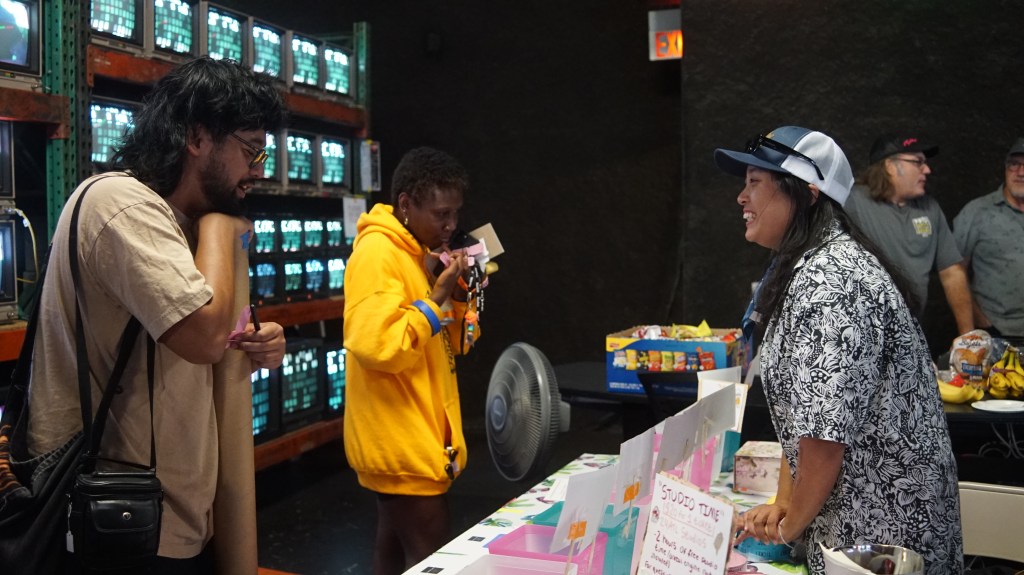
Last Saturday was the Atlanta Film Community Yard Sale, and I’d like to gush about it a bit.

In a group chat, fellow camera department lady Erin Zellers made a slightly joking comment about us all getting together to have a yard sale. I did a similar event with Film Impact Georgia last year which was popular, so I heartily agreed and wanted to take part. Together, Erin, Tina Somphone and I started planning the event we had no idea would grow from a couple of folding tables on someone’s lawn to the event of the year.

The Venue

We started thinking along the lines of a traditional yard sale. Getting a group of film friends to sell their gear in one place. A lot of people seemed interested, and we realized we’d outgrow a front yard really fast. A studio rental was the ideal way to promote film in a place that shoots film while avoiding potential weather delays.

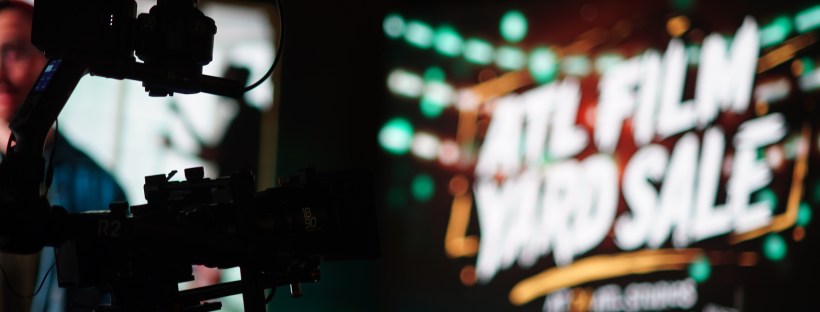
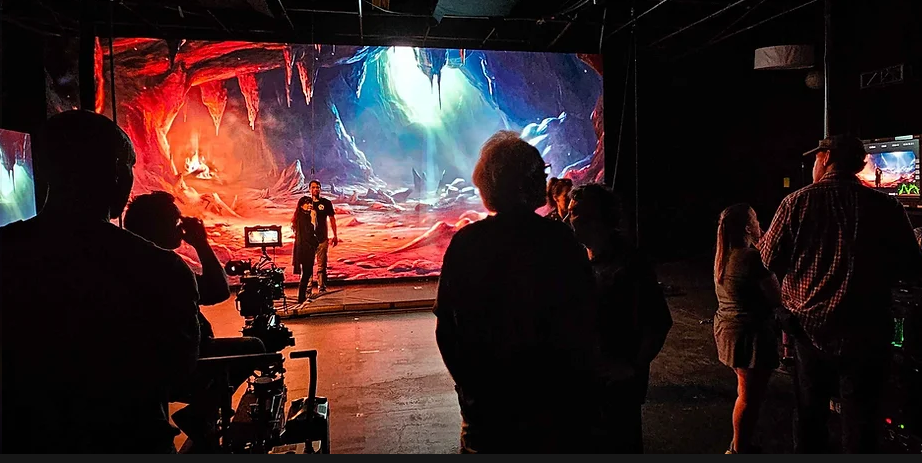
24ATL Studios, an LED Volumetric Wall Studio in Doraville, GA, took us up on our offer. Our challenge was coming up with the money for the rental. That’s where sponsorships came into play.

This image has an empty alt attribute; its file name is 24-studios-space-pic.png

Here’s a still from a short film I worked on at the studio.

Sponsors

Our sponsors ran the gamut from traditional film to grip gear to beverage companies.

  • Cinder Lighting and Grip
  • Kodak Film Lab Atlanta
  • Image Engine/Elemental
  • Guerilla Gear
  • Hammerhead Wheels
  • Atlanta Film Co.
  • Local 600
  • Plaza Theatre
  • J.R. Crickets (food truck)
  • Topo Chico
  • Fontis Water

Our sponsors provided us not just with money to rent the studio and provide for our attendees, but also gifted items as prizes and even held free giveaways. Several of them held demos at their booths if they attended, like Hammerhead Wheels giving people the opportunity to test out the wheels or Kodak with their film loading demonstrations. Image Engine and Elemental owner Marque showed the set of wheels that controlled the rig on his impressive camera car. Cinder gave away tons of free expendables to grateful attendees.

Vendors

In addition to our sponsors, we needed vendors to sell their goods! The goal was to have an event specifically catering to the film industry. Only film, photography or related gear would be allowed.

Our vendors were a mix of companies and individuals. We got a good selection of everything from digital cameras, lighting gear, sound equipment, Steadicam accessories, photo equipment and even a wardrobe seller. Next year we’d like to expand that and get some more variety in departments represented.

The Why of it All

The Atlanta Film Community Yard Sale put an emphasis on community.

This event provided a safe place for people to buy and sell their gear while putting them in touch with the companies they’d interact with in Atlanta’s Film Industry. It was also an excellent networking opportunity. So many friends and colleagues were present, but so many new faces were added too. Folks went to tables and learned about different lenses or compared favorite video monitors or went over the finer points of certain lighting equipment, getting to know their fellow filmmaking professionals and learning some things in the process.

What I was happy to see what not just the sponsor’s support, but all the film industry folks who came just to attend the event and talked about how much they enjoyed it and wanted another.

We had to contact a lot of people to get the word out about this event and also to garner the support we needed. All those supply runs and sponsorship pitches and flyer distributions illuminated what should have been obvious in the beginning – Film is a community, and we were here to help support it.

Much like an event being organized, the film industry thrives on those connections and friendships built along the way.

So long for now from the 3 Gworls.

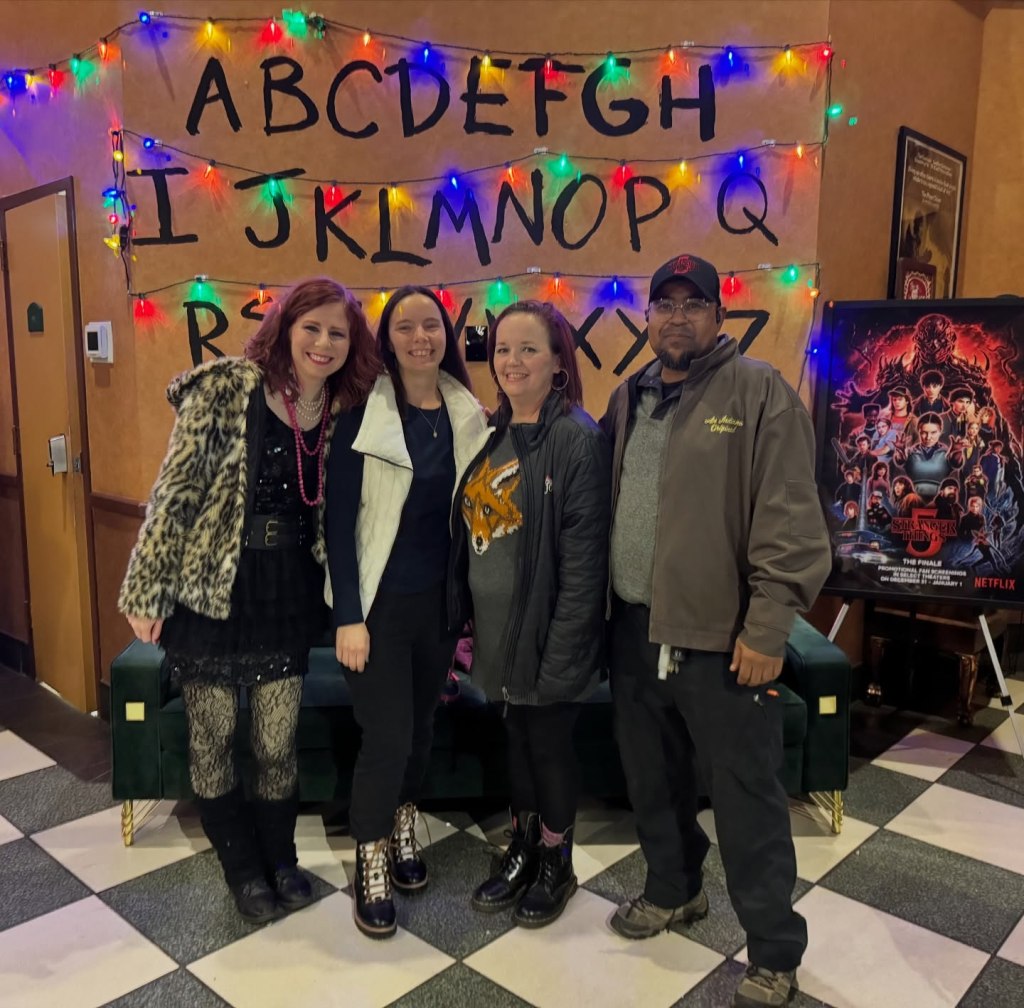
From left, Tina Somphone, Erin Zellers, Bridget LaMonica.

How to Avoid Film Job Scams – Take Seven

This is the seventh installment of “Bridget gets way too wrapped up in calling out scammers.” You know what to expect.

Let’s look at some new examples:

Turning Off Comments

Scammers have gotten wise to us warning each other via the comments section whether something is amiss. If someone posted a job and imediately turned off the comments, I want you to be wary.

What other details can we see here? I marked a lot of stuff in blue in this screenshot.

  • Mixing up Production Assistant/Personal Assistant
  • Saying this production, which they haven’t filmed yet, will air next month. As if!
  • Veles Productions (I covered a similar one in another blog also pretending to be Veles Productions.
  • The Day rate. Oh boy we have to dig into that one.
  • Bad grammar, improper use of English: “driver’s license in effect,” “be conversant with terminology.”
  • Incorrect job duties: Asking a PA to “guard the set” and help with lighting, props and more miscellaneous stuff.
  • Calling the crew “staff.” I’ve never heard that used on a film set. Ever.
  • Claiming these are 3 hour shoot days. Even the jobs that claimed to me they’d be a few hours ended up being like 13 hours.

Veles Productions is a real production company. They’re based in Poland. But they’re not the ones behind this. Scammers steal real production company names, director names and more to pretend to be someone else in order to trick you.

That Day Rate:

$125.21 for 3 hours.

First off, a “day rate” is usually going to be for a larger chunk of time, like 10 or 12 hours, and after that there’s overtime. Occasionally you’ll see a live event job or a corporate gig that’s only a few hours.

But this fake job post is trying to lure you in with the promise of high return with little effort. They claim you’re working 3 hours a day, total of 12 hours in the week, for $1503.

Let’s not forget that this “day rate” of 125.21 for 3 hours equals about $42/hr. Which is astoundingly high for a PA. That is like a camera operator rate on some gigs. Then if you do the math, $42/hr x 12 hrs = $504. Again, like I’ve pointed out in a previous blog post, the math just isn’t mathing.

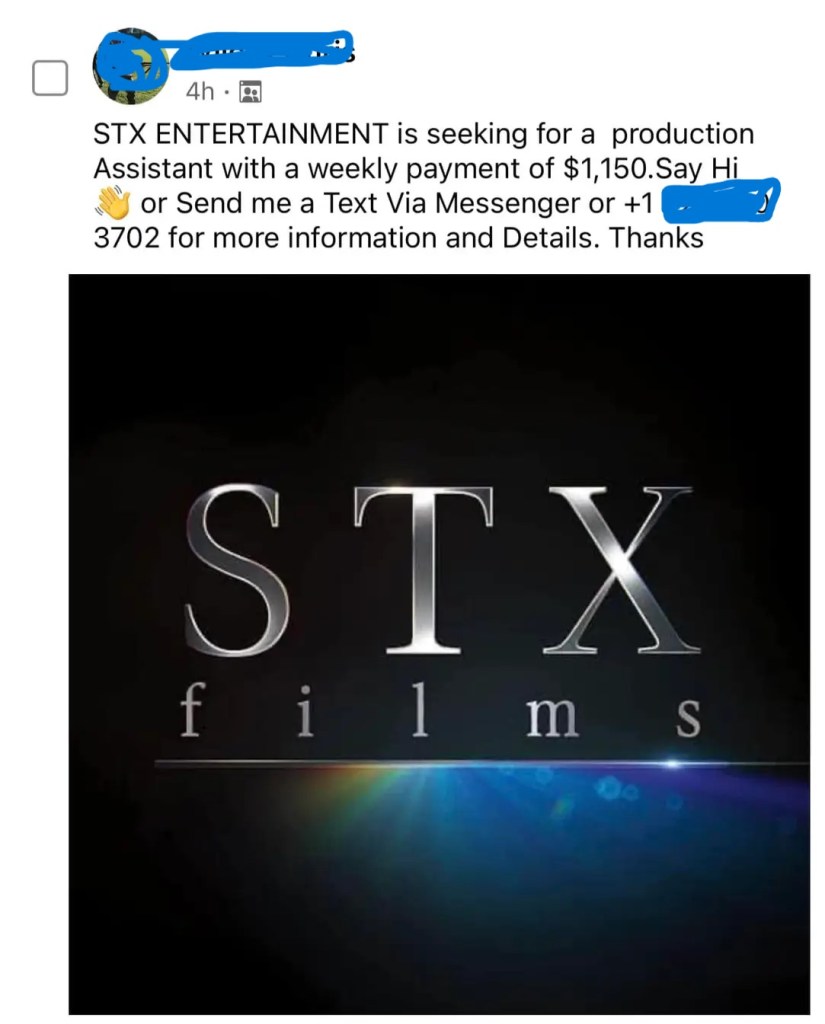
Say hi! Cutesy weekly payment scam

Here’s another one pretending to be a well known company.

This is the type of post that’s way too conversational and cutesy. I’ve seen this “Say hi!” post format a million times. Productions are not going to care if you “say hi.” Sorry not sorry.

Other red flags:

  • “is seeking for a production assistant” bad grammar
  • weekly payment
  • Say Hi + emoji
  • gives a clearly international-leaning number. The +1 is the US country code, but it’s possible this scam is meant to scam anyone in the world. And they could just buy a spoof number.

Scamming Models

This was one that graced the Atlanta Film Production Group for 4 hours before I was able to delete and ban the poster. First, I commented on the post, asking for clarification. Why were they asking for models to act? Wouldn’t you want actors? The poster claimed they wanted models and actors. it still didn’t make sense. Finally a community member came into the comments and said it was a scam. It had been posted in another city with the same dates and details. I did a quick search on Facebook to confirm, and deleted it.

Also look at the comments. The poster’s English is awkward. Saying for the other guy to “go to bed” and “Don’t rubbish another persons project and dream”. That last part feels like British English but even that seems wrong.

Would you like to PAY to WORK on a movie!?

This one is astounding. I covered a similar one in January with another Christian film who wants extras to pay to appear in the movie.


You want me to pay to work on your movie? I’m sorry hun, that’s not how this works!

  • Look at that AI generated image! They don’t have anything real to show.
  • claiming this is a hands on learning experience, hoping to take advantage of newbies.
  • Angling the post at teenagers. Wow that’s like extra illegal?

This screenshot was re-posted to Crew Stories (a pretty fun Facebook group if you haven’t seen it) and the comments have torn it apart. Apparently this Aaron guy has been trying to fund and make this film for like 10 years. Other commenters had personal experiences with the individual and presented their misgivings.

So, what did we learn?

The same old, same old. Look for weird numbers and unreal rates and job positions. Look for incorrect film terminology or a misunderstanding of job titles. Google search names or posts to see if it has been posted or called out elsewhere.

Stay safe out there folks.

Steadicam 101: Why Use a Steadicam?

I had the honor of co-hosting a Steadicam workshop for the Women in Focus Summit alongside fellow operator Kurush Bakhtiari. The event run by Ladibug Studios and ColourCo Rentals had several informational panels on camera, lighting and directing with a focus on getting more women and non-binary folks into production.

Kurush with his Archer and Klassen vest, me with a Zephyr kit.

I didn’t expect all of our attendees to take up the mantle of Steadicam. Sure, maybe we inspired a person or two who was curious or knew nothing about the skill, but learning about Steadicam is not just for the people who will wear the vest.

Plenty of crew members interact with the Steadicam operator: The AC who builds the camera to go on the rig, the grip who takes the rig off the operator when they need a break, the other grip who acts as a spotter for safety. Widen your parameters also to the 1st AD who is trying to keep a schedule and time transitions between sticks and camera accordingly, and to the director and DP who will be asking the Steadicam operator to bring their vision to life.

Understanding the roles, responsibilities and limitations of other positions on set just makes you better at your own job.

This will be a 3 part series to go over the basics.

What is a Steadicam?

Pictured: The Arm, Sled, Docking Station and Vest of a M2 model Steadicam.

A Steadicam is a tool used to create fluid dynamic shots unlike any other camera movement apparatus. It consists of a vest worn by the operator connected to an articulating arm and a post that holds the camera and electronic components. The arm does the job of evening out the natural bounce of a body walking, smoothing out the shot. If you were to attempt the same with handheld, it couldn’t be as smooth. Even if I breathe with a camera on my shoulder, the movement translates to the image.

Examples

Popular Steadicam examples include the stairs run from Rocky, the hallway shot in The Shining, and the Copacabana scene in Goodfellas. If you haven’t seen those, by all means click the links and watch the clips. Since those are the most commonly used examples, I wanted to show some fresh ones. Kurush and I put together a video of examples of a handful of other movies that have inspired us.

What we can learn from these examples:

Point Break: The camera expertly follows a high energy scene in a police station, whipping between characters and moments to carry the scene forward. This is a more interesting take on the typical police station scene without being static and stoic. This clip gives a real sense of space in the station, from the character’s entrance to how he moves around the bullpen. This shot switches between framing the main two characters from behind, getting a wide shot of the entire place, and returning to frame the main characters from the front. There’s a nice variety of shots without ever needing to break away for coverage.

Snake Eyes: In this example, we see how perspective changes as the Steadicam moves around the scene. At one point, the Steadicam becomes the point of view for one character, the boxer. When we reveal who it is, the Steadicam backs up to include him physically in the scene.

Birdman: The movie is depicted as if it is a single camera following characters around for a continuous shot. Since that is the technique, shots are constructed by the camera moving closer or farther away from speaking characters, moving around the stage to reveal things and traveling between locations around the theater by following one character at a time.

Baby Driver: This is near the beginning of the film, introducing Baby and his connection to music in the film. This is a well choreographed and timed performance between the camera operator and actor. See how things are revealed as Baby walks how each element of the scene adds to the soundtrack (honking cars, a trumpet player on the street, pedestrians). Pay attention to the background on a second watch of the scene.

Last Night in Soho: In this thriller, Eloise is experiencing flashbacks to the 60s to a vivacious woman named Sandie and a connection to a series of murders. Eloise sees herself in Sandie’s perspective, sometimes in the mirror, and sometimes replacing her in the scene. This is another well choreographed number. In the video I included the behind the scenes clip showing the Steadicam operator. Note how Eloise waits for her turn to cut in to the dance, and how moments are revealed as the Steadicam travels around the main characters. You can also see a spotter helping the Steadicam out. There’s a lot of moving parts and nobody wants to have a camera run into them!

In Part 2, we’ll talk about the components of the Steadicam and why balance is so important.

Screenwriting Basics #4: Dialogue

One way to get me interested in your script: Have really compelling, interesting, and/or funny dialogue.

Writing dialogue is hard. Heck, writing at all is hard. It takes years of study — reading everything you can get your hands on, practicing at your craft, sucking at the first few scripts you try, doing better with each draft and receiving constructive criticism that leads you down the right path.

First, let’s understand what counts as bad dialogue.


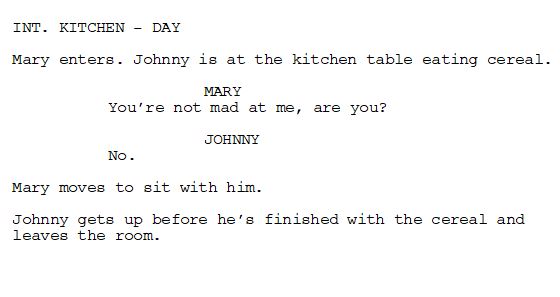
*snore*

Is anyone else bored yet? I know I am. Dialogue like this, although similar to how we talk in real life, does nothing to advance a plot and frankly bores the reader into a stupor. Authentic dialogue does not mean word-for-word small talk. Authentic dialogue is more simulated reality.

Another example:

If some kid scares off some robbers with his, um, karate skills? Wouldn’t you want to see that happen?

Here’s where we remember the cardinal writing rule of Show, Don’t Tell. It’s much more interesting to see action scripted out, happening before us, than to have some character explaining it. Johnny’s dialogue here becomes an info dump — blurting out a series of events in an unnecessarily long rant. It is so dull to hear a character explain things that should have just unfolded on screen.

Another fun, yet difficult one to learn. On-the-nose dialogue.

On-the-nose dialogue is when characters say what they actually feel in the moment or describe things that are obvious. It’s the opposite of subtlety. This is where subtext comes in, and that’s a tricky subject.

Subtext is the implicit meaning of a text—the underlying message that is not explicitly stated or shown. Subtext gives the reader information about characters, plot, and the story’s context as a whole.

https://www.masterclass.com/articles/what-is-subtext-learn-the-definition-and-role-of-subtext-in-writing-plus-5-tips-to-better-incorporate-subtext-in-your-work

A character’s feelings, or even the situation at hand, can be described using visuals, settings, character body language and more to be conveyed. Sometimes, a character will say the opposite of what they mean, but we as the audience can see the truth behind it. Humans lie a lot. Your characters could too.

Yeah. Johnny isn’t happy.

Your characters can say a lot without really saying much. Trust the actors to do the acting. Body language coupled with dialogue can change an entire meaning of a line.

Great dialogue is, of course, subjective. Beauty is in the ear of the beholder. But there are a number of films out there that many folks agree has good dialogue. Check out this scene from The Shawshank Redemption. Spoilers if you haven’t seen this famous film from 1994.

“It always makes me laugh. Andy Dufresne… who crawled through a river of sh*t and came out clean.”

– Red

This scene comes at the end of the movie. Andy Dufresne has already escaped, and Morgan Freeman’s character Red laments his loss. It’s expositional. It’s telling, not showing. It shouldn’t work but it does. It wraps things up beautifully, told in the unique voice of Red.

“I’m Mad As Hell and I’m Not Gonna Take This Anymore!”

– Howard Beale

This scene from Network is a great one to study. A news anchor losing his cool on national television! But the story behind the scene is not that he’s mad about current events… it’s truly about his anger over the fact that he’s losing his job. Subtext!

“That ain’t no Etch a Sketch. This is one doodle that can’t be undid.”

– Convenience Store Clerk

I really like Juno. The characters all have very strong, individual voices. Even the bit parts, like the clerk at the convenience store, are interesting characters for an actor to play.

You want to be the type of writer who could attract someone to any part in your film, and screenwriter Diablo Cody became quite the Hollywood darling after this film premiered.

Sources:

How to Avoid Writing On The Nose Dialogue – Screencraft.org

15 Movies Screenwriters Should Watch to Study Dialogue – Screencraft.org

What is Subtext – Masterclass.com

Screenwriting Basics #3: Character

Unless you’re writing the type of artistic film where you only show time lapses of moss growing or something, you’re likely going to need characters to populate your script. They may be a hodgepodge group of high schoolers or even anthropomorphic cars.

The most important of which is your main character. And they should do more than just go through the motions.

Your main character needs to be interesting. Infuse them with details, quirks, dialogue that makes the reader, and eventually audience, enjoy going on this ride with them.

How do you do this? Start thinking details. Are they funny? Smart in a really unique way? Do they see the world in a way others do not? Do they have a personal struggle and you can’t help but root for them?

Do they have a general disdain for humanity but also the propensity for curing everyone’s ills?

Lookin’ at you, Doctor House.

You want to avoid stereotypes in your main character. Instead of having a genius doctor, you have a genius doctor who lacks a bedside manner, has a physical disability which leads him to a dependency on narcotics.

So let’s talk round vs flat characters.

“A round character is deep and layered character in a story. Round characters are interesting to audiences because they feel like real people; audiences often feel invested in these characters’ goals, successes, failures, strengths, and weaknesses.”


https://www.masterclass.com/articles/round-vs-flat-characters-in-fiction

Round characters are more interesting and make your reader and audience more invested in the story.

“A flat character is a two-dimensional character lacking depth or a real personality. Usually, flat characters have just one or two perfunctory traits. Often considered “stock characters,” flat characters can often be summarized in one word (like “bully” or “love interest”) and never digress from or transcend their role.”

https://www.masterclass.com/articles/round-vs-flat-characters-in-fiction

A flat character lacks the great detail that makes a compelling character. They fall into stereotypes — the distracted professor, the overworked single mom, the ditsy cheerleader… we’ve seen these time and again. It’s fine if they populate the rest of your world a bit, but for the characters we follow? We want more.

How to write a round character:

  • Character Traits. What are their character traits, both good and bad? What is the flaw your main character possesses that might cause them grief later in the story?
  • Details. What are their likes/dislikes? What is their appearance? What sports do they play? Where do they work? You might not use all of these, but it will help you make more informed decisions on how your character will act.
  • Believability. Your main character has believable reactions to events based on their character traits. A generally mellow person won’t just blow up at a minor inconvenience. It wouldn’t fit their character. Don’t lose your reader, and later your audience, by making your character behave strangely.
  • Conflict. Give them an internal and external conflict. The main conflict may be the fate of the world ending, but the internal conflict may be a father regaining the love of his estranged daughter.
  • Dialogue. Your character has a voice, and it should be a distinct voice. If you cover up the names of all the characters in your script and read the dialogue, you should be able to tell who is speaking. Don’t let everyone sound the same.

Building a really interesting main character is one part of writing that great first script.

Sources:

https://blog.reedsy.com/round-character/

https://www.indiewire.com/2013/11/screenwriting-101-5-tips-for-writing-better-characters-into-your-screenplay-33156/

https://www.masterclass.com/articles/round-vs-flat-characters-in-fiction

Fear Street and How to Elevate your Horror Film

This post is going to be VERY spoilery for Fear Street 1994, Fear Street 1978 and Fear Street 1666 on Netflix. I recommend you watch them first. There’s some great surprises in this story you’re going to want to experience firsthand.

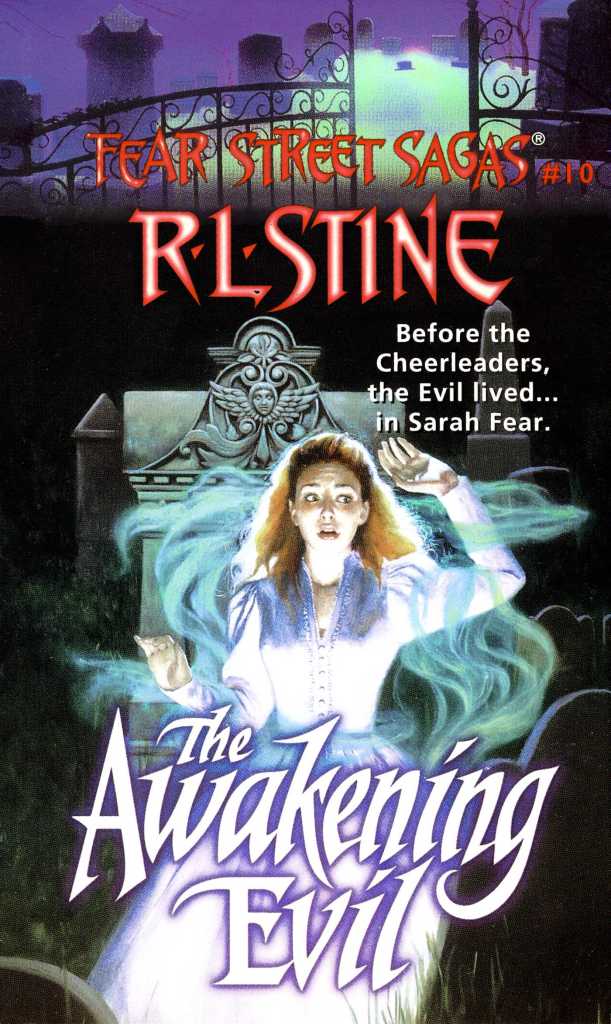
I read some of these Fear Street books as a kid. Each one began with a yearbook. Each one crossed out these pictures as the teenagers were killed off. The story that stuck out the most though was woven throughout the Fear Street and Fear Street Cheerleaders books: Sarah Fear and The Evil.

Sarah Fear was like “I woke up like this.”

The movies are loosely based on these. In this case that’s a good thing — the movies elaborate and elevate the campy horror I loved as a kid to something I really enjoy as an adult. Not only is it good horror, it’s smart.

There are many themes touched upon in the Fear Street movie series. I noted:

  • Racism/Classism (Shadyside vs Sunnydale. Even the names show a clear distinction in their fortunes, but Sunnydale’s good luck is at the expense of Shadyside’s sacrifice)
  • The Societal Harm of Misogyny (Literal witch hunts. Women who spurned the advances of men are accused of witchcraft – sentenced to death for the mere act of denying a man.)
  • Homophobia (The plot begins in 1666 with Sarah and Hannah accused of witchcraft since they love each other.)
  • Legacy and The Choice to Bear it or Break it (The Goode Family continuing their “traditions” to ensure their good fortune at the expense of others).
  • Reversal of Expectations (Goode = Evil. Fier/Fear = Innocence. Sunnydale is full of dark secrets, while Shadyside is innocent.)

I find that good horror, the stuff I want to watch again and again, isn’t just full of cheap scares. Good horror is about something.

My favorite horror movies are in the realm of It Follows, A Quiet Place.

Fear Street decided to be more than just a trio of slasher flicks. It’s clear depiction of classism separates and destroys people. Because one man, Solomon Goode, decided he wanted power over others, he doomed an entire town for generations. “The sun will shine on us yet,” he says, prophesying not that his crops will grow, but that he will be among the chosen few, at the expense of whoever is sacrificed.

Shadyside is plagued with gruesome murder and people being trapped in the town due to financial reasons. “Nobody ever leaves Shadyside” is a poignant line spoken from despondency. Sunnydale is the cookie-cutter perfect town. As long as each generation of Goode sacrifices someone to the evil forces that Solomon summoned, they will remain prosperous and carefree. Who cares if some teenagers die? Or a church full of children? Power over all becomes the ultimate evil here. The pulsating blob of malevolence in the caves is just a personification of that.

Forcing the Shadysiders to kill each other? That’s the whole dog eat dog mentality that plagues the working world. Step on someone to get ahead, that’s what the corporate bigwigs do right?

Nothing like someone over analyzing horror movies to ruin the mood, amiright guys?

But our Shadysiders make the ultimate decision to fight this. Our main characters band together to take down the evil. They fight against expectations and they honor the memory and wishes of Sarah Fier. The truth sets them free, and follows Goode to the end of his days.

When Deena and Sam emerge from the evil caves at the end of the third movie, they emerge in Sheriff Goode’s house. It’s beautiful, perfect, and full of mounted and taxidermied goats. Goats, of course, being a symbol of the Devil. The girls go out to the street, bloody and bedraggled. A neighbor spies them as he’s backing his car up, which causes him to be flattened by a passing truck. Sunnydale’s good luck is over and that is due to the actions of the Shadysiders.

If you are writing horror, you’d do well to take a page from Fear Street‘s book-to-movie adaptation. Making your movie about something other than just an axe wielding serial killer will capture your audience’s imagination, bring to light societal problems in the real world… and possibly lead to a few sequels. Anyone can write about some murderer picking off teenagers, but to make that story more than scares elevates your writing to the next level.

It’s been many years since I read the books, but I believe The Evil was originally Sarah Fear’s revenge personified. I distinctly remember her dying on her passage to America, cursing her sister or somebody for making her go on this journey. The movies decided to go deeper, and the revelation of the real evil was a great twist that made for excellent commentary on classism, misogyny and more.

I’d totally watch more of these, Netflix. Please continue giving Leigh Janiak the chance to direct them.

To Film School or Not to Film School?

^ Is that even the right question?

Often I hear from people new to the film industry who want to know if they should attend film school to get a leg up. I can’t give them a straight answer.

Years ago, I too was wondering the same thing. Growing up in rural Pennsylvania, with nary a film production to be seen, I didn’t know how I was supposed to “get in” especially when I couldn’t afford a plane ticket to LA, let alone the cost of living there while trying to break into a notoriously difficult industry.

I eventually found myself completing a Masters of Fine Art in Film and Television at the Savannah College of Art & Design. My time there was awash in good memories — I met some amazing friends I’ll carry with me the rest of my days, as well as picking up select skills — such as the Steadicam — that I may not have had the opportunity to try out otherwise. But still, I sometimes look back on my time at SCAD and wonder “Was it worth it? Should I have skipped the school?”

If you’re wondering why I still have those doubts, even after having graduated four years ago, it’s because when I look at my student loans, I begin to feel faint and need to find something else to do. It’s also because of how I calculated what I was paying per class period, and certain classes that didn’t live up to expectations.

Some of the best film makers and cinematographers I know personally today were self taught or were brought up in the ranks of hierarchy on film sets over time. I also know some who went through film school and have nothing more than an ego to show for it.

The answer to “How do I break into the industry?” is never going to be a simple formula and no two paths are the same.

So, how do you break in?

The most common paths are variations on these — please note that these are aimed towards the Camera Department since that is mostly what I’m familiar with:

1.) Film School: After or during school, start getting on “real” sets, most likely as a production assistant (read: entry level) or, rarely, jump right into camera assisting/producer assisting/etc.

2.) Work at a Camera or Equipment Rental House, gaining knowledge and experience working with the equipment. Get hired on sets. Work your way up.

3.) Get on sets as an office or set production assistant. Slowly migrate into the department you are interested in. Impress people and try to move up the ladder.

4.) Self-taught. Start by making really bad films. Learn from your mistakes. Keep going. Self finance your passion.

5.) Be related to Spielberg/Nolan/some big whig in the industry already.

All this circles back to whether or not film school is the answer for you. I don’t feel my job is to convince you one way or the other. Rather, I feel a list of pros and cons is more helpful, to allow you to make an educated choice.

PROS

Direct access to professional equipment without rental costs and insurance.

Professional networking at the student level. Film school is where many of the greats of filmmaking met for the first time. Maybe that will be your story too.

Directors/Cinematographers/Producers who are easily accessible because they’re grading your homework as professors at the school.

Amenities: professional equipment, film festivals sponsored by the school, meet and greets with industry professionals who might talk to your class.

CONS

Expensive. Tuition, books, and financing your own films costs serious money.

Certain Classes. I’m still mad about Professional Development, a class in which we basically paid full price to just work on our own stuff.

Limited scope. Students who are into non-traditional forms of telling a story, such as with experimental film, may feel limited by the standard Hollywood method taught at school.

Lack of resources. Along with the pro of having equipment and space to borrow for free are the limits of actually getting those things when they are in high demand.

In many ways, attending SCAD was the best thing I’ve done to get myself into the right trajectory for what I’m doing now. I’d never have picked up the Steadicam and I’d never have made the connections I did. But I also know that it would have been possible (but not guaranteed) to get where I am now without the tuition cost.

Deciding whether or not to attend film school is a big decision. Until you’ve made that decision, you can check out this book:

bookAmazon link

Media Parodies Media: The Bojack Horseman Story

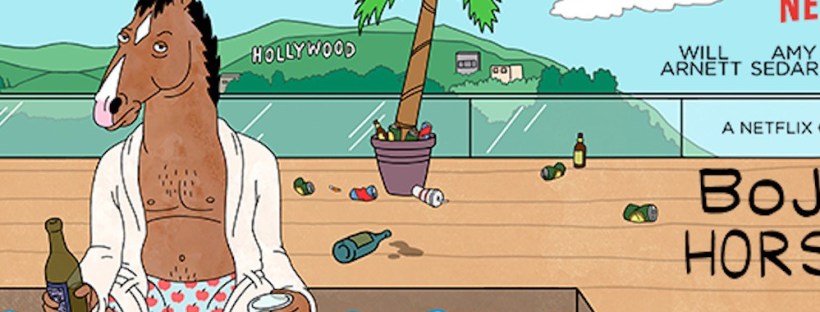
Bojack Horseman is a Netflix Original that premiered in 2014. It’s a dark humor animation with anthropomorphic animal people navigating the shallow world of Hollywood. Somehow, I didn’t get around to this show for four years. Then I binged four seasons in an embarrassingly short time.

I was surprised by how emotionally invested I became with Bojack‘s cast of characters. Real human drama and timeless themes exist within the animated packaging featuring a talking horse.

At first, Bojack Horseman is a very nihilistic look at a ex-sitcom star’s messed up life. Booze, drugs, one night stands, many questionable decisions… it’s a fun ride to watch Bojack spiral out of control. But from the beginning the writers subtly tug at your heartstrings by fleshing out his character as well as those of the ones around him.

Bojack acts out and gets himself into trouble because, plain and simple, he’s not happy. There are the glimpses into his truly awful childhood and parents who never really wanted him, all of which ended up with Bojack becoming a washed up ex-sitcom star.

Portrayal of Media and Hollywoo(-d)

What the show does especially well is parodying the media and entertainment industries. From “A Ryan Seacrest Type”– a vapid Hollywood reporter who comments on whatever inane news has surfaced, to media-fueled squabbles over apple muffins and the insane things stars do for attention.

Amid the laughs are some really poignant digs at Hollywood in general (re-named Hollywoo after Bojack stole the D in a booze-addled stupor).

In the episode where Mr. Peanutbutter and Todd come up with the Oscar nominees, reading the whiteboard behind them was insightful and relevant. Last year’s #OscarsSoWhite scandal was put in sharp relief as they had written down “black people” and then crossed it out.

If you notice, the board also includes only female names in “Best Director” — a stark contrast to the reality. In 2018, Greta Gerwig became only the fifth female director to even be nominated for the Best Director Oscar for Lady Bird. So far the only female director to win has been Kathryn Bigelow in 2009 for The Hurt Locker.

oscar_noms.png

Bojack also parodies what happens to some child stars. With Sarah Lynn, you see the stark contrast between the innocent girl on the 90’s sitcom to the coked out mess she becomes later in life.

The Human Element

Part of the reason we care so much about these characters is because of their very real struggles:

Princess Carolyn — Cutthroat in the world of being an agent/manager, but almost always at the brink of failure. She also feels unfulfilled and wishes for a family, but is possibly past the point of no return.

Todd — discovering his sexuality. I think so far this is the only time I’ve seen a character in a show discover they are “Ace.”

Diane — Just…everything about Diane. Her issues with her family and her career struggles make her a relateable, anxiety-ridden character.

Season Five

Bojack Season 5 premiered recently. There were a couple of episodes that really stood out, like the one that centered around Diane’s exploration of her ancestral routes (for a Buzzfeed-like story she was writing) and an episode that centers around Bojack giving a speech at a funeral that doesn’t cut away and is simultaneously hilarious, dark and uncomfortable.

Season 5 wasn’t my favorite, but it still represents part of a quality piece of entertainment. If you haven’t tried this series yet, it’s about time.

It’s about time for something like A Wrinkle in Time

I finally saw A Wrinkle in Time, via Red Box. It was a trippy, colorful, spacey adventure great for kids.

The movie made waves early in promotional days when it was revealed the typically white heroine would be portrayed by Storm Reid, a young lady who is neither typical nor white. And what a fantastic choice this casting was.

awit_onlinecharacter_meg_v3_lg

Unfortunately, A Wrinkle in Time (2018) was not the blockbuster it really wanted to be. With a slow beginning that bogs down the pace and the hard-to-follow rules of the fantasy world, it didn’t meet high expectations.

It reminds me of the hype when Lucy (2014) came out. Forget what movie that is? So did most everybody else. But it was originally hyped to show off an actiony female heroine. It just couldn’t help the fact that it was unnervingly stupid.

But you can’t place all your expectations on one movie. You just rejoice in the fact that it exists and it signals a shift in cultural representation. 

A Wrinkle in Time could have been a bomb with white leads. It could have been a re-hash of the 2003 Canadian attempt at a television-based adaptation. When author Madeleine L’Engle saw that, she told Newsweek, “I have glimpsed it…I expected it to be bad, and it is.”

200px-Awrinkleintimetv.jpg

So bad in fact that the actors refused to open their eyes in this pic. Maybe.

What’s important is that Director Ava DuVernay took the opportunity to film a very difficult to adapt novel with actors and crew of all colors, genders, etc.

To get that diverse cast and crew, DuVernay didn’t have to do anything fancy. She didn’t have an inclusion rider, or special contract. To put it simply, she just made sure the production hired great people of all kinds and colors. That’s something we need to see more of.

The 2018 version by Disney may not have made a huge profit, but it showed a young capable girl of a mixed race family, with numerous roles in her world filled by diverse people. It put a normal lens on a medium that usually paints the world in bland colors. I’d like to think more than a few young girls saw this and were inspired. And if that’s all it did? Maybe it accomplished what it set out to do.


Sources

https://en.wikipedia.org/wiki/A_Wrinkle_in_Time

https://www.rottentomatoes.com/m/a_wrinkle_in_time_2018/

http://fortune.com/2018/03/12/wrinkle-in-time-ava-duvernay-inclusion-rider-diversity/

Teachable Moment: The Nxivm Case

My last post was about separating artist from art. Weinstein was a topical case study of course, but my intention was to ask whether we could still enjoy art created by problematic people. Y’know, the Hitchcocks of the world.

During all the discussions regarding problematic directors and producers, I never felt personally affected, except to put trust in the victims and decry the actions of those who abused their power.

But I’m getting ahead of myself.

In 2001, Smallville premiered. The TV series that showed Clark Kent’s journey to become Superman quickly became my favorite. Show runners Alfred Gough and Miles Millar, in addition to bringing in a number of classic characters of the Superman mythos, also introduced a couple original characters. One such character was brave and smart. She stopped at nothing to expose the truth, help her friends and make a better world in her own way.

I’m talking about Chloe Sullivan, played by Allison Mack. She was the nascent reporter turned pseudo-Justice League Watchtower. She was my favorite character besides Clark.

Last year I saw someone share an article that didn’t look legit. It stated that Allison Mack had been found to victimize girls and prostitute them for cult leader Keith Raniere. Pimp Mack, they called her. I was sure this article wasn’t true.

This week Mack was arrested. The story was real.

mack

See full article here.

Mack co-founded Nxivm with Keith Raniere. The organization operated under the guise of a mentorship program for young women. The company website states: “NXIVM is a company whose mission is to raise human awareness, foster an ethical humanitarian civilization, and celebrate what it means to be human.”

No. It’s a pyramid scheme meant to trap women, self-branded as a form of self help and entrepreneurial endeavor.

Apparently Kristin Kreuk, the actress who played Lana Lang on Smallville, recruited Mack before eventually getting out of it herself. Kreuk shared in a statement on Twitter that she had joined the group to help with her shyness, assuming it was simply a self help workshop. She closed her statement with how she is “deeply disturbed” and thanked the women who came forward about the violent inner workings of Nxivm.

Mack continued in the group, leveling up to Raniere’s inner circle by luring girls into the pyramid scheme turned sex trafficking ring. Women were encouraged to recruit other women in order to become masters instead of slaves. Girls were branded and made to starve themselves to fit Raniere’s sexual fantasies. These were impressionable women who were seeking to better their careers through what they thought was mentorship.

Emil: Chloe, I couldn’t help but notice that you practically jumped out of your chair when I came in here. I’d prefer that if there were no secrets between us.
Chloe: Then you’re in the wrong business.

Smallville Season 9, Episode 6: Rabid

I usually use this blog to teach about film, but sometimes those teachable moments are less about technique and more about the seedy underbelly of the entertainment industry.

It upsets me to my core that this case has brought to light the dirty laundry of an actress I thought I could admire. It upsets me that it was an actress at all who lured women into this trap.

I look back at her most famous role, that of the dynamic and strong Chloe Sullivan.  I feel betrayed by a person I never met who doesn’t know I exist. She doesn’t owe me an explanation. An actor is not their character. This much is definitely clear here. We must out predators wherever and whomever they are.

We must not throw judgment on the young women who were sucked into this world. Like with any cult, it probably didn’t seem so bad until they were in deeper than they could escape. Maybe that’s even how Mack’s involvement began.

“I’m not sure if you’ve noticed, but the people who are the worst at taking care of themselves are the ones the world actually needs the most.” — Chloe Sullivan, Smallville

I hope that young women will take note from this case, and be very careful who they put their faith in for mentorship opportunities and career advancement. Not all who say they are there to help you have your best interests at heart.

Hopefully this will be a teachable moment for Allison Mack too. She could have taken many lessons on doing the right thing from the character she portrayed for ten years. Instead she, like the Weinstein-like men before her, must face consequences for her actions.