Why Residuals Are a Big Factor in the SAG-AFTRA and WGA Strikes

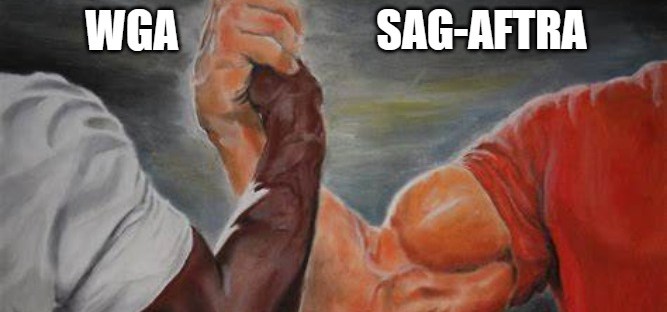
The WGA and SAG-AFTRA are both on strike against the Alliance of Motion Picture and Television Producers (AMPTP) halting TV and film productions and leading to a very sparse year financially for many film workers. They’re just asking for more money, right? Yes and no. This is certainly not a case of greed from the average film worker, but from corporate CEOs who make hundreds of millions of dollars a year while balking at a small percentage that writers are asking for. To put it in perspective, since 2018 writers have seen an inflation-adjusted fall in revenue of 14%. For writer-producers it’s worse at 23%. In recent years, the numbers of writers working at a WGA minimum went from a third to half of all writers. Meanwhile SAG-AFTRA actors report paltry residuals and popular TV shows that didn’t properly compensate them either, and a big culprit is streaming.

The WGA Strike Began May 2, 2023

The WGA went on strike in May when negotiations broke down. How far apart was the WGA’s proposal from the AMPTP counter offer? The WGA asked for a pay increase for members totaling $429 million per year (that’s only about 5% on WGA minimums). The AMPTP countered at $86 million per year, an amount they called “generous.”

You can consult this page to see the WGA’s terms and the AMPTP counter offers.

The WGA has gone on strike for several reasons, one of them being paltry residuals for streaming shows. Residuals are compensation for a performer when their work is re-run, syndicated to another network, or sold as a physical media such as a DVD box set to name a few. Streaming obviously complicates this because programs are not broadcast in the same fashion as on traditional TV.

“Over the past decade, while our employers have increased their profits by tens of billions, they have embraced business practices that have slashed our compensation and residuals and undermined our working conditions,” said the WGA Negotiation committee to its members prior to the strike beginning.

Surprisingly, WGA West’s fiscal report in March 31, 2022 reported an “all time high” in guild collected residuals. How does that make sense when writers claim they’re making less?

Because they are making less!

The total residuals may appear higher, but that is due to the volume of extra projects being made. It’s no longer just theatrical releases and network TV. There is a cornucopia of different streaming platforms all vying for a catalogue of material to get you to sign up for another subscription service.

Charles Slocum, assistant executive director at the WGA West, indicated that residuals slashing was taking place on a per-program basis, and the major culprit was streaming services.

And so, when WGA contracts were coming to an end this year, residuals were one of the main points they would negotiate for — as well as not having writers replaced by the likes of ChatGPT.

Slocum also made the point that companies have not agreed to pay residuals at broadcast levels for streaming programs. “If you write for a streamer, you get two residuals payments – one for domestic streaming and one for foreign streaming. It’s a set amount of money. If it’s a big hit, you do not get paid more residuals in streaming, whereas in the broadcast model, you do because of its success. That’s the sense that residuals were slashed – they have not agreed to a success factor when a program is made for streaming.”
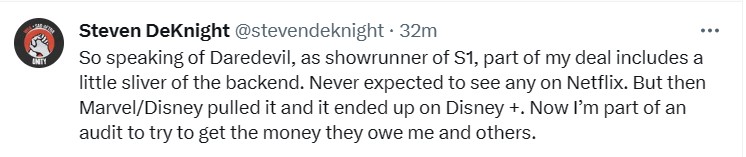
Many writers, actors, and other film industry professionals have taken to social media to explain what position they are in. Screenwriter Daniel Kwan, Oscar-winner for Everything Everywhere All at Once, said on Twitter, “It’s about maintaining a healthy middle/working class of writers in our industry. It’s about showing our collective strength as new tech threatens to take away our leverage.”

The average person may assume that screenwriters (and actors!) are making so much money already that this argument is unnecessary. But the truth is, the majority fall into middle class status or lower. Only a small percentage make the insane bucks that make headlines.

Shrinking writer’s rooms has also been a factor that has plagued modern writers. In traditional TV, you’d have a group of people hammering out episode ideas, sharing script writing duties for 20+ episode seasons. Now, with streaming’s angle towards shorter seasons (8 episodes seems the norm these days) and fewer writers, the entire process has shifted. Shorter seasons and smaller rooms equals fewers weeks of pay and more gaps in work for writers and actors alike

SAG-AFTRA Strike Began July 14, 2023

Actors too, are striking for better conditions. They decry similar concerns such as waning residuals from streaming to A.I. creating virtual versions of actors and replacing them, the actors were ready to put their foot down and join the WGA on the picket line.

“There has been a sea change in the entertainment industry, from the proliferation of streaming platforms to the recent explosion of generative AI, and at stake is the ability of our members to make a living,” said SAG-AFTRA Chief Negotiator Duncan Crabtree-Ireland. “We must ensure that new developments in the entertainment industry are not used to devalue or disrespect the performers who bring productions to life.”

The culture’s shift to streaming has led to shorter season runs, and therefore fewer episodes and less work for recurring performers on shows.

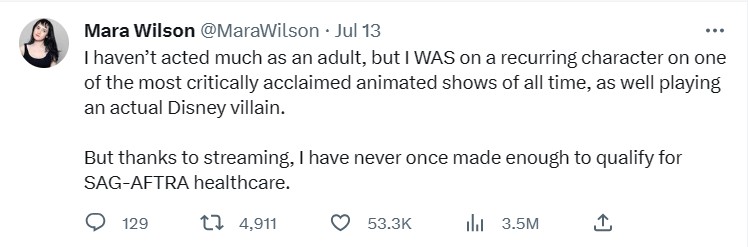
Most actors, like the writers, do not make the big bucks that make readers of Variety blush. Many are considered middle class or even struggling to get by. As the strike was authorized, numerous actors took to Twitter to provide anecdotes on why the strike was necessary.

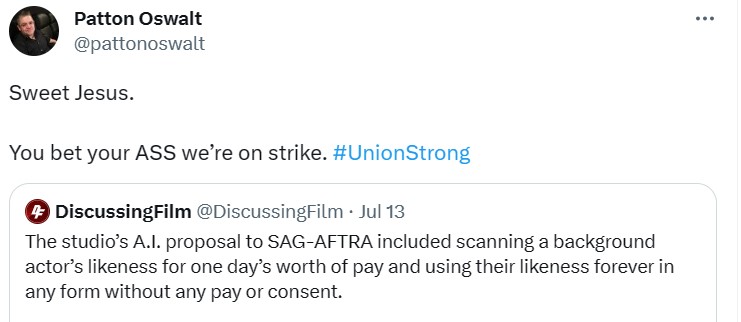
The popularization of A.I. tech has made both writers and actors nervous about the reality of losing their jobs. This is a huge topic, and difficult for me to cover without this post ballooning into a novel’s length, but suffice to say that AMPTP has unironically looked at A.I. as a cost-cutting maneuver to replace people.

This post went around recently by Justine Bateman, A.I. consultant to SAG-AFTRA during the negotiations.:

All indicators are showing that we’re going to be in this for the long haul.

Sources:

Deadline: Are Streaming Residuals Being Slashed? As WGA’s Own Data Shows, It’s Complicated

YouTube Video: Steve Schmidt explains how the SAG-AFTRA & WGA strike impacts the American middle class |The Warning

Tensions from the last writers’ strike cast a shadow over current labor fight

Why Actors Are Going on Strike

Mini Rooms Drive Major Controversy as Creative Community Feels Strain of TV’s Vast Expansion

SAG actors strike, joining Hollywood writers. What are we supposed to do now? Read?

Spider-man: Across the Spider-verse is Breaking its Artists

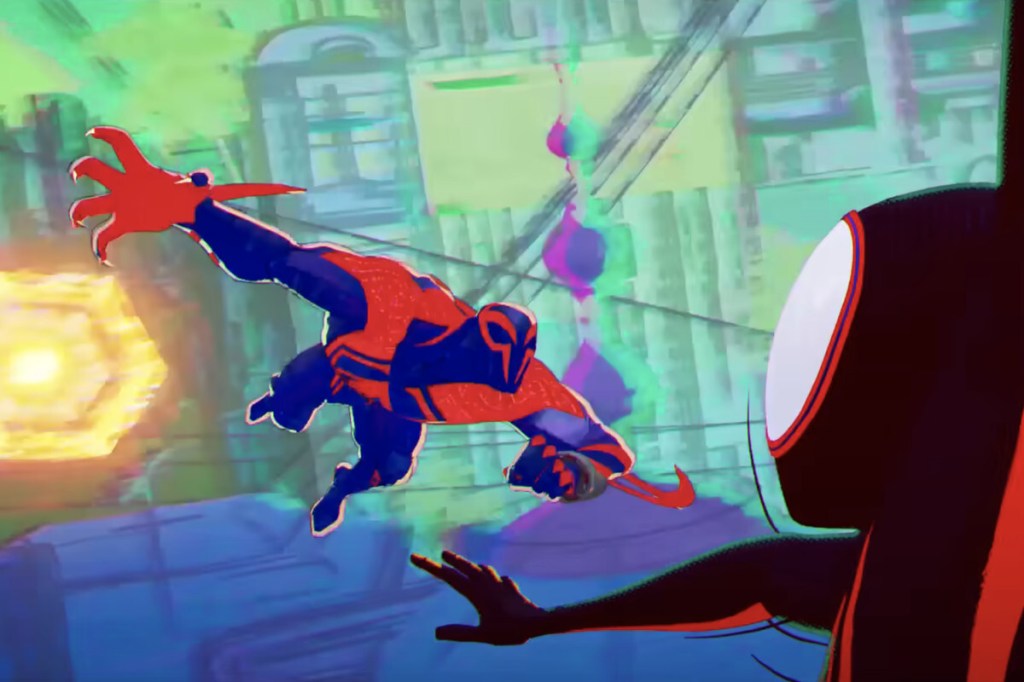
Spider-man: Across the Spider-verse is still doing gangbusters at the box office 3 weeks after its release. It’s a stunning display of cinematic art, and immediately blew away all high expectations that existed after Into the Spider-verse inspired us all to be our own hero. Too bad the artists who made the film truly had to suffer for that art.

The second Spider-verse movie did some really amazing things, including having the story grow darker and more mature as Miles himself grows into being his own hero. One very notable, and highly anticipated part of the film was how each universe would be rendered in its own unique art style. Gwen’s universe is awash in melty watercolor tones, Pavitr’s universe is Bollywood and boisterous, Miguel’s features some neon colors and sketchy lines.

It’s a beautiful movie. Really.

But 100 artists had to leave the project due to unfair working conditions.

Long hours and rough days are no strangers to those of us who work in film. A 12 hour day is standard for us. Many who work on bigger productions find themselves working way over that time, with a consolation of overtime and learning techniques on how to not fall asleep while driving home. Throw in the mix a Fraturday (day starts on Friday, ends on Saturday) that severely cuts into the weekend and then you do it all again on Monday. And these are actually better conditions than where it all originally started.

The artists on Spider-verse reportedly were hired on during the layout process, then had to wait months to get started, and then were shunted into immediate crunch time with 11 hour days 7 days a week. These conditions lasted for more than a year.

Some were afraid to leave, reticent to allow their work to go to the wayside if they weren’t there to see it through.

Fix it in Post!

Part of the issue was Phil Lord’s angle on editing material after a 3D render had already been produced. That’s pretty late in the pipeline for animation. That’s like an actor getting the director’s notes after you’ve already shot the scene. Those changes should take place during the storyboard stage, a handy pre visualization that filmmakers use to block out their entire movie before it is filmed or animated.

Animators allegedly had to go “back to the drawing board” five times, which had to be incredibly frustrating. After working so many hours on a scene, now you want it done a different way? Sure I don’t need to see my family any time soon.

One artist, pseudonym Stephen in this Vulture article, said:

For animated movies, the majority of the trial-and-error process happens during writing and storyboarding. Not with fully completed animation. Phil’s mentality was, This change makes for a better movie, so why aren’t we doing it? It’s obviously been very expensive having to redo the same shot several times over and have every department touch it so many times. The changes in the writing would go through storyboarding. Then it gets to layout, then animation, then final layout, which is adjusting cameras and placements of things in the environment. Then there’s cloth and hair effects, which have to repeatedly be redone anytime there’s an animation change. The effects department also passes over the characters with ink lines and does all the crazy stuff like explosions, smoke, and water. And they work closely with lighting and compositing on all the color and visual treatments in this movie. Every pass is plugged into editing. Smaller changes tend to start with animation, and big story changes can involve more departments like visual development, modeling, rigging, and texture painting. These are a lot of artists affected by one change. Imagine an endless stream of them.

Of course Sony execs rushed to backpedal on these claims. Amy Pascal, for one, didn’t exactly help things with this statement:

“One of the things about animation that makes it such a wonderful thing to work on is that you get to keep going until the story is right,” adds Pascal. “If the story isn’t right, you have to keep going until it is.” To the workers who felt demoralized by having to revise final renders five times in a row, the Spider-Verse producer says, “I guess, Welcome to making a movie.”

Amy Pascal, from the Vulture article.

A Lesson We Seem to Keep Learning

I don’t think the guy on the left would have gotten a sequel

Back in 2019 I did a post on the Sonic live action movie that dropped a trailer so jaw droppingly terrible that they literally had to rework the Sonic CGI in record time. I ended up watching both Sonic movies later on and they were both delightful family romps — and the correct choice was made to fix the Sonic character to be more like the source material.

My blog focused on the inherent problem with wanting to fix something fast. CGI, animation, and any kind of VFX takes an astonishing amount of hard work and time. It’s not just hitting a button that says render and walking away to watch a season of Black Mirror.

Crunch has been a negative word circulating through VFX houses and video game companies for some time now. I learned a lot about the term when it came to the videogame industry, actually, in Jason Schreier’s nonfiction book Blood, Sweat and Pixels. It’s a pretty insightful read. Animators, VFX artists, and video game designers are pushed into crunch mode to meet imminent and obscenely short deadlines and fix the inevitable problems that comes with that rushed work. It leads to an unhealthy work environment and depressed, overworked artists. Who wants that?

Across the Spider-verse came to a pulse pounding close. M friends and I sat at the edge of our seats in shock when we saw that the next installment would be in theaters March 29, 2024. We’d just been ripped in two by a cliffhanger, and before we could wonder how long it would take a sequel to come out, we were delivered an unfathomable promise.

According to additional reports coming out now, that’s not likely. And you know what?

That’s. Okay.

If we can give these hard working artists some breathing room and some better conditions, I can wait longer to see the conclusion of Miles Morales’s story.

I’d like to imagine an alternate universe in which we respect our artists, give them reasonable time and work conditions, and continue to appreciate their work.

If that means I don’t get Spider-verse 3 next March, I humbly accept that.

Sources:

Damning Across the Spider-Verse Report Reveals 100 Artists Quit Amid Brutal Working Conditions

Spider-Verse Artists Say Working on the Sequel Was ‘Death by a Thousand Paper Cuts’

The Problem with Sonic’s “Fix it Fast”

“Blood Sweat and Pixels: The Triumphant, Turbulent Stories Behind How Video Games Are Made” by Jason Schreier

Networking for Film Makers

I read a book on networking once and realized it didn’t have exactly the information I needed for my own career. But there was some sage advice that could be adapted.

Let’s look at several options for networking in the film industry.

Networking Events

Might seem obvious.

It does make a difference on which networking event you attend.

When I first moved to Georgia, I jumped at the chance to go to meet folks in the industry. I literally went to the first one I saw. It was at some studio and sounded legit. People were encouraged to go up to this microphone, introduce themselves, and mingle afterward. It was so awkward. Everyone there was someone who wanted a job, not anyone who could actually offer one. I ended up making one connection, who ended up humble bragging into making me believe he knew what he was doing. I wasted time prepping a film that fell apart the day before the shoot and I found out they lied and misled about everything. I had to block this person on every form of social media as they got a bit stalkery.

Lesson learned.

So choose accordingly. As a general rule, networking events shouldn’t charge much if anything to its participants. I was at an event that charged $10 to attendees which wasn’t bad. Look at the event, where it is held, and what exactly they’re offering. It may also be helpful to go to more specific events that cater to more narrow criteria, like one specifically for women film makers.

Here are a few upcoming networking events you may want to check out:

April 1 – Class In Session: Creative Industry Mixer & Panel – Free

March 23 – Atlanta Film Production Group – Film Mixer – $10

Other events to look out for in the future:

WIFTA open networking events (open to members and non-members)

Atlanta Film Society‘s Eat Drink and B- Indie Networking events.

Casual Meetups

It’s not all about networking, sometimes it’s just about making a connection.

Film Bar Mondays – Set at a different bar each week, Film Bar is an informal meetup.

Film Brunch Sundays – Another super informal meetup.

Atlanta Script Reading Club – A group of people get together to read and discuss scripts. It’s a new group but I like their chutzpah. They cover screenplays and plays.

Maybe check out some groups on something like Meetup.com as well!

Education

I know I’m not the only one who attended SCAD or a similar film school and referred to it as “Networking School” It really was a trial by fire situation. You quickly built your favored group of film people and made films together. Some of those connections would go on to last into your professional career.

But this isn’t a post about film school. You can see that post here.

Let’s talk about other educational opportunities. A simple Google search or Facebook event search will show you courses and panels you can attend either virtually or in person.

For an entry level course, I’ve heard really good things about both the PA Academy and the Georgia Film Academy, plus I’ve run into graduates on films I’ve worked. Clearly something is working.

Atlanta Film Society hosts a number of great events you can learn from, such as their writing classes, panel discussions and film screenings.

Film Festivals

https://www.filmimpactgeorgia.org/georgiafilmfestivals

Another great way to meet people is at film festivals or screenings! Talk to panelists after a discussion, research filmmakers and talk to them about their work, meet your fellow audience members, go to a social event connected to the film festival. Come equipped with business cards (yes I’m old school) or an easy to share Instagram or Facebook handle so you can connect with people after the event.

I got to DP The Night Courier because the director and I met at a film festival. We contacted each other outside the film festival and said, almost simultaneously, “Hey I liked your film!” and a connection was made. That led to another successful film for both of us.

Working on set

“But I’m trying to network in order to get on set!” You say. I know, it’s a real chicken-and-egg situation.

One great way to meet and network with people in the industry is to actually work on sets, big or small. I’m hard pressed to find a gig I did where I didn’t end up with a phone number, email or Instagram of someone who wanted to work together or connect again in the future.

“Wouldn’t it be cool if we worked together again? What’s your Instagram?”
“Quiet on set. And stand over there.”
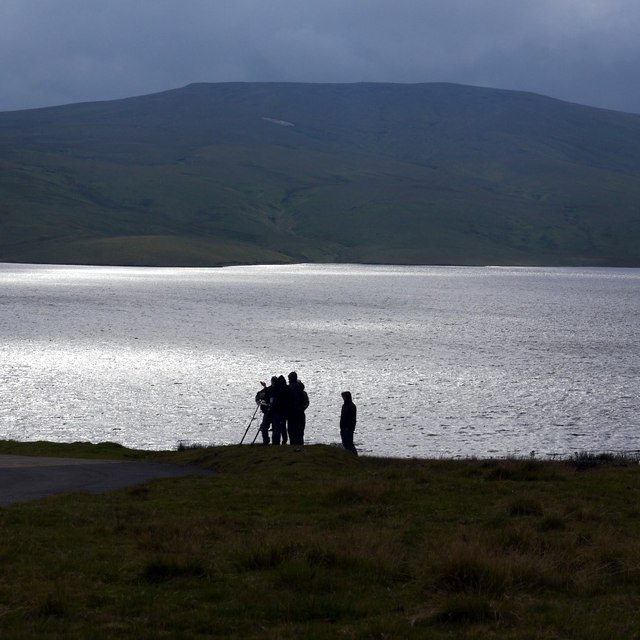
Film crew on location above Cow Green Reservoir by Andrew Curtis is licensed under CC-BY-SA 2.0

I did a lot of the work for you here. Now it’s your turn. Go out and make those connections!

Someone asked me to give an inspirational speech…

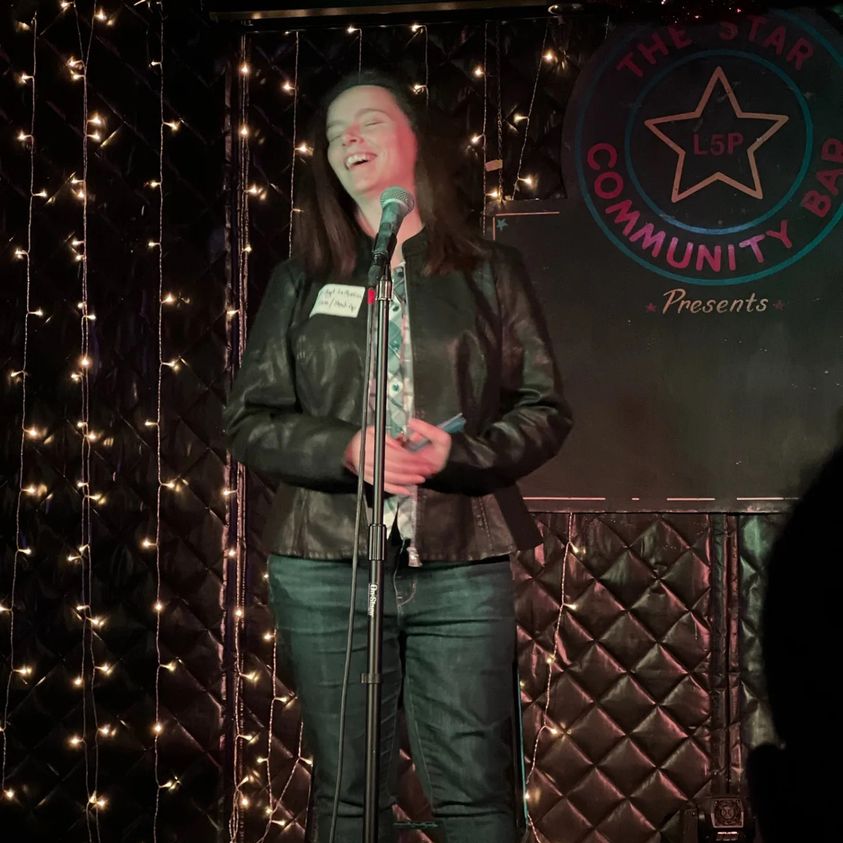
Recently I was asked to speak at the Atlanta Film Production Mixer on Feb 17. It was held at the Star Community Bar in Atlanta.

Organizer Edward Reid told me to prepare 5-10 minutes of “something inspirational, talk about your specialty.”

Never one to underdo something, I wrote a whole speech. I thought it was pretty good, so I’m sharing it here too.

The awkward timing on this photo provided by Marco Gutiérrez.

My name is Bridget LaMonica. I’m a cinematographer and Steadicam operator. 

I graduated from the Savannah College of Art & Design and immediately started working in film, right? Great success. Roll credits. We’re done here.

SCAD – The University for Creative Careers and Existential Breakdowns. Had fun though!

No, not really. 

It took a couple years. Thank God I moved here with a savings because it was months before I started getting paid work, and even longer still before film was truly paying my bills. 

What got me here was not just what I knew, but my personality and work ethic. Yeah yeah, – but hear me out.

If you’re a pleasure to be around and you’re willing to learn on the fly, you’ll go far. My first full run on a show, I was hired as a production assistant. By the end of the first week, I was upgraded to camera PA and stills. And a producer was genuinely shocked I wasn’t a camera assistant already. 

I got my first camera operating job on a feature because I had worked with the DP on several short films. She liked working with me, and trusted me to shoot that feature alongside her. 

90% of the work I get is through recommendation. Your biggest goal is being the one that people like being around. Let’s face it, when you work a standard 12 hour day, the last thing you want to be is the grumpy one everyone avoids. We call those people… oh wait, we don’t call those people. Because they don’t get hired again.

You have to overcome the crushing disappointment of rejection and applying to promising jobs that then ghost you like a bad first date. 

There’s also something else you have to deal with.

You see, after that big step of camera operating on that first feature, I was visiting family for Thanksgiving that I hadn’t seen for a few years. I thought maybe, this was one of those humble brags that would earn me sick thanksgiving family street cred. After I told this family member that I had camera operated on a movie, he winced at me – winced! – and said “Are you happy with where you are in your career right now?”

I didn’t know how to respond. The turkey hadn’t even come out yet.

I’m a camera operator on a movie! How is that not a good thing?

I’ve seen worse.

For every person who claims you can’t have a creative career, who says you shouldn’t bother writing that movie or working on some set… For every person who says “Get a real job” – remember they’re also the ones gushing over the most recent episode of The Last of Us, or listening to music on the way to their boring office cubicles.

Film and television productions spent 4.4 billion dollars in GA alone last 2022. All that content had to be made by someone. By someone like you….

If I couldn’t get past rejection and disappointment, I never would have taken that Steadicam class. I remember putting on the heavy rig we had at school, feeling overwhelmed, and thinking – for a minute there – maybe I can’t do this. But I’m no quitter, and this was just another goal to tackle.

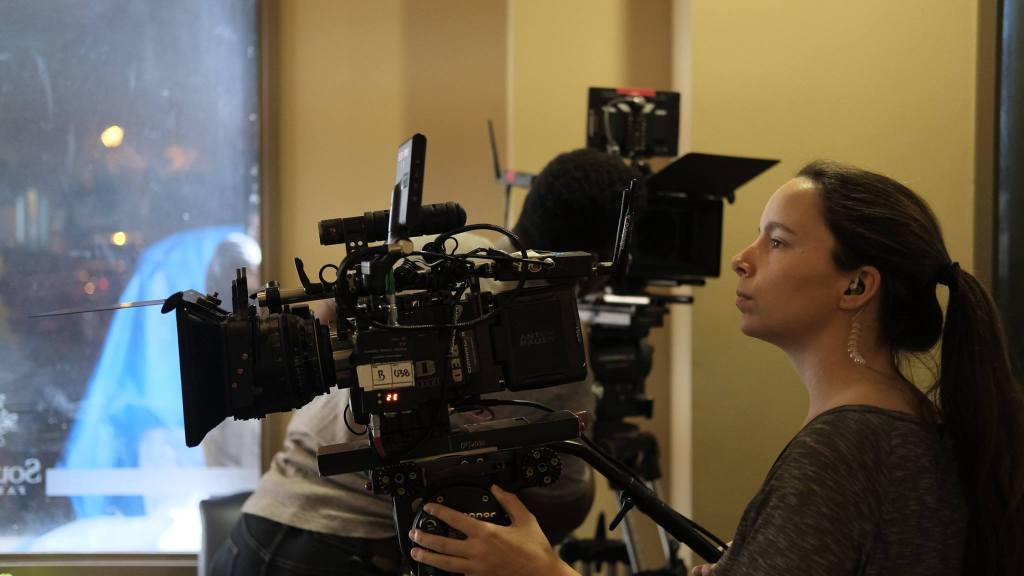
I’m one of the few female Steadicam operators. I know, I know, you figured me for a professional wrestler. I’ve put on Steadicam rigs that made muscle-bound key grips go “Whoa. This is heavy.” I’ve also operated hour long segments on reality TV wearing an EZ rig and ye olde Sony F55 – about yay big of your best friend including the lens. (Imagine hand gesture here).

Eh this is the best photo I got after 2 seasons on the show.

Getting started is the hardest part. You’re here. This is a start. Networking is a big deal in this business. Picking the right projects will set you on your path. Go into each job with the knowledge that your presence could make the entire production better. 

There will be hard days and crazy directors and hilariously bad crafty and moments where you may legitimately question your sanity – but if you keep going, you’ll find yourself saying, “I make movies for a living.” What’s not a little cool about that?

Even if that requires being the old cam op who can fit into tight spaces.

And if it’s a crappy movie you’re embarrassed you worked on? Well, did the check clear? 

I’m not just in the film industry to make films. I’m also here learning, pushing boundaries and helping those who need it, because I was once the one who didn’t know what a c-stand was. Now I hope I inspire the next person.    

One of the ways I do this is through the blog on my website (Holy crap, you’re here already?!). Thanks to my set experience, I write on my website about equipment you should know, how to write a screenplay, and even how to avoid scams targeting film people. That’s a big one for me. I don’t want those who chase their dreams taken advantage of by some jerk. Some jerk in a cubicle.

I’ve had people reach out and thank me for the information on my blog. I’ve had PA’s on set appreciate that I took the time to teach them a skill. It’s that passing of knowledge that makes me realize that I do make a difference, and it feels good.

A Film is Born Three Times: Pt. 2 Production

“A film is born three times. First in the writing of the script, once again in the shooting, and finally in the editing.”

Robert Bresson, French film maker.

Part 2 of 3. Read Part 1 on Re-writing here.

You’ve written the script. You’ve done the pre-production. You have your shotlist in hand and you’re ready to shoot. Surely, you have an image of what your film is going to look like in your head. The thing is — it’s really hard to make that a reality.

Once you’ve made your first or even fourteenth film, isn’t part of you a little disappointed it doesn’t look exactly how you pictured it? No? Just me, okay.

There’s a number of factors that go into why your film will change during production. Let’s go over a few reasons:

  • casting
  • location
  • equipment

Casting

You and a friend are prepping for a film competition and it’s the night before your first shoot day. You’ve got your gear and props, your script finalized, your cast set and call sheets sent out. Now all you need is–

Oh wait, your lead actor just quit. Now it’s 11pm at night and you’re supposed to be filming a mere 10 hours from now.

This is exactly what happened to Desiree and I when we were prepping our Mystery Box Film Challenge short. Our lead actor was cast via the film commission in Philly, and he decided at 11pm the night before the shoot that he wasn’t going to drive to Northeast Pennsylvania to do the short. Because he’d have to get up early. I can’t even make this up. The actor had the script and knew where he’d be filming for days in advance, and chose literally the 11th hour to change his mind.

Desiree and I very calmly… went into panic mode. After a moment of us going “literally, WTF” we contacted everyone we knew in the local film community, and the search was on. Friends contacted friends until we connected with a guy named Joe, who was more than happy to help us. He turned out to be a great actor, a better choice than we originally had, and our short film continued as scheduled.

Especially in the case of short films and volunteer projects, you could lose people at the last minute. The goal is to have a network you can turn to in order to fill in the gaps. Or start getting creative with the cast you already have.

Location

When I originally wrote The Road Less Traveled, I had envisioned a cat and mouse chase inside a literal slaughterhouse. Instead, we ended up in an antique barn, which I ended up liking so much more.

Sometimes your limitations on location will be budget related. You intended on x but had money for y (or z was free).

Weather, too, can play a part. If originally your location was going to be outdoors and a storm blows through, you might have to re-evaluate and see if you can film an indoor scene instead.

My thesis film, Routine Procedures took place in a crater….but since that’s impossible to create on no budget, we filmed in a sand pit used by construction. We filmed on days they weren’t out scooping the sand. A unique feature was that a lot of it was flooded, so we needed to purchase a canoe to get to the optimal location.

Equipment

You’ve got everything planned. Absolutely nothing could go wrong.

You get the idea now, right?

You don’t have enough batteries to continuously shoot. Your media fails. Your stabilizer isn’t stabilizing. Your mattebox donut has ripped and too much light is now hitting the filter.

This is one example where we had to replace a piece of equipment with something unexpected. The rubber “donut” that goes from the mattebox to the lens had torn, and too much light was hitting the filters. We replaced it with an old school mousepad with a hole cut in it. It worked great! Plus I ended up seeing this kittycat mouse pad on the next project I worked with this DP so obviously it made an impression.

Film sets are Murphy’s Law Incarnate. You need to be able to roll with the punches.

The following scenarios have happened to me or someone I know:

  • the DP underestimated how much media we’d need to record on and nobody media managed even after I pointed out we were going to run out of cards. The last scene of the day was filmed shooting one line of dialogue at a time on the last two minutes of card space.
  • Your wireless follow focus has lost signal and has some issue that can’t be solved, so you pull it off the barrel of the lens and pull focus by hand (like the pioneers did!)
  • The director suddenly wants a Steadicam-like shot without there being a budget or an actual Steadicam around. You see a rolling desk chair and get some ideas…

Don’t let an equipment malfunction limit your ability to shoot your film. There’s often a way around it if you take a moment to look at your options.

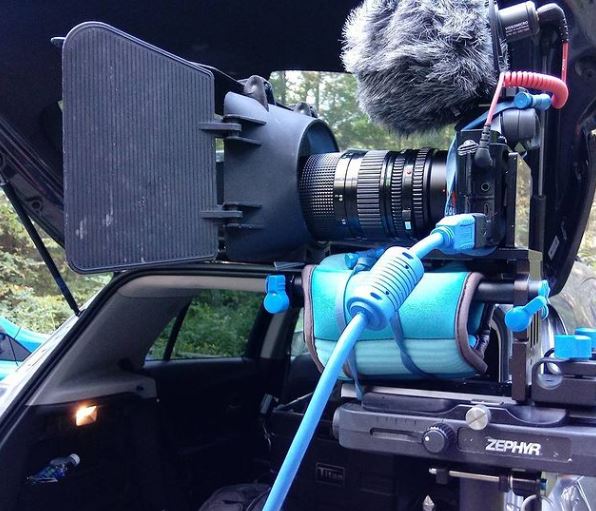
A Steadicam setup I did years ago for someone’s crowdfund campaign. The camera was way too light for the Steadicam, so I bongo tied a few 5lb ankle weights on there to compensate.

One of the absolute best skills you can have as a film maker is problem solving. If you can be adaptable, creative and a team player, you can find a way around your problem and into a solution.

Screenwriting Basics #5: Scene Description

I want to spend time showing examples, so very quickly here’s what goes into scene description (also called action lines):

Elements of Scene Description:

  • tells you what the characters are doing in the scene
  • describes the setting
  • details what can be seen or heard in the scene
  • sets tone and pacing or rhythm that informs the edit
  • uses ALL CAPS to highlight important things (use sparingly)
  • avoids camera direction (don’t use “the camera dollies in…”)

We’re going to look at pages from three very different scripts: Spider-Man: Into the Spider-Verse (2018) by Phil Lord and Rodney Rothman, Zodiac (2007) by James Vanderbilt, and Butch Cassidy and the Sundance Kid (1969) by William Goldman

Spider-man: Into the Spider-verse (2018)

This animated film balances humor, pathos and a coming-of-age story in a superhero origin film. It is excellent, and for that matter, so is the script.

Into the Spider-verse has a narrative told through a comic book filter, and for that reason the script has to show this comic flair as clearly as possible. That includes scripting out the comic thought bubbles and things that appear across the screen. Note that the pivotal moment “EVERYONE KNOWS” is played up for comic relief — the script has it appear in giant letters behind Miles, the last period landing with a resounding note.

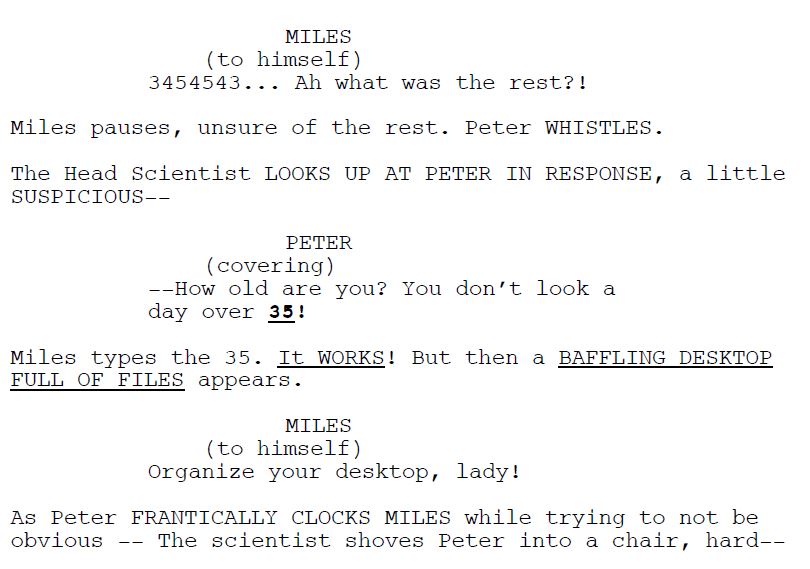
Later in the script, when Miles is trying to help Peter B Parker hack into a computer they have to work around the Head Scientist Olivia Octavius. This fun exchange happens:

That “organize your desktop, lady!” line got big laughs in the theater, and that’s partly because of how starkly we’re shown the “BAFFLING DESKTOP FULL OF FILES” right before that. So relatable. If that moment hadn’t been scripted out, it wouldn’t have played to such laughs.

Zodiac (2007)

Lots of good feelings from the first example. Let’s go down a darker path.

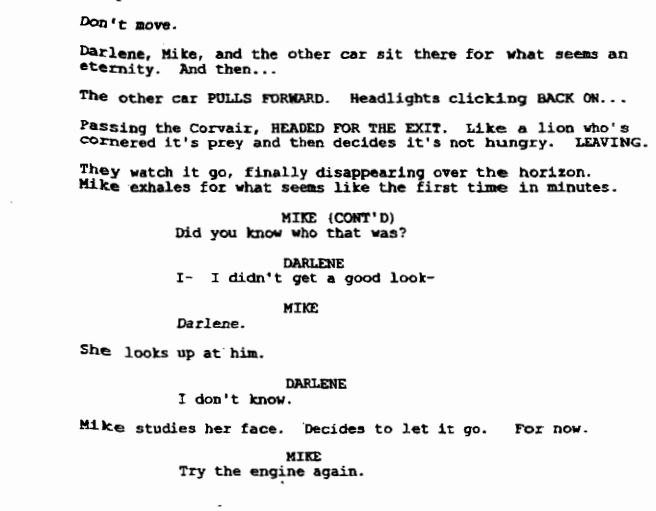
Writing horror, thriller, suspense… they come with other challenges. How can you communicate that a scene is scary? Get out this page from Zodiac, the movie based on the real story of the Zodiac Killer.

Look at how the car following Darlene and Mike, soon-to-be-victims, is characterized. Like a hungry lion. It’s not literal, and yet it works to get the point across.

What was interesting when I looked up this example was the fact that the script I lfound and the resulting film were very different scenes. In the script, this car has been following Darlene and Mike for miles, resulting in a car chase and eventual car trouble. In the movie, things are quite innocent until the killer’s car pulls up behind them.

An early draft could look totally different from what you eventually see on screen. Why this car chase scene was skipped over was possibly two-fold — the car chase scene took too long and detracted from the rest of the movie, and possibly because it wasn’t true to what really happened. This is a real killer this movie is based on, so some attempt at reality should be made.

Butch Cassidy and the Sundance Kid (1969)

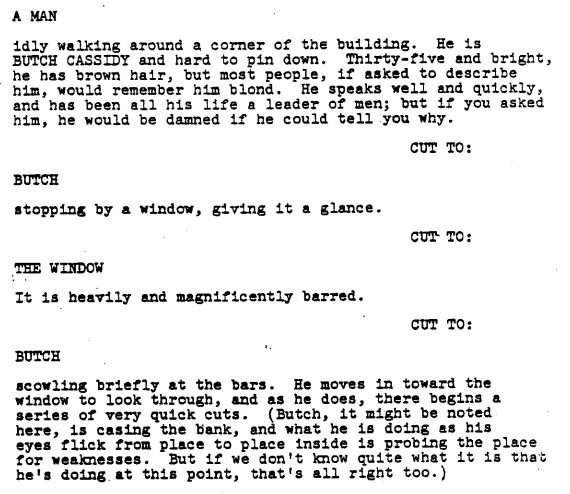
In the opening of this Western, we’re introduced to our main character Butch Cassidy. The scene descriptions give us a good idea of what type of man he is and how he should be portrayed.

William Goldman is a very well known screenwriter, and he could get away with some tricks that you probably shouldn’t do in your first scripts. For one, he’s scripting out a lot of stuff that cannot be seen, like how Butch speaks and that he’s been a leader of men all his life. For the most part, if you can’t see or hear it, you should think twice about writing it in your action lines.

The format is also a little off from the norm, or at least what we see today. A MAN is separated from the rest of the description. This could be very intentional rhythm illustrated for the scene, having the director and actor take their time letting this introduction play out before the camera. Nowadays, write the subject in the same paragraph. William Goldman can do all this. We can’t. Yet.

I also want to note Goldman’s use of “CUT TO:” between each segment here. This is a stylistic choice — it’s not necessary. Sometimes this can give a sense of pacing. Personally I find script pages to be prime real estate — I might need to hit very specific page counts and I find the CUT TO unnecessary because…well, what else are you going to do? If you’re jumping to another scene, you’re gonna cut.

Sources:

The Magic Bullet: Action Lines – ScriptMag.com

5 Ways to Write More Effective Scene Description – The Script Lab

Screenwriting Basics #4: Dialogue

One way to get me interested in your script: Have really compelling, interesting, and/or funny dialogue.

Writing dialogue is hard. Heck, writing at all is hard. It takes years of study — reading everything you can get your hands on, practicing at your craft, sucking at the first few scripts you try, doing better with each draft and receiving constructive criticism that leads you down the right path.

First, let’s understand what counts as bad dialogue.


*snore*

Is anyone else bored yet? I know I am. Dialogue like this, although similar to how we talk in real life, does nothing to advance a plot and frankly bores the reader into a stupor. Authentic dialogue does not mean word-for-word small talk. Authentic dialogue is more simulated reality.

Another example:

If some kid scares off some robbers with his, um, karate skills? Wouldn’t you want to see that happen?

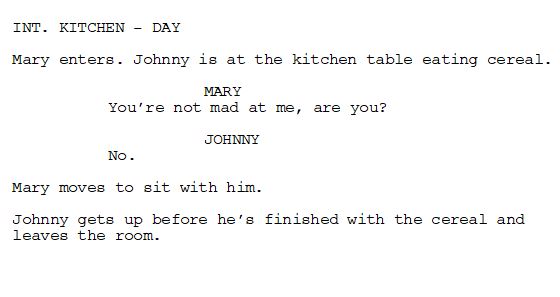
Here’s where we remember the cardinal writing rule of Show, Don’t Tell. It’s much more interesting to see action scripted out, happening before us, than to have some character explaining it. Johnny’s dialogue here becomes an info dump — blurting out a series of events in an unnecessarily long rant. It is so dull to hear a character explain things that should have just unfolded on screen.

Another fun, yet difficult one to learn. On-the-nose dialogue.

On-the-nose dialogue is when characters say what they actually feel in the moment or describe things that are obvious. It’s the opposite of subtlety. This is where subtext comes in, and that’s a tricky subject.

Subtext is the implicit meaning of a text—the underlying message that is not explicitly stated or shown. Subtext gives the reader information about characters, plot, and the story’s context as a whole.

https://www.masterclass.com/articles/what-is-subtext-learn-the-definition-and-role-of-subtext-in-writing-plus-5-tips-to-better-incorporate-subtext-in-your-work

A character’s feelings, or even the situation at hand, can be described using visuals, settings, character body language and more to be conveyed. Sometimes, a character will say the opposite of what they mean, but we as the audience can see the truth behind it. Humans lie a lot. Your characters could too.

Yeah. Johnny isn’t happy.

Your characters can say a lot without really saying much. Trust the actors to do the acting. Body language coupled with dialogue can change an entire meaning of a line.

Great dialogue is, of course, subjective. Beauty is in the ear of the beholder. But there are a number of films out there that many folks agree has good dialogue. Check out this scene from The Shawshank Redemption. Spoilers if you haven’t seen this famous film from 1994.

“It always makes me laugh. Andy Dufresne… who crawled through a river of sh*t and came out clean.”

– Red

This scene comes at the end of the movie. Andy Dufresne has already escaped, and Morgan Freeman’s character Red laments his loss. It’s expositional. It’s telling, not showing. It shouldn’t work but it does. It wraps things up beautifully, told in the unique voice of Red.

“I’m Mad As Hell and I’m Not Gonna Take This Anymore!”

– Howard Beale

This scene from Network is a great one to study. A news anchor losing his cool on national television! But the story behind the scene is not that he’s mad about current events… it’s truly about his anger over the fact that he’s losing his job. Subtext!

“That ain’t no Etch a Sketch. This is one doodle that can’t be undid.”

– Convenience Store Clerk

I really like Juno. The characters all have very strong, individual voices. Even the bit parts, like the clerk at the convenience store, are interesting characters for an actor to play.

You want to be the type of writer who could attract someone to any part in your film, and screenwriter Diablo Cody became quite the Hollywood darling after this film premiered.

Sources:

How to Avoid Writing On The Nose Dialogue – Screencraft.org

15 Movies Screenwriters Should Watch to Study Dialogue – Screencraft.org

What is Subtext – Masterclass.com

Screenwriting Basics #3: Character

Unless you’re writing the type of artistic film where you only show time lapses of moss growing or something, you’re likely going to need characters to populate your script. They may be a hodgepodge group of high schoolers or even anthropomorphic cars.

The most important of which is your main character. And they should do more than just go through the motions.

Your main character needs to be interesting. Infuse them with details, quirks, dialogue that makes the reader, and eventually audience, enjoy going on this ride with them.

How do you do this? Start thinking details. Are they funny? Smart in a really unique way? Do they see the world in a way others do not? Do they have a personal struggle and you can’t help but root for them?

Do they have a general disdain for humanity but also the propensity for curing everyone’s ills?

Lookin’ at you, Doctor House.

You want to avoid stereotypes in your main character. Instead of having a genius doctor, you have a genius doctor who lacks a bedside manner, has a physical disability which leads him to a dependency on narcotics.

So let’s talk round vs flat characters.

“A round character is deep and layered character in a story. Round characters are interesting to audiences because they feel like real people; audiences often feel invested in these characters’ goals, successes, failures, strengths, and weaknesses.”


https://www.masterclass.com/articles/round-vs-flat-characters-in-fiction

Round characters are more interesting and make your reader and audience more invested in the story.

“A flat character is a two-dimensional character lacking depth or a real personality. Usually, flat characters have just one or two perfunctory traits. Often considered “stock characters,” flat characters can often be summarized in one word (like “bully” or “love interest”) and never digress from or transcend their role.”

https://www.masterclass.com/articles/round-vs-flat-characters-in-fiction

A flat character lacks the great detail that makes a compelling character. They fall into stereotypes — the distracted professor, the overworked single mom, the ditsy cheerleader… we’ve seen these time and again. It’s fine if they populate the rest of your world a bit, but for the characters we follow? We want more.

How to write a round character:

  • Character Traits. What are their character traits, both good and bad? What is the flaw your main character possesses that might cause them grief later in the story?
  • Details. What are their likes/dislikes? What is their appearance? What sports do they play? Where do they work? You might not use all of these, but it will help you make more informed decisions on how your character will act.
  • Believability. Your main character has believable reactions to events based on their character traits. A generally mellow person won’t just blow up at a minor inconvenience. It wouldn’t fit their character. Don’t lose your reader, and later your audience, by making your character behave strangely.
  • Conflict. Give them an internal and external conflict. The main conflict may be the fate of the world ending, but the internal conflict may be a father regaining the love of his estranged daughter.
  • Dialogue. Your character has a voice, and it should be a distinct voice. If you cover up the names of all the characters in your script and read the dialogue, you should be able to tell who is speaking. Don’t let everyone sound the same.

Building a really interesting main character is one part of writing that great first script.

Sources:

https://blog.reedsy.com/round-character/

https://www.indiewire.com/2013/11/screenwriting-101-5-tips-for-writing-better-characters-into-your-screenplay-33156/

https://www.masterclass.com/articles/round-vs-flat-characters-in-fiction

Screenwriting Basics #1: Budget Friendly Screenwriting Software

This is the first in a multi-part series breaking down the screenwriting process so you can get started writing your next great idea.

First, let’s talk where you write the script. I don’t care if you start in a paper notebook or scribble outlines on napkins, at some point you’re going to have to type this into proper screenwriting format on a computer.

Professional screenwriting programs like Movie Magic Screenwriter or Final Draft are a major investment. Screenwriter 6 is currently at the sale price of $169. It’s usually $249. Final Draft 12 is on sale for $185 (again, usually $249).

That’s a hefty price tag for someone who is just starting out. Luckily, there’s some really good free and cheap options out there too:

  • YouMeScript – a Google Drive extension. Features the ability to have multiple writers working at the same time from different computers. Great for collaboration but make sure you save often. It does not automatically save for you.
  • Fade In – Fade in provides a free trial to get you started. It is only $80 for the full version.
  • Writer Duet – a Cloud based software that has a lot of nifty features. The free trial lets you write your first 3 scripts on the program for free.
  • Celtx – This used to be free but it seems it’s gone through some updates and is now $15/mo for the most basic package.

The free options are fine for when you are learning to write or if you are simply writing for your own short films, but if you decide to go big time and start submitting to agents or contests or major production houses — get Final Draft or Screenwriter. There can be little formatting issues with the free programs that the pricey programs would sort out.

Study the Craft

You can’t expect to grow as a writer unless you work at it, study it and see what’s been done before.

You can see my list of recommended screenwriting books here: Reading List: Screenwriting.

How do you expect to write a script if you don’t read them first? The following link gives resources to the best screenplays to read in each genre.

You can also check out a lot more scripts on Simply Scripts and Drew’s Script-o-Rama. Just keep in mind some are transcripts written by a fan watching a show, which makes them not worth studying. You may also have to click through a few, especially on Drew’s site — some links are broken.

“So what’s all this I hear about formatting?” We’ll talk about that in the next Screenwriting Basics post.

Fear Street and How to Elevate your Horror Film

This post is going to be VERY spoilery for Fear Street 1994, Fear Street 1978 and Fear Street 1666 on Netflix. I recommend you watch them first. There’s some great surprises in this story you’re going to want to experience firsthand.

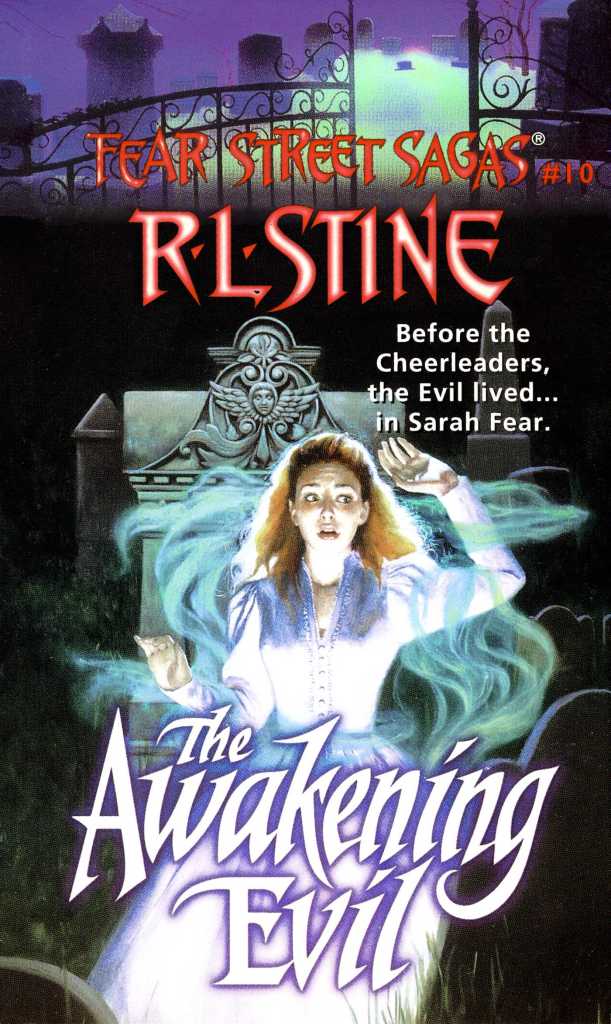
I read some of these Fear Street books as a kid. Each one began with a yearbook. Each one crossed out these pictures as the teenagers were killed off. The story that stuck out the most though was woven throughout the Fear Street and Fear Street Cheerleaders books: Sarah Fear and The Evil.

Sarah Fear was like “I woke up like this.”

The movies are loosely based on these. In this case that’s a good thing — the movies elaborate and elevate the campy horror I loved as a kid to something I really enjoy as an adult. Not only is it good horror, it’s smart.

There are many themes touched upon in the Fear Street movie series. I noted:

  • Racism/Classism (Shadyside vs Sunnydale. Even the names show a clear distinction in their fortunes, but Sunnydale’s good luck is at the expense of Shadyside’s sacrifice)
  • The Societal Harm of Misogyny (Literal witch hunts. Women who spurned the advances of men are accused of witchcraft – sentenced to death for the mere act of denying a man.)
  • Homophobia (The plot begins in 1666 with Sarah and Hannah accused of witchcraft since they love each other.)
  • Legacy and The Choice to Bear it or Break it (The Goode Family continuing their “traditions” to ensure their good fortune at the expense of others).
  • Reversal of Expectations (Goode = Evil. Fier/Fear = Innocence. Sunnydale is full of dark secrets, while Shadyside is innocent.)

I find that good horror, the stuff I want to watch again and again, isn’t just full of cheap scares. Good horror is about something.

My favorite horror movies are in the realm of It Follows, A Quiet Place.

Fear Street decided to be more than just a trio of slasher flicks. It’s clear depiction of classism separates and destroys people. Because one man, Solomon Goode, decided he wanted power over others, he doomed an entire town for generations. “The sun will shine on us yet,” he says, prophesying not that his crops will grow, but that he will be among the chosen few, at the expense of whoever is sacrificed.

Shadyside is plagued with gruesome murder and people being trapped in the town due to financial reasons. “Nobody ever leaves Shadyside” is a poignant line spoken from despondency. Sunnydale is the cookie-cutter perfect town. As long as each generation of Goode sacrifices someone to the evil forces that Solomon summoned, they will remain prosperous and carefree. Who cares if some teenagers die? Or a church full of children? Power over all becomes the ultimate evil here. The pulsating blob of malevolence in the caves is just a personification of that.

Forcing the Shadysiders to kill each other? That’s the whole dog eat dog mentality that plagues the working world. Step on someone to get ahead, that’s what the corporate bigwigs do right?

Nothing like someone over analyzing horror movies to ruin the mood, amiright guys?

But our Shadysiders make the ultimate decision to fight this. Our main characters band together to take down the evil. They fight against expectations and they honor the memory and wishes of Sarah Fier. The truth sets them free, and follows Goode to the end of his days.

When Deena and Sam emerge from the evil caves at the end of the third movie, they emerge in Sheriff Goode’s house. It’s beautiful, perfect, and full of mounted and taxidermied goats. Goats, of course, being a symbol of the Devil. The girls go out to the street, bloody and bedraggled. A neighbor spies them as he’s backing his car up, which causes him to be flattened by a passing truck. Sunnydale’s good luck is over and that is due to the actions of the Shadysiders.

If you are writing horror, you’d do well to take a page from Fear Street‘s book-to-movie adaptation. Making your movie about something other than just an axe wielding serial killer will capture your audience’s imagination, bring to light societal problems in the real world… and possibly lead to a few sequels. Anyone can write about some murderer picking off teenagers, but to make that story more than scares elevates your writing to the next level.

It’s been many years since I read the books, but I believe The Evil was originally Sarah Fear’s revenge personified. I distinctly remember her dying on her passage to America, cursing her sister or somebody for making her go on this journey. The movies decided to go deeper, and the revelation of the real evil was a great twist that made for excellent commentary on classism, misogyny and more.

I’d totally watch more of these, Netflix. Please continue giving Leigh Janiak the chance to direct them.