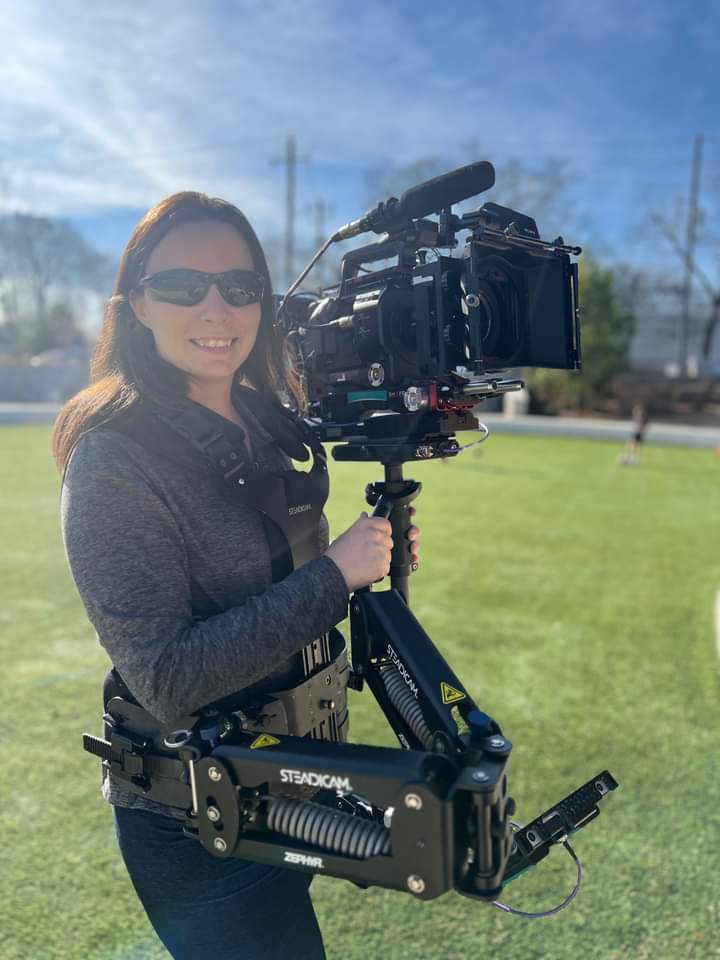
The Atlanta Film Yard Sale – Year 2!

Last year, a group of three camera department women got together to plan a simple yard sale — that ballooned into the event of the year. Those women were Erin Zellers, Tina Somphone and myself. And we had to go bigger and better this year.

I wrote about the first one here: https://bridgetlamonica.com/2024/09/11/the-atlanta-film-yard-sale-and-building-a-film-community/

Being a filmmaker doesn’t mean you are an artist on an island, creating alone. Film production is the ultimate group project. (sorry kids in high school, you still have to get along with other people!) Just as you would make a film with a group of dedicated people, the yard sale event comes together thanks to a wide network of people, from the three organizers, to the volunteers, to the sponsors, to the vendors and the attendees.

There was a lot of well-intentioned pressure from Year 1 to keep going. We didn’t even finish having the event last year before people were asking us when we would do it again. “Twice a year?” some people suggested. We all turned pale. “Once a year is fine” we assured them.

As 2025 dawned, we got to work.

Looking at what we got right and what needed work last year, we started figuring things out. One biggie was that we needed more space. We absolutely packed 24ATL last year, the LED Volume Studio in Doraville GA. It was a great space (and that wall is super cool, you should really check it out) but we ended up shortchanging people on space and didnt’ want to do that again.

Plus the need was simply greater this year. I know I haven’t discussed it on the blog much but I have talked endlessly about this to folks in person. The film industry is not in a great place right now. People are making the decision to either transition out of the industry entirely, or are holding on with their fingertips and hoping things will pick up work-wise. For this reason, there’s a number of people who just need to make some money or want to transition their business to something else. We had plenty of people who wanted to sell at the event.

Our sponsors this year made it possible to get any further. You can’t host an event without money to organize it.

Tier 2 Sponsors

You can see Local 600’s writeup about the event here.

Tier 1

Yes, we had a lot of sponsors! They donated money, prizes for the drawing, and more. We also had a surprise bonus drawing prize from Panavision! Super awesome.

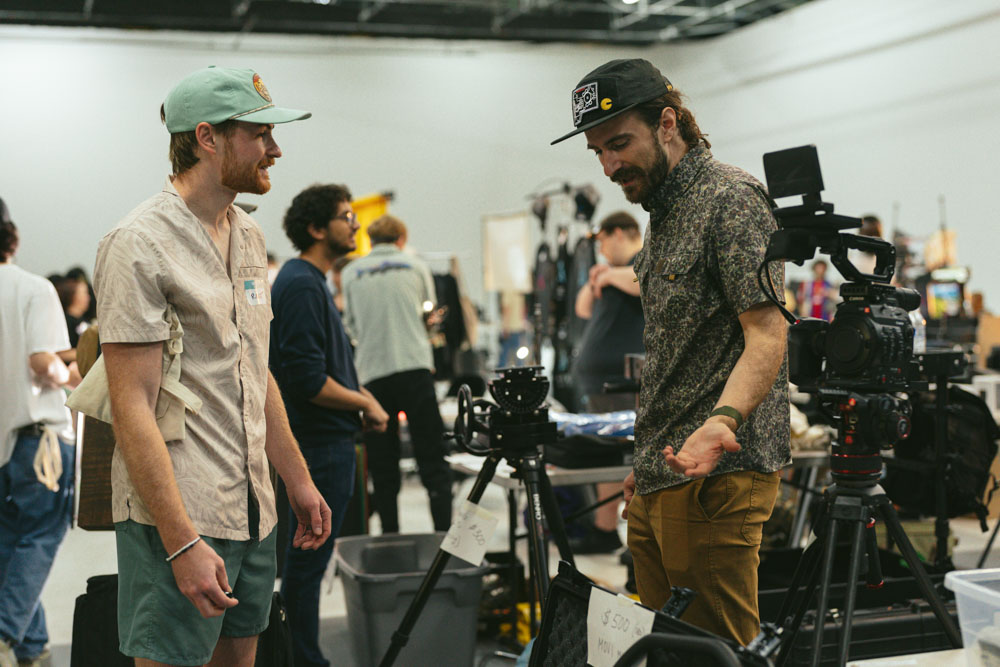
PC&E (Production Consultants & Equipment) became our venue for the event. Not only do they rent out a lot of film gear in the local film industry here, they also have an enormous sound stage that we would end up filling. And then some.

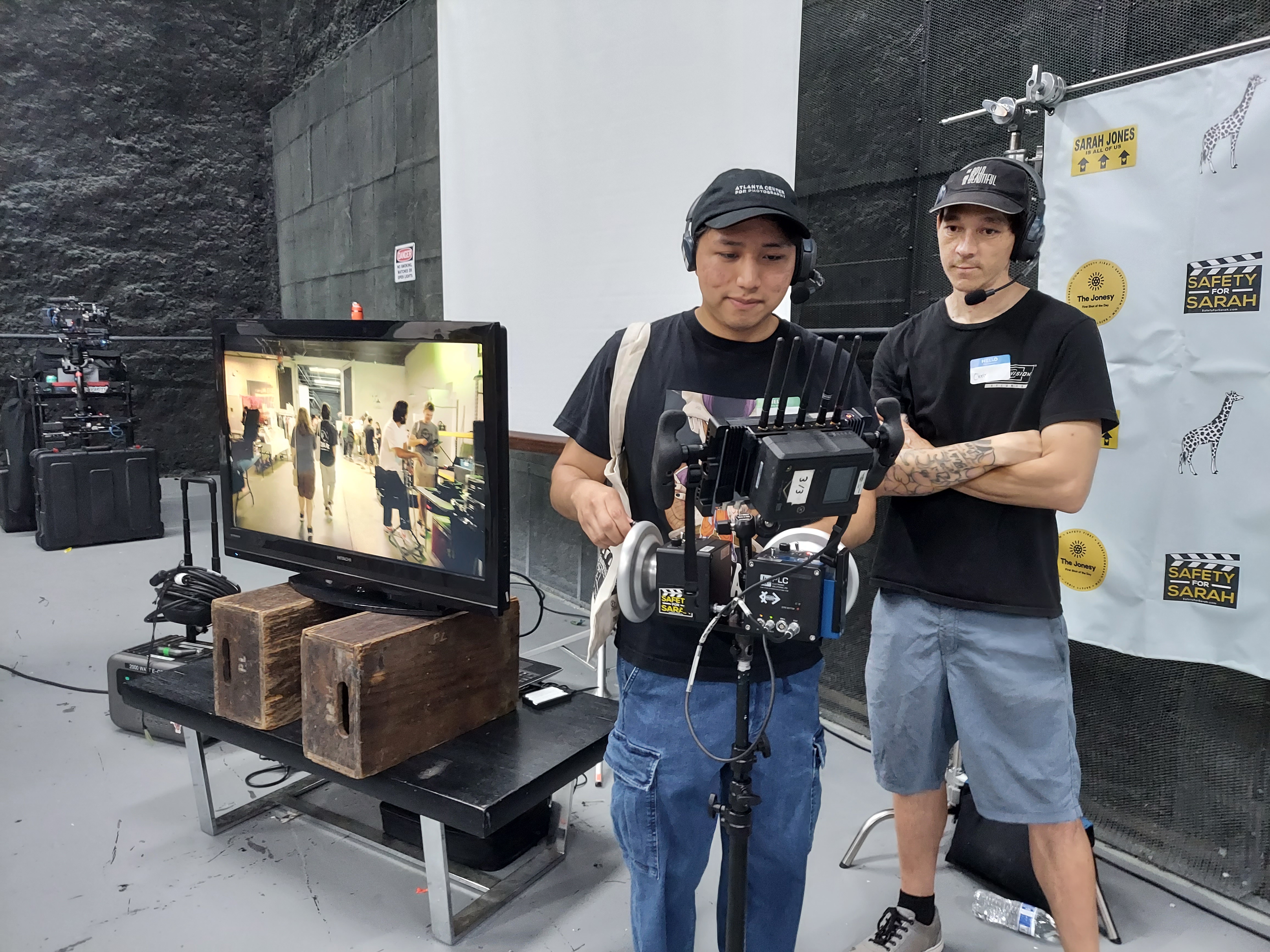
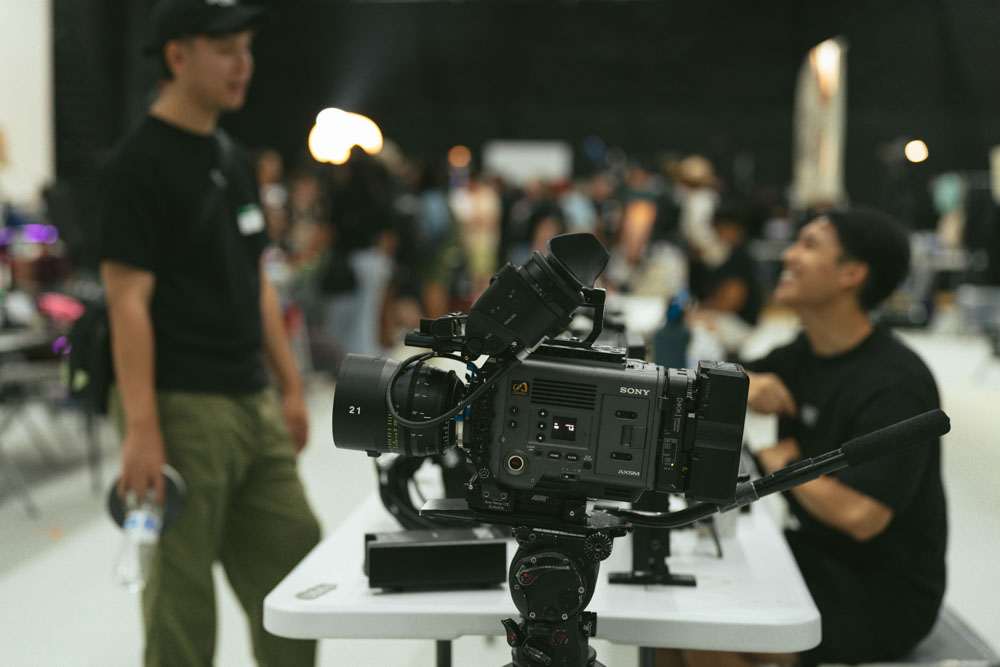
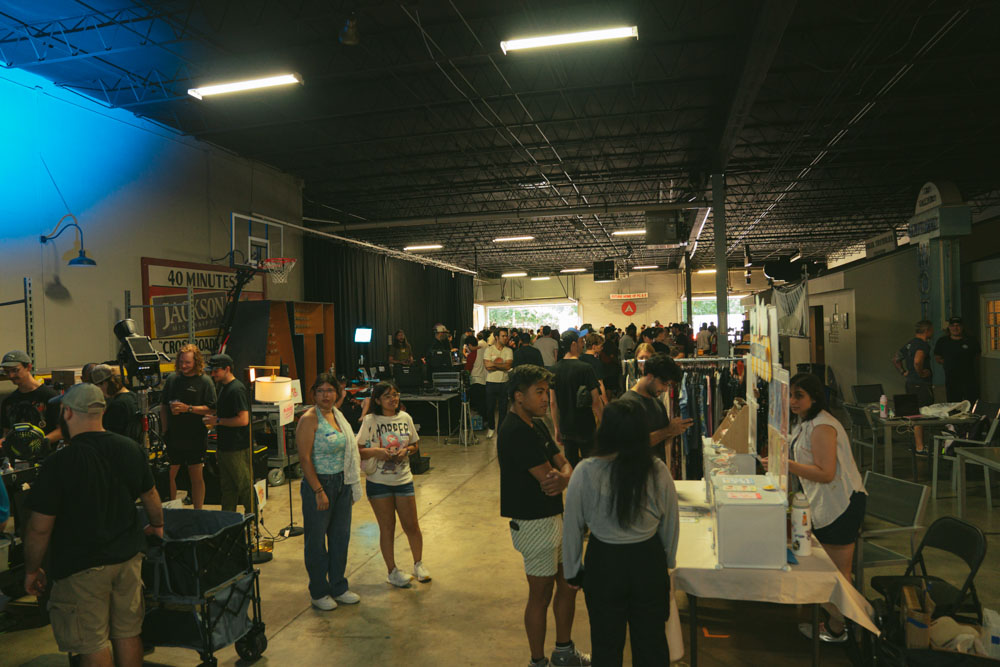
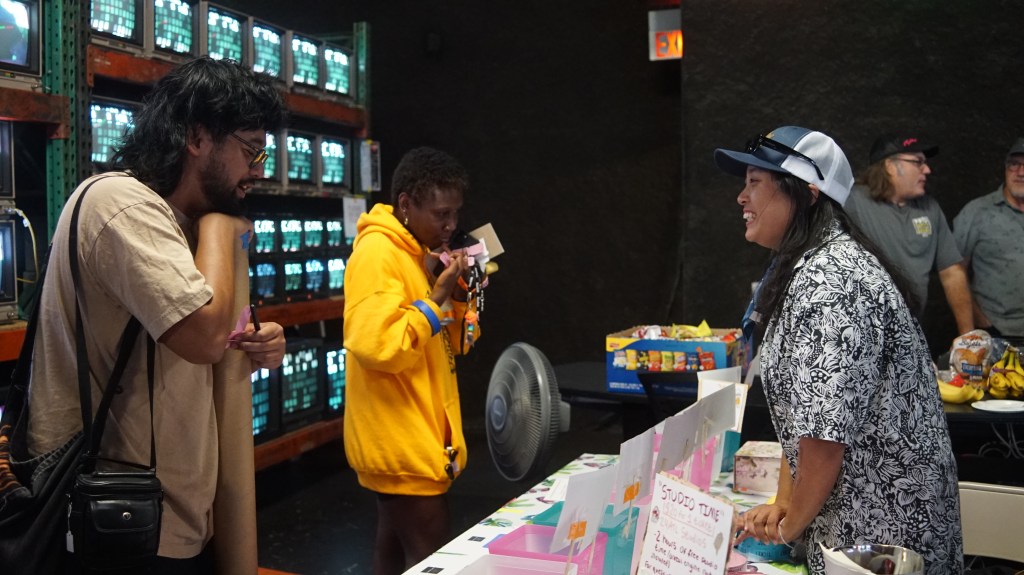
We filled every available space, from the entirety of Stage 1’s 9400 sq ft to the staging area leading to it and the outside. We had people everywhere! Plus food trucks. Plus activities like a scavenger hunt.

This year we were able to raise money for a cause that’s near and dear to a lot of members of the film industry, the Sarah Jones Film Foundation. The foundation honors the memory of 27 year old camera assistant Sarah Jones, who tragically lost her life in February 2014 due to an accident on the set of Midnight Rider. The foundation provides education and awareness, film safety grants, and even a wonderful film internship program. You can learn more about the foundation here.

Thanks to our donated items, our drawing prizes, our vendors and sponsors, we were able to raise $2500 for the foundation.

We also held demonstrations this year! As is typicaly with the film production life, we had a couple cancellations that had to be filled, and everyone who did a demonstration did an amazing job.

The demonstrations included an excellent “how to film stunts” demo with Good Slate Pictures. They also have a YouTube channel so you should definitely check out their stuff! Their YouTube is called Behind the Stunts.

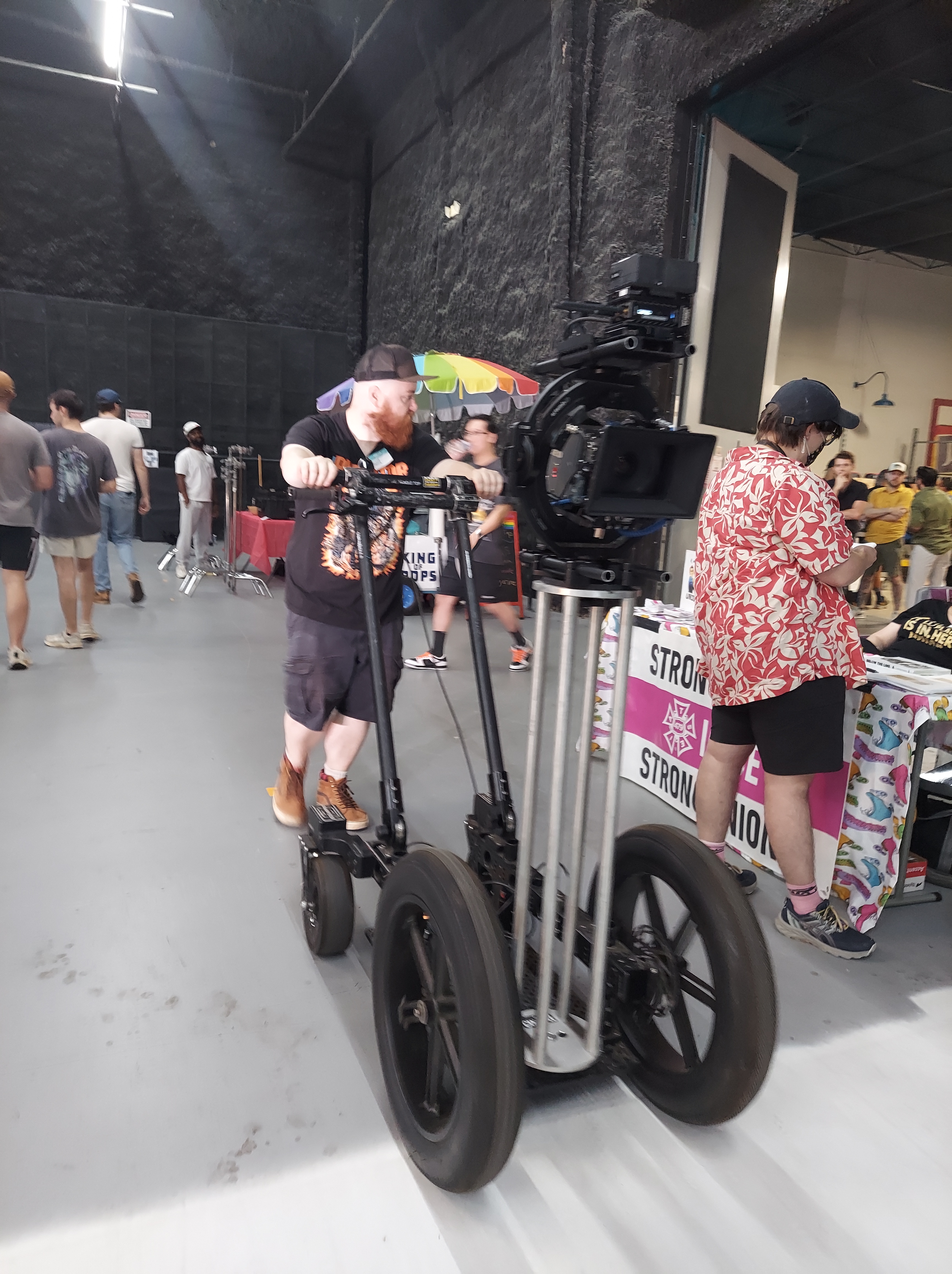
Chris Roe, ARRI Certified TRINITY Operator, Cinematographer and Steadicam Operator, brought his cool rickshaw with remote head! Folks got to try to remote head for themselves as the rickshaw roamed the space.

Kenya Campbell and Deanna Griffin did a DP/Gaffer fireside chat. It was great information to share with our audience as experience levels varied. Plus it is always great to learn new tips, tricks, and practical information to make you better at your job!

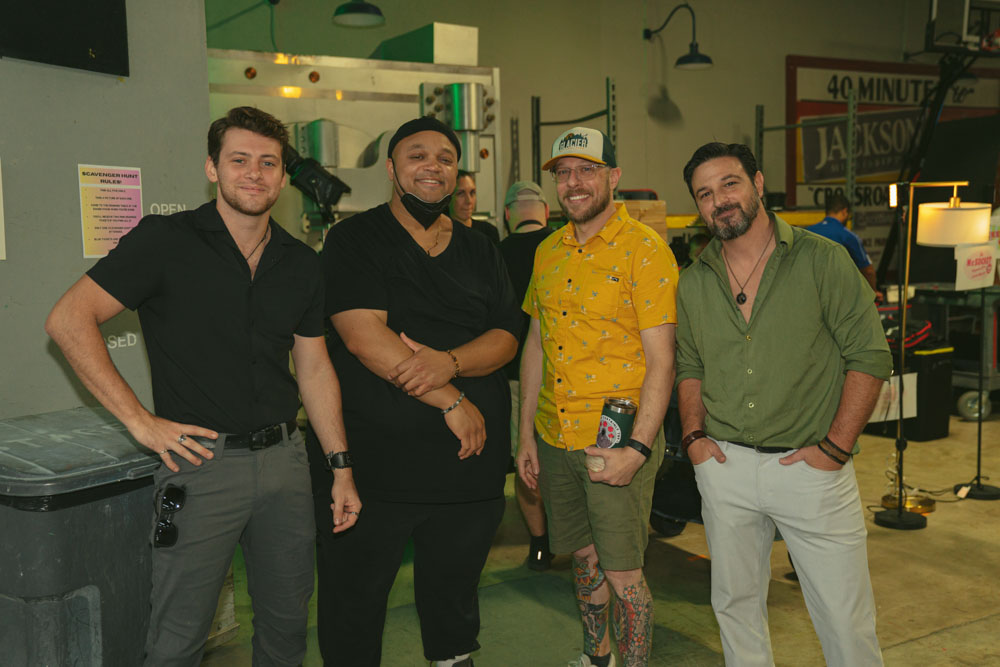
I can’t say enough about how this community came together! This, my friends, is what the film industry is all about. Working together towards a common goal. Sharing education and resources. Having a good time with your friends.

We’ll see you at the next one.

Photo Credit: Local 600 Still Photographer Josh Stringer

Not One Size Fits All – Easyrigs and You

I’ll never claim to know it all. I’m a camera operator and there’s always going to be gaps in knowledge, new technology to learn, or new techniques to master. And you too should never stop learning.

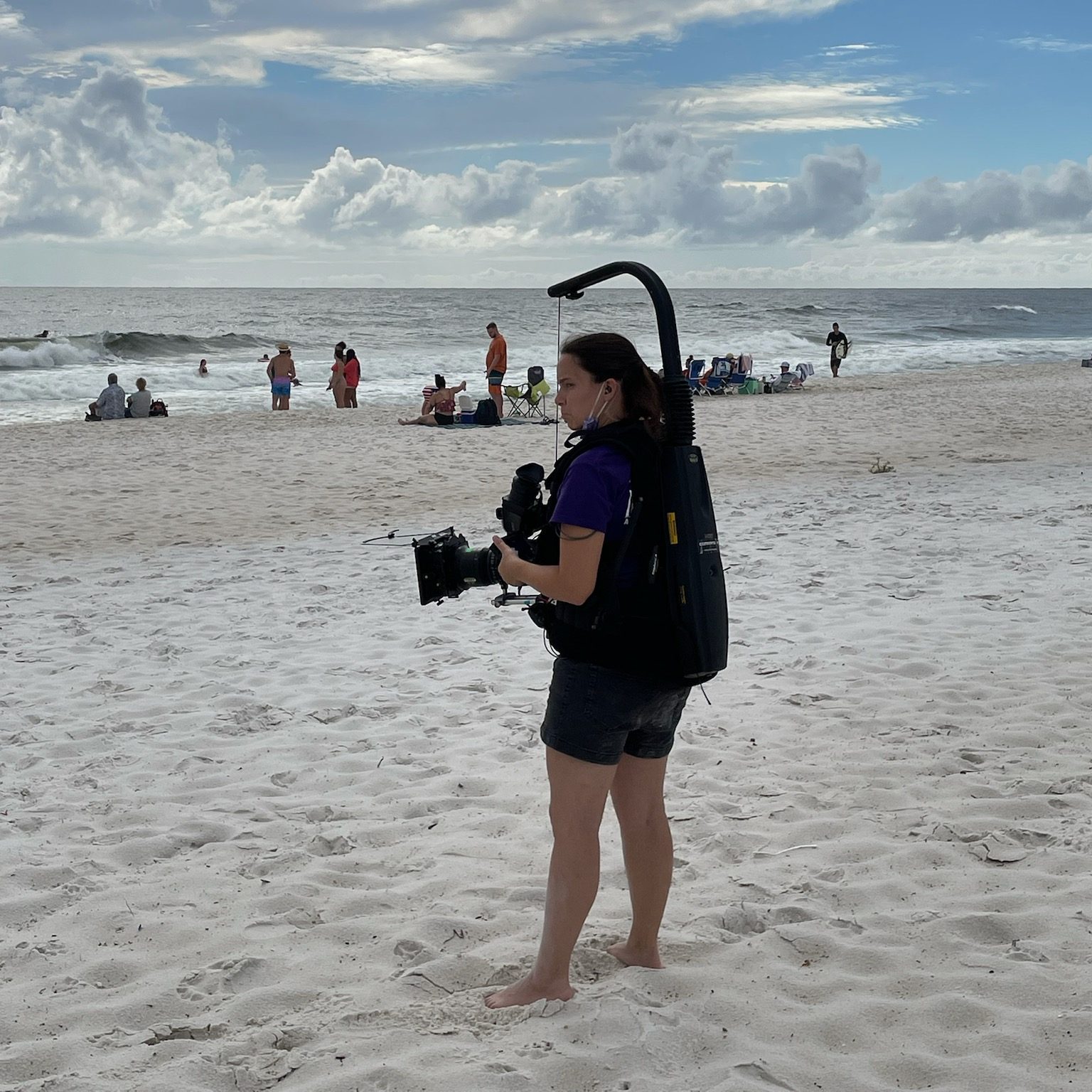
So when I entered season 3 of a reality show, I was definitely surprised when the Easyrig production provided for me just didn’t feel right.

For those not in the know yet (and that’s okay, remember what I said about learning?) – An Easyrig is a camera support system that helps reduce back strain especially when doing handheld with heavier cameras. You probably wouldn’t use one with a smaller camera, like a Lumix or A7s, but for your bigger cameras, it helps a lot to distribute the weight.

It’s sort of a vest thing – different from the Steadicam because it’s a lot softer material in the front – and it has an arm over top that carries the camera via a clip and string. Everything’s attached to a pulley system inside the hardshell on the back.

There’s straps and things to help you adjust it to your body but what I didn’t know… was that the Easyrig wasn’t one size fits all.

We started a scene in an office where a bunch of cast members were doing a meeting. It was going to be a long scene, we knew that. It would be difficult to stop and start again, so we prepared for the long haul.

But as I was operating, I felt the vest slipping lower and lower. I tightened it to the point where it was nearly suffocating, and it was still slipping. The lower portion of the vest where there was a hard point eventually rested on the top of my thigh, and I tried to push through the discomfort.

Of course, that’s when my leg began to go numb.

I kept trying to readjust my body and how I was holding the camera in order to find some relief and power through the rest of the scene. But it wasn’t working. My leg was tingling and going numb and I knew there was a problem.

I finally got on the walkie – something I try not to do during a scene unless it’s absolutely necessary – and called out to production that something was wrong and I needed to set down my cmaera.

Crickets.

Unfortunately for me, they either didn’t hear me or nobody knew who should answer. That’s a problem.

My leg was getting worse. I was probably just going to cave and set the camera down mid-scene, which was something I was loathe to do. I called over walkie again. No response. But then my DP came in and said “Hey, my B cam needs a break. We’ve got to stop now.”

And we did. I took everything off, re adjusted again, took a mini-breka, and went back into it. The rig was slightly better after the break but… it was still starting to cut into my thigh. I found myself hiking up the bottom of it just to keep going with the scene. It was rough. I knew something was wrong.

I ended up calling 16×9 Inc for help. 16×9 Inc is an authorized Easyrig dealer, and the guy on the phone (I’m so sorry I don’t remember your name) walked me through what I needed to know about Easyrig fits. We decided that the right size for me would be a different model, the Easyrig Gimbal Flexvest.

When I got the new Easyrig it was like the clouds finally parted and I could see the sun.

So now I’m the first person who will tell female and smaller-framed operators “Make sure you get the right fit. Easyrigs are not all created equally. They are not one-size-fits-all.”

Putting the Easyrig on

The Easyrig slides on sort of like an awkward, top-heavy backpack. Whenever putting on or using the Easyrig, you need to be aware of your surroundings and of the people around you. You are now taller and bulkier, plus you have a camera that could swing free and hit someone if you’re not actively controlling it.

I usually adjust the waist straps first to get the rig situated properly on my hips, then clip on the chest harness part. Tighten straps for the chest harness so it’s snug, and do the same for straps that are connecting the top to the bottom.

Test the fit by grabbing the vest and seeing if it moves. If it does, you’re not tight enough. Then also test the length of the vest by seeing if your legs can move freely up and down without hitting the bottom of the vest. If anything moves, tighten stuff up. If’s its all the way tight and things still move (especially when you put weight on it) it’s time to consider a different rig or a different method to operate the camera.

It it absolutely not worth hurting yourself to accomplish any shot.

Instructional Video

Dom from LensProToGo goes over how to fit the Easyrig on your body in this video:

Be safe while operating, friends!

Podcast update

We’ve been hard at work bringing Lights, Camera, Remake to life. We are currently up to 11 episodes on Spotify and I’m slowly uploading the episodes to Youtube as well.

We will be looking for sponsors as we grow.

In the meantime you can support us by following on your podcast streaming platform of choice and sharing the episodes or reels we put out. This is a labor of love and we enjoy sharing it with everyone. The response has been wonderful so far.

Instagram: https://www.instagram.com/lightscameraremakepodcast/

Youtube: https://www.youtube.com/@LightsCameraRemakePodcast

Lights, Camera Remake! A Podcast about Hollywood Unoriginality

Yet another person with a podcast. Oh my goodness. But let me explain.

One of the age-old complaints about movies and Hollywood in general is that there’s no originality left. We see endless remakes, reboots (slightly different), sequels, spinoffs and adaptations. Can’t they come up with anything new?

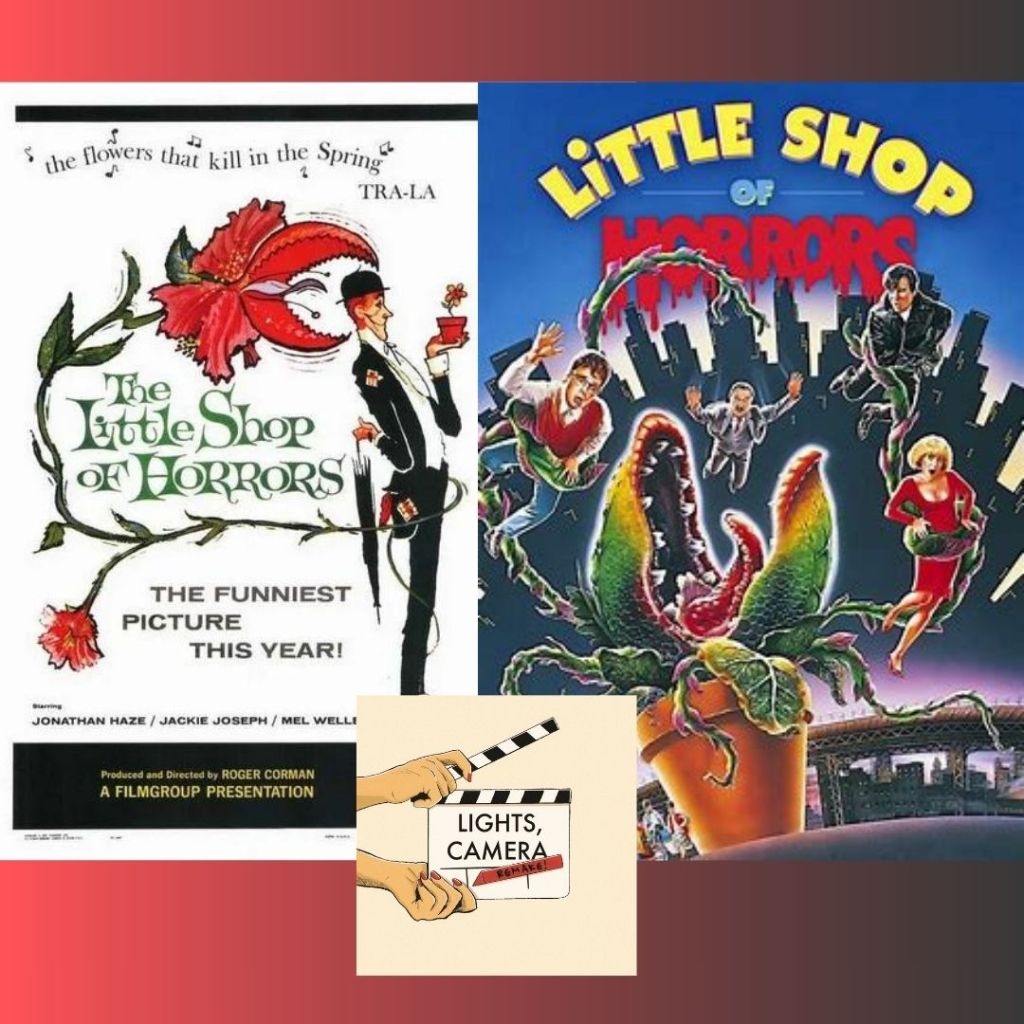
As I began to dig into this idea, I found some surprising things. Like the fact that Little Shop of Horrors -the musical comedy horror starring Rick Moranis and Ellen Greene? – was actually a remake of a low budget movie from 1960. Did you know that Martin Scorsese’s The Departed is based on a 2002 Hong Kong film Internal Affairs? 1998’s You’ve Got Mail is a remake of The Shop Around the Corner (1940). Ocean’s Eleven (2001) is a remake of Ocean’s Eleven (1960).
A remake of an old movie can bring a classic story to a new audience… and also sometimes make audiences really angry.

That passionate knee-jerk reaction is worth discussing.

I’d love to see more originality in the movie theater. The problem is — those movies have a harder time finding an audience.

Hollywood studios and executives are running a business, and they want to make money. And working with something that has established IP (like a Marvel movie, or a book adaptation, a remake) somewhat guarantees an audience will attend. At the end of the day, they just want to make money and make their shareholders happy. And they want to keep their jobs.

Anyway, my friend Erica Strout and I got talking, usually at work in between setups or at lunch. We met on a reality show TV show with myself working as the camera operator and Erica as my camera assistant. We became fast friends. And then we watched movies together. And had a lot of discussions about film in general.

Now we’re doing the Lights, Camera, Remake! Podcast.

This amazing artwork created by Taylor Rebyanski!

Is it always a bad thing to see a remake of a classic (or possibly unknown) movie? Our podcast looks to break it down and see if there’s merit to Hollywood shirking an original idea for a retelling.

On each episode we’ll look at a movie and its remake, or sometimes a movie and its sequel, to determine if Hollywood rehashed it for a reason or for a cash grab.

Episode 1 is about Solaris (1972) and Solaris (2002).

Solaris is an atmospheric Russian science fiction film based on a book. It was later remade in 2002 starring George Clooney.

You can listen to the episode on Spotify or right here:

Episode 2 is Little Shop of Horrors (1960) and (1986).

Next up this week is Weekend at Bernie’s! The episode will be uploaded on Wednesday, Jan 22.

Follow us on Spotify, Instagram and Facebook!

https://www.instagram.com/lightscameraremakepodcast/

https://www.facebook.com/profile.php?id=61560111332548

We’ve also got an email you can submit ideas, comments or random concerns too. We understand you have those.

LightsCameraRemakePodcast@gmail.com

http://www.screenrant.com/movies-secretly-remakes-surprising/

theenemyofaverage.com/movies-that-are-remakes/

How to Avoid Film Job Scams – Take Nine

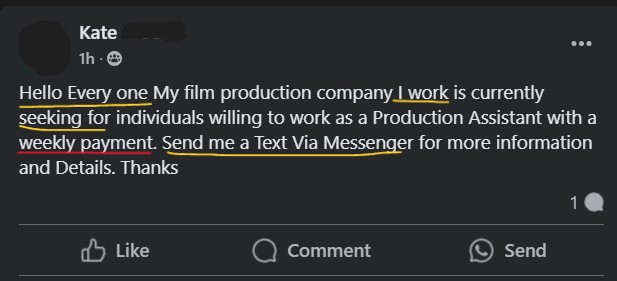
On the Facebook film page I help manage, we’ve been getting flooded with scam posts again. They sneak into the group answering the group rules and questions, pretending to be real people, and then they post something like this garbage:

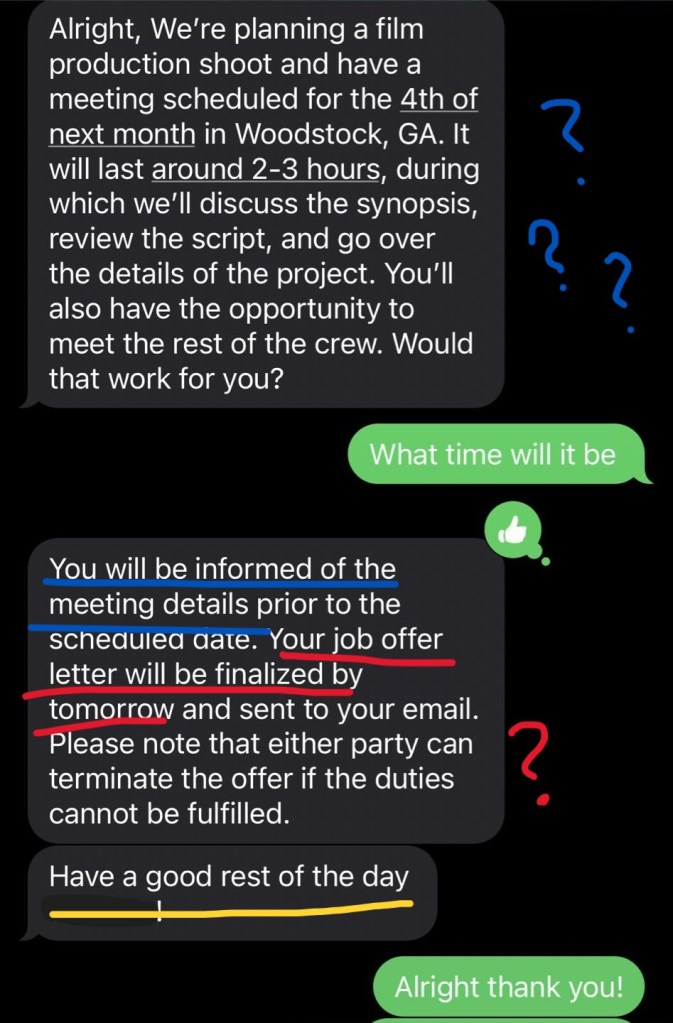
In my annotations, I marked in yellow the bad English grammar usage. In Red we see where it is obviously a scam.

For some reason, the scammers love to advertise a weekly payment.

As I see them, or as they are reported by community members, these scammer posts are deleted and the user is banned. Sometimes I’ll post about it on the page immediately after and hopefully catch whoever might have already emailed the scammer. But since it is nearly impossible to keep up with scam posts (I just can’t be on the page 24/7 people. I know.) my main goal is to educate our populace so that we all know what signs to look for.

Check out this similar scam job posted on a Florida film group:

I’ve redacted some identifying info like the full email and the name of the poster for two reasons. 1: the name might belong to a real person who was hacked or is being impersonated. 2. I don’t want someone mistakenly reaching out to this person.

To be fair, there’s not a lot in this particular scam job post to clue you in, but we will note a few things here before we dig deeper:

In Yellow: Things that are suspicious. One, “we are seeking” has been in a lot of scam job posts, but it is not necessarily only used by scammers. Two, the weird email they are using. Doesn’t look professional at all. But a scammer might use gmail or something that looks like a company email and a real person may be using a weird email. So it’s not a huge red flag.

In Blue: Some misunderstanding of how professional film people work. We see them stating their budget – not necessary for a PA or a Set Medic to know. But some folks might post this (see how this gets difficult to tell a scam job post?). We also have them clarifying that Production Assistants are also “PAs.” It’s nitpicky but you shouldn’t see that kind of explanation of film terms in a job post.

In Purple: I redacted part of the name but I’ll tell you that a lot of these scammers have been using weird, backwards names. Like Smith John instead of John Smith. I think it’s because they’re stealing the real John Smith’s info but reversing the name. I’ve seen this before with Jeffery Cooper/Cooper Jeffery, though the jury is still out if there was a real guy being personified or if this was just a fella using every random name he could think of.

Luckily, we can see what happens after you contact this potential job. I’m redacting their info as well, but we will call them Lily.

Lily applied to the job after seeing it on the Florida film group. Lily then received texts very soon after applying:

In Yellow: Bad grammar.

In Blue: This scammer clearly posted this scam elsewhere, because they mistook Lily as being in Pennsylvania, instead of Georgia or Florida (the group where it was posted). The scammer then immediately disregards Lily asking if the production is in Pennsylvania because they are just responding with a copy/pasted response.

In Red: Here’s the hallmarks of the scam. They try to lure you in with a flexible working situation that “won’t interfere with your current job.” That’s not how productions work! At all! They also talk about the weekly rate here, which I’ve pointed out countless times is a scammer tactic.

In Blue: Here we have a weird misunderstanding about how production works. This is continued in the next screenshot below. This person is telling a PA about a meeting and discussing the synopsis of the movie and all that. A PA would not need to be at that meeting or need that information. I don’t know why they think including this makes it seem more legit. It just makes it clear they don’t understand the film industry.

In Blue: Continuation of the weird meeting mumbo jumbo. “You’ll also have the opportunity to meet the crew!” Oh how cute. Typically that’s done on … day one of the production. Like everywhere else.

In Red: More scam red flags. A job offer letter is something a traditional job may give you, but productions are short term. If anything, you should be receiving a deal memo.

If you see a suspicious job post in a Facebook group, make sure you report it to the group admins. And if you start getting suspicious texts like these, check it against the red flags we’ve gone over here and in other installments of “How to Avoid Film Job Scams” in order to best arm yourself against a scam.

Sources:

Federal Trade Commission – Consumer Advice: How To Spot, Avoid, and Report Fake Check Scams

The Evils of the Rolling Take and Reset

Let’s dig into a pet peeve of many on set: the rolling take.

A rolling take is when you keep shooting and keep repeating the action. Like an actor walking in to a room who flubs a line and goes back to start it over again. That can be a valid reason for a rolling take. No need to re-slate and re-call action. Just try it again.

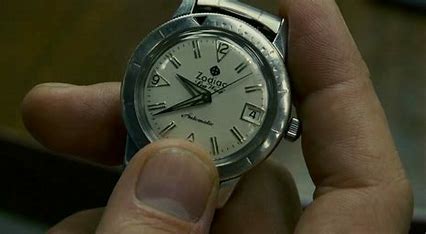
An Insert Shot: A watch being picked up and brought into the frame is a valid reason to do a series of the same action without cutting in between.

A rolling or series take might be done on a particular insert shot to get it right. Let’s say your actor needs to throw a letter to land on a desk just right. The director might ask for a series or rolling take in order to keep attempting that throw to get it the way they want. No fuss, no muss, and no wasting extra setup time to get that insert shot that you’ll see for two seconds on screen.

Directors don’t work the slate but I’ll allow this since it’s clipart.

Imagine this scenario: It’s after lunch. The Assistant Director is informing everyone for the third time that you are now an hour and a half behind on the schedule. You have several more scenes to light and shoot and somehow you have to make up a significant amount of time. Hence the anxiety that leads inexperienced directors to try shortcuts. One of those shortcuts is overusing a rolling take.

After experiencing this on a number of films, I’ve observed that green directors love to overuse the rolling take. They’re feeling the pressure and just trying to get footage in the can. The AD, meanwhile, is just trying to make their day. Now suddenly, you’re filming scene coverage as a rolling take, not cutting when you reach the end of the action, but waiting for the actor to reset and just going with it, maybe for multiple “takes.”

A rolling take going on and on is more trouble than it’s worth.

Time = Money

First, what should be obvious — you’re using up footage. This became less of a crisis when most of us went from actual film stock to digital, which is a much cheaper alternative, but digital does not mean free.

Film costs include the film stock, developing, processing, and digitizing so you can edit on a computer.

But just because you can hit “record” on a camera doesn’t mean that doesn’t cost money. Each card needs to be purchased, and you need to have enough available media to get through the day’s shooting without having to write over those cards with additional footage. Ideally, you want your DIT or media manager making backups throughout the day. That means the production also needs to purchase storage and backup storage for that media.

So let’s say you think you know the costs and you’re still cool with doing 40 minute takes instead of a few 5 minute takes. All that footage needs to be downloaded and viewed, meaning you’re paying for the media manager’s time to download that footage and make copies, as well as the editor down the line. A single 40 minute clip is just going to take longer to download and transfer. And you might be paying overtime to the media manager who is staying late dumping all that footage.

Wear and Tear on Cast/Crew

In the moment, if you abuse the rolling take, you’re quickly using up the energy reserves and physical strength of your cast and crew.

You’re also using up your camera operators and 1st ACs and boom ops and everyone doing something physical for that scene that no longer get that tiny bit of rest to reset themselves.

  • The cast has to stay in-the-moment and may get frustrated, flubbing lines more and more.
  • The boom op has to hold that boom pole and actively follow whoever is talking without getting that small break in between.
  • The camera operators might be doing handheld or Steadicam and are using up their muscles faster.
  • 1st ACs, staring at a screen for minute changes in focus, don’t get to rest their eyes.
  • Script supervisors’ notes get complicated as the same scene plays out multiple times in the same take.

When I’m doing Steadicam or handheld, my least favorite thing is a rolling take, especially if it’s long. I just need time to reset. Sometimes there’s an adjustment needed in a handgrip on a shoulder rig or I need to fix the balance on the Steadicam.

Other concerns? Using up batteries! You might be playing beat the clock with what battery you have left in the camera or on the mic packs.

Closing Thoughts

Using a series or a rolling take can be done with purpose. It’s just another tool in your kit. Abusing it can lead you to creating an uncomfortable work environment for your crew. So before you panic and decide to just “roll on everything” look at it critically and see if a rolling take is necessary or if you need to re-evaluate and be more concise with your time.

The Atlanta Film Yard Sale and Building a Film Community

Last Saturday was the Atlanta Film Community Yard Sale, and I’d like to gush about it a bit.

In a group chat, fellow camera department lady Erin Zellers made a slightly joking comment about us all getting together to have a yard sale. I did a similar event with Film Impact Georgia last year which was popular, so I heartily agreed and wanted to take part. Together, Erin, Tina Somphone and I started planning the event we had no idea would grow from a couple of folding tables on someone’s lawn to the event of the year.

The Venue

We started thinking along the lines of a traditional yard sale. Getting a group of film friends to sell their gear in one place. A lot of people seemed interested, and we realized we’d outgrow a front yard really fast. A studio rental was the ideal way to promote film in a place that shoots film while avoiding potential weather delays.

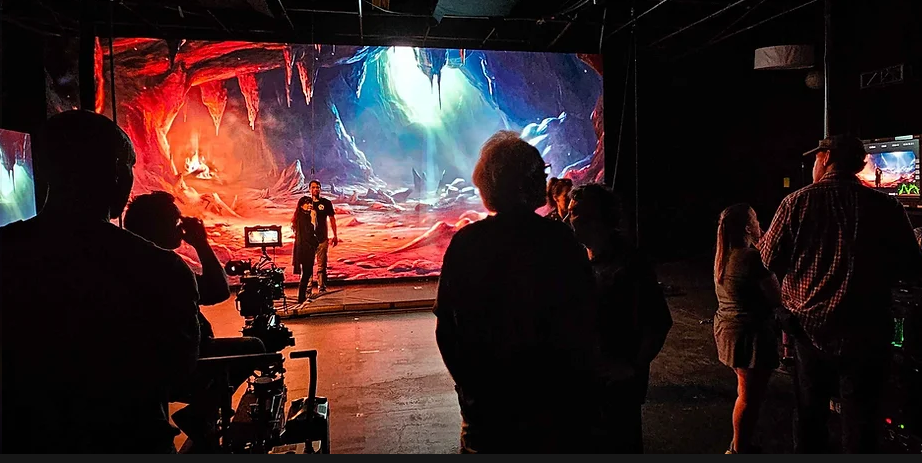
24ATL Studios, an LED Volumetric Wall Studio in Doraville, GA, took us up on our offer. Our challenge was coming up with the money for the rental. That’s where sponsorships came into play.

This image has an empty alt attribute; its file name is 24-studios-space-pic.png

Here’s a still from a short film I worked on at the studio.

Sponsors

Our sponsors ran the gamut from traditional film to grip gear to beverage companies.

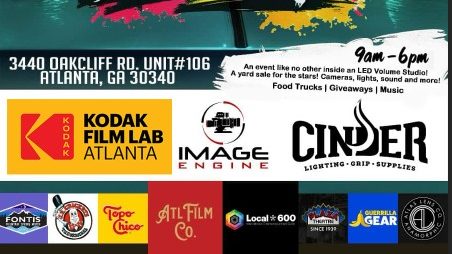
  • Cinder Lighting and Grip
  • Kodak Film Lab Atlanta
  • Image Engine/Elemental
  • Guerilla Gear
  • Hammerhead Wheels
  • Atlanta Film Co.
  • Local 600
  • Plaza Theatre
  • J.R. Crickets (food truck)
  • Topo Chico
  • Fontis Water

Our sponsors provided us not just with money to rent the studio and provide for our attendees, but also gifted items as prizes and even held free giveaways. Several of them held demos at their booths if they attended, like Hammerhead Wheels giving people the opportunity to test out the wheels or Kodak with their film loading demonstrations. Image Engine and Elemental owner Marque showed the set of wheels that controlled the rig on his impressive camera car. Cinder gave away tons of free expendables to grateful attendees.

Vendors

In addition to our sponsors, we needed vendors to sell their goods! The goal was to have an event specifically catering to the film industry. Only film, photography or related gear would be allowed.

Our vendors were a mix of companies and individuals. We got a good selection of everything from digital cameras, lighting gear, sound equipment, Steadicam accessories, photo equipment and even a wardrobe seller. Next year we’d like to expand that and get some more variety in departments represented.

The Why of it All

The Atlanta Film Community Yard Sale put an emphasis on community.

This event provided a safe place for people to buy and sell their gear while putting them in touch with the companies they’d interact with in Atlanta’s Film Industry. It was also an excellent networking opportunity. So many friends and colleagues were present, but so many new faces were added too. Folks went to tables and learned about different lenses or compared favorite video monitors or went over the finer points of certain lighting equipment, getting to know their fellow filmmaking professionals and learning some things in the process.

What I was happy to see what not just the sponsor’s support, but all the film industry folks who came just to attend the event and talked about how much they enjoyed it and wanted another.

We had to contact a lot of people to get the word out about this event and also to garner the support we needed. All those supply runs and sponsorship pitches and flyer distributions illuminated what should have been obvious in the beginning – Film is a community, and we were here to help support it.

Much like an event being organized, the film industry thrives on those connections and friendships built along the way.

So long for now from the 3 Gworls.

From left, Tina Somphone, Erin Zellers, Bridget LaMonica.

Selecting the Best Festival for Your Film

I saw a post online by someone asking about film festivals. They asked if Tribeca, Sundance, and SXSW were the “only” ones. There were a lot of comments at a varying degree of helpfulness.

Let me overwhelm you real quick — There are literally thousands of film festivals. So how do you choose?

What’s your budget?

Not of your film’s production, but to submit to festivals. Submitting to film festivals can cost anywhere from $15-75 or more depending on late fees. Apply early to get the best deal, but that means starting this research early too. Maybe even while you’re in production on the film. Or pre-production.

Submitting to film festivals costs money. You’re going to want to be targeted.

Know your film

Do you have a short or a feature? Was it a student film? What genre is it? All these factors are going to determine what film festivals you should be considering.

Do you have a cyberpunk scifi fantasy? Might not be Tribeca material.

Do you have a sappy romance? Not the right vibe for Sick Chick Flicks.

Research the Festival

Alright, so you’ve made a shortlist of festivals that will accept the length of film and the genre. Now you’ve got to narrow it down more.

First, is the film festival legit? Unfortunately, there’s fests out there that are not honest or forthcoming about what they provide. Some are what’s called “awards mills” that just give an award to anyone who submits. This award, and this festival, is therefore useless in proving your worth.

Other questions are: Do they screen all selected films? Is it screened in a real theater or just some random location? Does the film festival have a proven track record or is it brand new? When in doubt, Google the film festival and see if any complaints come up.

What are the Perks of Submitting to the Festival?

Do they offer great awards like representation, film budget funding, or meetings with high profile producers in the film industry? Are there professional judges? These are certainly bonuses if you submit a film and its received well, because it could possibly lead to more work for you in the future or some good meetings with the right people.

Target the Right Locations

There are film festivals everywhere, but you should have a few nearby that you can actually attend.

Attending film festivals is a form of networking, and it looks better if you’re there in person to meet with people and talk to other filmmakers about their films.

Take Advantage of Panels and Special Attendees

Piggybacking on my last comment, film festival attendance is a great opportunity to network, learn and grow as a filmmaker. Make sure to note whose work you like, who you should reach out to later and talk shop with.

If the film festival has informational panels, even better! Go and learn. When appropriate, talk to panelists and ask smart questions, but don’t take all their time. They’ll appreciate the enthusiasm and the consideration to their time and knowledge.

Closing Thoughts

Getting your film into festivals should not be the final decision you make — it should be a well informed decision you develop over the course of pre- to post-production of your film. Choosing the right ones gets you that much further ahead.

This has been on my mind because I’ve been in talks with someone about creating a local genre-specific film festival in Atlanta, and I want to make sure it’s the best it can be on its first year.

Need more info and tips for submitting to film festivals? Check out the sources below!

Sources:

17 Tips to Find the Right Festival for Your Indie Film

How to Submit to Film Festivals: Tips from an Industry Screener – Adorama

Film Festivals: Where to Submit as a New Filmmaker – Backstage

    How to Avoid Film Job Scams – Take Seven

    This is the seventh installment of “Bridget gets way too wrapped up in calling out scammers.” You know what to expect.

    Let’s look at some new examples:

    Turning Off Comments

    Scammers have gotten wise to us warning each other via the comments section whether something is amiss. If someone posted a job and imediately turned off the comments, I want you to be wary.

    What other details can we see here? I marked a lot of stuff in blue in this screenshot.

    • Mixing up Production Assistant/Personal Assistant
    • Saying this production, which they haven’t filmed yet, will air next month. As if!
    • Veles Productions (I covered a similar one in another blog also pretending to be Veles Productions.
    • The Day rate. Oh boy we have to dig into that one.
    • Bad grammar, improper use of English: “driver’s license in effect,” “be conversant with terminology.”
    • Incorrect job duties: Asking a PA to “guard the set” and help with lighting, props and more miscellaneous stuff.
    • Calling the crew “staff.” I’ve never heard that used on a film set. Ever.
    • Claiming these are 3 hour shoot days. Even the jobs that claimed to me they’d be a few hours ended up being like 13 hours.

    Veles Productions is a real production company. They’re based in Poland. But they’re not the ones behind this. Scammers steal real production company names, director names and more to pretend to be someone else in order to trick you.

    That Day Rate:

    $125.21 for 3 hours.

    First off, a “day rate” is usually going to be for a larger chunk of time, like 10 or 12 hours, and after that there’s overtime. Occasionally you’ll see a live event job or a corporate gig that’s only a few hours.

    But this fake job post is trying to lure you in with the promise of high return with little effort. They claim you’re working 3 hours a day, total of 12 hours in the week, for $1503.

    Let’s not forget that this “day rate” of 125.21 for 3 hours equals about $42/hr. Which is astoundingly high for a PA. That is like a camera operator rate on some gigs. Then if you do the math, $42/hr x 12 hrs = $504. Again, like I’ve pointed out in a previous blog post, the math just isn’t mathing.

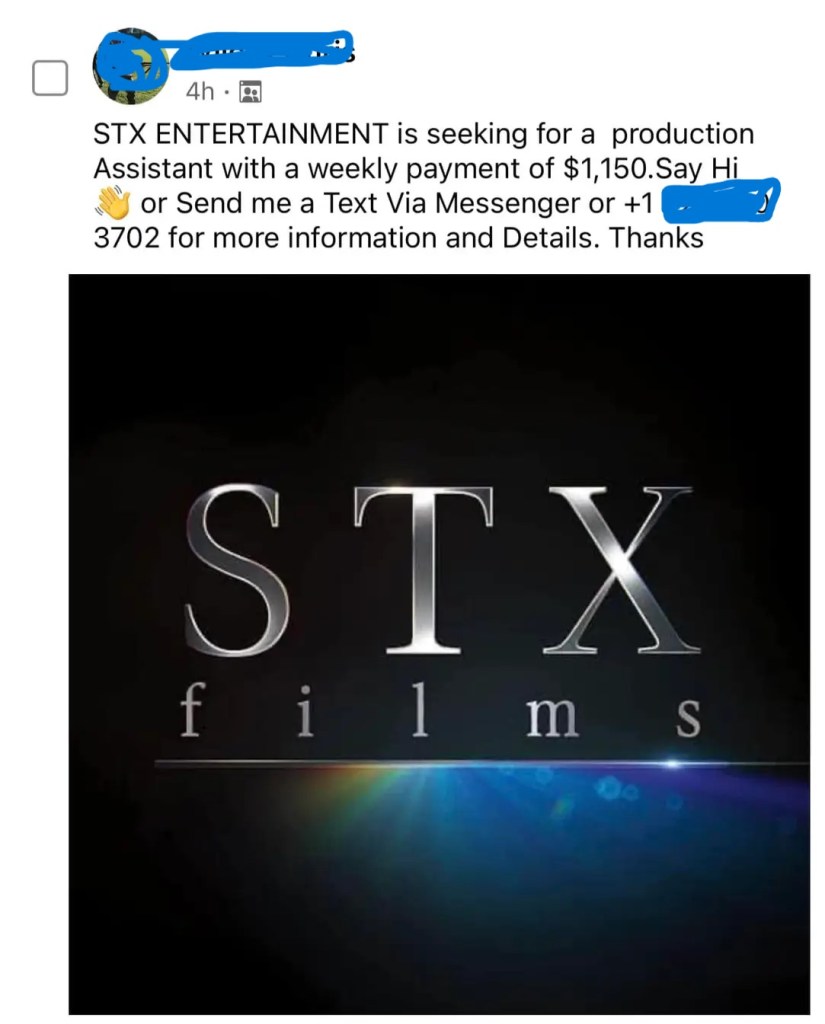
    Say hi! Cutesy weekly payment scam

    Here’s another one pretending to be a well known company.

    This is the type of post that’s way too conversational and cutesy. I’ve seen this “Say hi!” post format a million times. Productions are not going to care if you “say hi.” Sorry not sorry.

    Other red flags:

    • “is seeking for a production assistant” bad grammar
    • weekly payment
    • Say Hi + emoji
    • gives a clearly international-leaning number. The +1 is the US country code, but it’s possible this scam is meant to scam anyone in the world. And they could just buy a spoof number.

    Scamming Models

    This was one that graced the Atlanta Film Production Group for 4 hours before I was able to delete and ban the poster. First, I commented on the post, asking for clarification. Why were they asking for models to act? Wouldn’t you want actors? The poster claimed they wanted models and actors. it still didn’t make sense. Finally a community member came into the comments and said it was a scam. It had been posted in another city with the same dates and details. I did a quick search on Facebook to confirm, and deleted it.

    Also look at the comments. The poster’s English is awkward. Saying for the other guy to “go to bed” and “Don’t rubbish another persons project and dream”. That last part feels like British English but even that seems wrong.

    Would you like to PAY to WORK on a movie!?

    This one is astounding. I covered a similar one in January with another Christian film who wants extras to pay to appear in the movie.


    You want me to pay to work on your movie? I’m sorry hun, that’s not how this works!

    • Look at that AI generated image! They don’t have anything real to show.
    • claiming this is a hands on learning experience, hoping to take advantage of newbies.
    • Angling the post at teenagers. Wow that’s like extra illegal?

    This screenshot was re-posted to Crew Stories (a pretty fun Facebook group if you haven’t seen it) and the comments have torn it apart. Apparently this Aaron guy has been trying to fund and make this film for like 10 years. Other commenters had personal experiences with the individual and presented their misgivings.

    So, what did we learn?

    The same old, same old. Look for weird numbers and unreal rates and job positions. Look for incorrect film terminology or a misunderstanding of job titles. Google search names or posts to see if it has been posted or called out elsewhere.

    Stay safe out there folks.

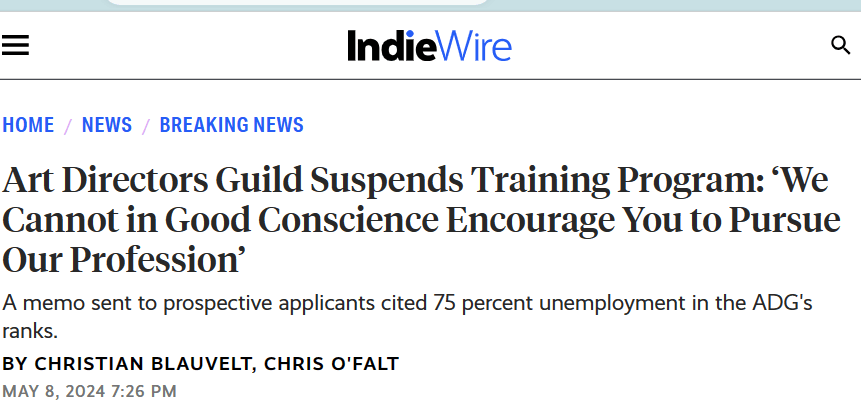
    Does the Art Directors Guild Suspending their Training Program Signal a Massive Change?

    Recently, this article made the rounds:

    Read more on IndieWire.

    The Art Directors Guild, IATSE 800, is a union representing over 3,000 Art Directors, Illustrators, Scenic Artists, Graphic Artists and Set Designers in the film industry. In the article, we learn that the Art Directors Guild sent an email out announcing they will suspend their training program due to the 75% unemployment rate among its union member’s ranks. This decision is entirely reflective of the ripple effect of the SAG-AFTRA and WGA strikes last year.

    “The industry has not resumed a full, pre-strikes level of productions, and it remains unclear if a return to that status quo is possible in a Hollywood gripped by ever-higher costs, ever-lower revenue, and increased production abroad.”

    -IndieWire

    This also brings to mind how many people I see announcing they are moving to Atlanta and looking for connections in the local film industry. That’s fine but, I hope everyone and anyone who is thinking about going into film for the first time or moving to continue their film career does a bit of research first. We clearly haven’t recovered from the two strikes last year (necessary though they were, they also hurt financially). I also question if we ever fully recovered from 2020, when the pandemic shuttered production across the world.

    But with a pandemic that encouraged people to stay inside, there ended up being a lot of TV being consumed. The streaming companies — Netflix, Hulu, Disney+, Paramount, etc — got excited.

    In 2021, Netflix boosted their budget almost 30%, putting $13.6 billion into content spending. This article from 2021 predicted their budget would balloon to $18 billion by 2025. An sharp upward trend seemed likely.

    In 2023, Netflix content spending was around $17 billion. And before you point out “but 17 is so close to 18!” I need you to realize how vast a number 1 billion represents. If we were to use time as an example: 1 million seconds = 11 days . 1 billion seconds = 31 years.

    Streamers are focusing on more original content in order to keep customers interested. There’s also a noted shift into reality style television, as shows like Netflix’s Nailed It cooking competition series are still popular and much cheaper to produce than narrative content. I’ve also talked before about these companies not greenlighting projects and just outright cancelling them to save a buck.

    The streaming companies blew their budget on a dream, and now the bill has come due. They over estimated their profitability while fighting each other for market dominance. Instead of one triumphing over the others, we have a consumer base watered down and split amongst many services, if they even have streaming at all. Who misses cable now?

    There is also likely a slow up because of this year’s negotiations between the AMPTP and IATSE, Teamsters and Hollywood Basic Crafts. The current 3 year contract expires July 31st. These unions are negotiating for proposals on Pension and & Health Plans, wage increases, residuals and concerns over artificial intelligence.

    A strike doesn’t seem as likely this year. For one, the negotiations appear to be making some headway. Several unions such as Local 892 Costume Designers and Local 728 Lighting technicians have reached tentative deals.

    But, the reality is that most folks can’t afford to have another strike. That’s concerning because of what’s on the docket but also…totally understandable. Those of us in this position are trying to recoup from last year. Some folks haven’t worked at all this year. That’s unheard of in most other professions.

    The fact that the Art Directors Guild suspended their training program is genuinely sad to hear, but it seems to have been done with the very real concern about not putting more pressure on folks who need work right now. As hard as it is to see, not adding trainees in the guild for a time is a kindness. And surely, when things pick up, they can reassess and reopen their ranks to new people.

    Will things ever go back or is this a hint at lasting change? The answer is far more complicated than we can surmise right now.

    Sources:

    Art Directors Guild Suspends Training Program: ‘We Cannot in Good Conscience Encourage You to Pursue Our Profession’

    Netflix’s Amortized Content Spending to Rise 26% to $13.6 Billion in 2021, Analysts Project

    Analysis: Content Spending Will Slow in 2023 as Streamers Pivot to Profitability; Disney, Netflix to Lead Way

    IATSE Lays Out Contract Proposals, Including “Substantial” Health & Pension Plan Increases, As General Negotiations Begin

    Georgia film industry sets another economic impact record

    Steadicam 101: Balancing and Operating

    We’ve learned why we use a Steadicam…

    We’ve covered what pieces make up the Steadicam…

    Now it’s time to balance and actually use the thing!

    Balance

    A Steadicam cannot work properly if the rig is not balanced.

    Again, this is a simplified version of balancing. To really learn, you gotta get your hands on a rig, or at least observe a Steadicam operator as they prep.

    First of all, you need to find the center of gravity, or cg, of the camera. After the camera is built (i.e. it has all the accessories and lens you’re going to use for the shot) you can find the cg by rolling the camera body on a rail. Where the camera is balanced on that rail, mark with a piece of tape or just remember where it is.

    • The camera is placed on the sled via the cheeseplate on top.
    • The post is lengthened to the appropriate length. This is in relation to how much weight is on the camera at the top.
    • On the top stage are the adjustment knobs to move the camera right and left or front and back. This is the fine adjustment.
    • If the rig is perfectly balanced while stationary, you’ve achieved “Static balance.” If there’s time, proceed to:
    • Dynamic Balance.” Spin the post on the balancing peg and see if the camera tilts any direction. You then make corrective adjustments with the fine adjustment knobs, moving the monitor in/out and moving the battery in/out.
    • adjust the tension on the arm so the camera floats where you want it.
    • the vest is adjusted to the operator’s body so it doesn’t slip and pressure is exerted evenly across it.

    Operating

    Actually operating the Steadicam requires a lot of physical and internal adjustments.

    The operator has to have good posture. They walk forward, smoothly, making minor adjustments as needed. They avoid accidentally cross stepping, so they don’t trip.

    While the operator’s feet carry them where they need to go, their hands are busy making sure the camera is where it needs to be pointed. The left hand is on the gimbal, in charge of panning, while the right hand lives on the handle that connects to the arm, moving the rig up and down as needed.

    For more in depth information about Steadicam operating, check out the Steadicam Operator’s Handbook by Jerry Holway and Laurie Hayball.