New Year, Same Old Film Job Scams

I use the blog on my website to teach what I know about the film industry. But one topic keeps coming up: Scams. It’s gotten so common that now people just associate my blog as “the scam blog.” My last scam related post was in August, but I’d have enough fodder to update the post weekly.

Here’s an example:

Love that comment.

I highlighted the red flags that should stand out for you:

  • Generally poor grammar: “The dates for a documentary-style TV show for Veles Productions (extra space added) this month are August 21-25.” Also the weirdness of hiring a Production Assistant/Personal assistant, two completely separate jobs.
  • Astronomically high rate for a PA $1500 for 12 hours (and weird added “4 hours per day.”) Day rates for PA’s range around $175-250ish per day (12 hours) depending on the market and type of gig.
  • Must have “terminology knowledge.” What!?
  • Using the word “staff” instead of “crew.”
  • The PA is helping set up “lights, props and tools.” PA is an entry level job and typically shouldn’t be doing any of these things, but as budgets get tight (read: stingy) a lot of places are making PA’s take on extra responsibilities. It’s not great but… I’ve seen it done.

That’s your typical example of a film job scam that’s posted to social media. It could be Facebook, Instagram…heck I’ve even seen scams posted to StaffMeUp and LinkedIn. Nowhere is safe, so always keep your guard up.

I wanted to shift gears for the new year and arm you with two other types of scammy jobs to look out for: Illegal internships and opportunity scams.

Illegal Internships

I’ve worked on a number of movies, tv shows and other projects where we’ve got some newbies working as PA’s who are billed as interns.

Internships have been under fire before in the entertainment industry. A famous case occurred during the production of Darren Aronofsky’s Black Swan. Two interns sued on behalf of 100 Fox Searchlight interns for backpay as they did work as employees, not interns. The class action lawsuit was resolved in the interns’ favor.

But I’ve also run into it on several low budget features and other projects where someone eager to enter the film industry comes in as an intern. Read between the lines — unpaid labor.

Sometimes I make a point to ask the intern “Are you in college right now? Are you getting college credit?” If not, then it gets sketchy. A legal internship benefits the intern alone, through work experience and/or college credit. Typically an employer is helping the intern but not benefitting themselves — well, in theory. But if that intern is doing the work that a full time employee would do? That’s a problem.

If you want to volunteer on someone’s project, that’s up to you. But I wouldn’t ask you to take the title of intern if you’re doing an actual job for someone. I even wrote about deciding whether or not to volunteer on a film set before:

“This is your opportunity!”

The real reason I was inspired to do an update on scams is because I came across this on Eventbrite.

This “event” someone posting that you could work on a faith based film — for the low, low price of $199! That you pay them.

Oh jeez, where do I start with this one?

You should never pay to work on a movie.

I’ve seen this scam before in another form, someone advertising they needed crew for a movie and asking the crew to pay to work on the film. The audacity of this.

Oh also, “star” in a movie? With no acting experience? That’s fishy enough. At best you’d be an extra. Someone sitting on a park bench in the background or filling tables in a restaurant. Not a main character with lines.

Sign up from our website and receive a 25% discount!

Star in a Faith-Based Christmas Movie! No Acting Experience Required. Now available in over 50 major US cities. Bring the whole family!

If it wasn’t clear this was a scam before, I clicked on the website link and saw that the “admission fee” was now $50 (how generous! And also not the definition of 24% off from the original $199) and now the location was listed as another state. Not Atlanta but Venice Beach California, Detroit, Los Angeles, etc. It’s a “pop up filming event” (the heck is that!?) in over 50 major US cities!

Using the word “local.” So many of the Facebook-posted job scams I’ve covered have used terms like “local” or “in your area” so they can scam far and wide. Or there’ll be a weird space before the location or date because it’s clear they copy and paste and change a couple details.

There are plenty of other scammy looking opportunities, classes, events that try to sell the dream of a career in film to new people. If something seems too good to be true or glamorizes the whole prospect of joining a film production, think twice before you submit or pay for anything.

Stay safe in 2024.

Sources:

Fox Settles ‘Black Swan’ Interns Lawsuit After Five Years

More than 40% of interns are still unpaid—here’s the history of why that’s legal

How to Avoid Film Job Scams – Take Four (blog)

5 Reasons for and Against Volunteering on a Film (blog)

The Case for Physical Media in an Increasingly Online World

Many PlayStation users were greeted with this legal notice recently:

PlayStation, due to “licensing changes” is deleting 1200 titles, including those that were purchased by users already, and not offering refunds.

The concept of ownership these days is tenuous. In the before-times, it was pretty clear. If you owned a record, a CD, a DVD…. that’s yours for however long you want it. You could sell it at a yard sale. You could Frisbee it at a neighbor you don’t like. That’s yours for all purposes with certain exceptions for illegal copying or pretending you’re a theater chain and trying to profit off the film yourself.

But as our technology changed, so did the way we consumed our media. Movie rental places were replaced by streaming services. Music aficionados actually pay for Spotify. You no longer have to go to a physical store and find the music you want. You could just yell in your house, “Alexa, play Running up that Hill by Kate Bush.”
Just yesterday I was reminded how things have changed. I was in a Discord with some friends. We were all playing separate games because the Eminem takeover killed Fortnite (don’t judge me) but meanwhile, we were using a bot called Jockie Music to play music for us while we talked. We went through some early 2000s emo, some pop 80s tracks, and on a whim one member played a soundtrack title from Final Fantasy. 800 miles apart, and we were all able to listen to the same music and request what we wanted from a personal digital DJ.

This topic also came to mind recently because I heard Best Buy was phasing out their DVD sales. Then I was in Target for Black Friday and their DVD section was one shelf. In Walmart the same, with the Entertainment section being taken over by tech.

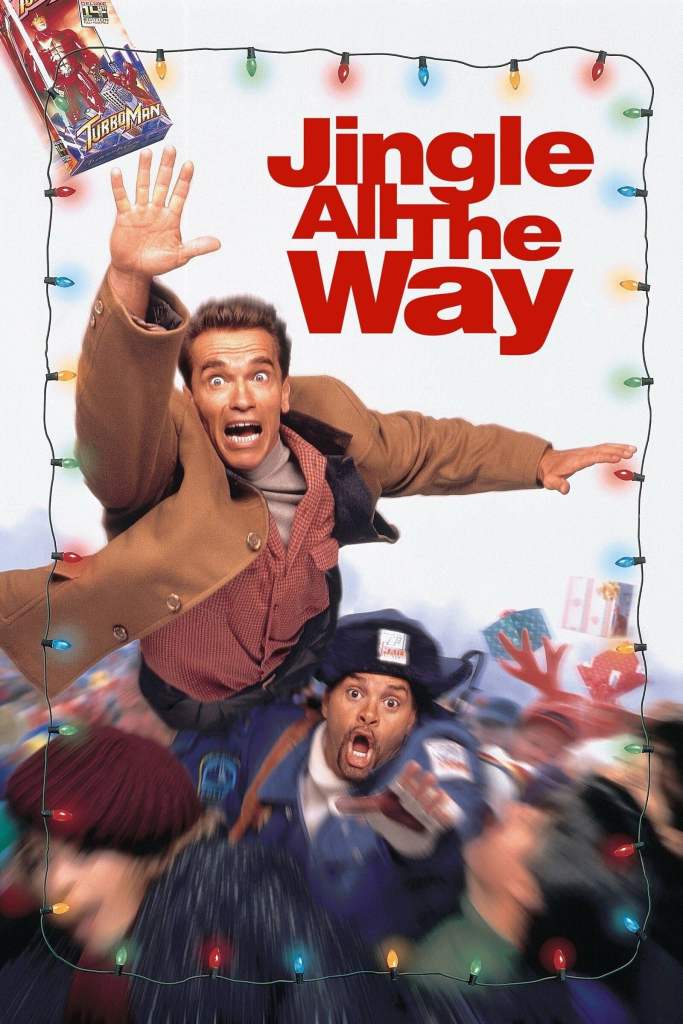
Have you ever tried to look up a movie that is 10, 20, 30 years old and can’t find it? Or better yet, you find it, but it’s not free. You have to rent a movie that’s been playing on regular TV for free for decades. Last year I had a hankering for a bumbling, heavily accented father trying to get his little Anakin Skywalker the hottest toy of the season. I speak of course of the 1996 classic Jingle All the Way.

Pictured here: Me, looking for outdated movies in bargain bins.

I. Couldn’t. Find. It.

I had 4 streaming services to choose from. It was nowhere without having to rent a nearly 30-year-old movie. This year Disney+ has custody, so…cool I guess.

That’s the thing. These streaming services all buy and essentially “borrow” a lot of their content through licensing. They compete against each other. You want to watch all the Spider-mans? And I mean all of them? Good luck finding them all on one service. You can’t even watch the Andrew Garfield movies (all 2 of them) on one service.

Besides the streamers flipping through content like cards in a deck of Uno, you also have the very real possibility that a company will just arbitrarily decide “You know what? We need a tax break.” And they delete their own movie off their service with no physical media to back it up. Gone. That content that cost hundreds of thousands of dollars, and so many people’s time and energy to create… is gone forever.

HBO Max reportedly cut costs last year by deleting 20 shows and movies including those that belonged just to them. That’s content that exists nowhere else.

Surely you’ve also booted up a service like Netflix and started the endless scroll to find something to watch. That’s apparently something these companies are very concerned about. From the previously linked MSNBC article:

“With the coming addition of Discovery+ content, Warner Bros. Discovery executives are concerned HBO Max may get bogged down with little-watched films and shows. That could cause viewers to associate the service with having a lot of stuff they don’t want to watch — the “Netflix problem,” said one HBO Max executive, who asked not to be named because the decision was private.”

Digital content isn’t, necessarily, forever. I feel like the NFT bros have also come to this conclusion.

The case could be made for physical media to experience a resurgence. Heck, record sales are doing well. Yes, vinyl! Vinyl sales were up for the 17th year in a row, though the article I reference did mark a slow in growth, probably due to price increases.

I get it. The way movies have been marketed has been diluted by so many avenues, and folks don’t necessarily have $22 to lay down on a movie to add to their collection. But your favorite movies, the ones you want to go back to time and again? They’re worth it.

Maybe I’ll end this by proposing this ridiculous idea: Physical media on demand. Sure, the vast rows of TV season box sets and various editions of Blu-Ray and DVDs might have to be phased out, but perhaps there should be a way to custom order the physical media you want so it’s only produced when someone orders a copy. Less waste is created. But at least there has to be a way to keep digital copies of movies that were acquired legally. Otherwise, I think the pirates will probably win, and that’ll be yet another struggle in the film industry to fight.

Sources:

PlayStation Store To Lose More Than 1,200 Purchasable Titles – With No Refunds

Where to Watch Every Spider-Man Movie Online in 2023

Streaming services are removing tons of movies and shows — it’s not personal, it’s strictly business

Here’s why HBO Max is pulling dozens of films and TV series from the streaming platform

U.S. Vinyl Album Sales Rise for 17th Straight Year — But Growth Is Slowing

Header image: Photo 26195729 | Dvd © Tonny Anwar | Dreamstime.com

Pay or Play – Some Movies Don’t See the Light of Day

Imagine working months, a year plus, on a project. Planning and outlining a story. Script revisions and rewrites. Storyboarding. A music score with full orchestra. Fighting and stunt choreography. Filming ninety percent of the movie.

Only to have HBO Max (I refuse to call it Max) shelve it for a tax write off.

This happened last year to Batgirl. Yes I’m still mad about this.

The movie starred Leslie Grace as Barbara Gordon/Batgirl, Brendan Fraser as Firefly and J.K. Simmons as Commissioner Gordon. Michael Keaton was reprising his role as Batman. And it looked awesome.

Filming began November 30, 2021. In January 2023, DC Studios Co-head Peter Safran deemed the film “not releasable.”

But, the real reasoning may just be because The Artist Formerly Known as HBO Max was rebranding, and no longer wanted the direct-to-streaming movie in its library. And it would make a fantastic tax write off.

I was going to write about this a long time ago. I mulled it over, got mad about it, and decided too much time had passed and I didn’t want to bring it up again.

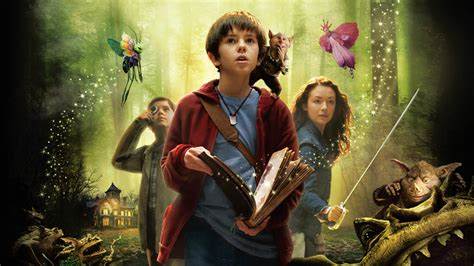
But then we have Disney+ cancelling The Spiderwick Chronicles series adaptation this week. This is only one cancelation of many, as Disney+ and Hulu downsize for their fiscal third quarter.

This year, Disney+ deleted Crater, a $54 million feature that only lasted on the streamer for seven weeks! They also removed the Willow spinoff, Y: the Last Man, and The World According to Jeff Goldblum. Last year, HBO Max removed the likes of The Witches (2020), MoonshotLocked Down, Superintelligence, Charm City Kings, An American Pickle and a veritable pile of animated and live action series.

And since my blog lately has become “here’s a bunch of thoughts about the writer and actor’s strikes” you can only imagine how much Disney and Hulu and all these other streamers are saving on their barely existent residuals.

The Not So Fantastic 4

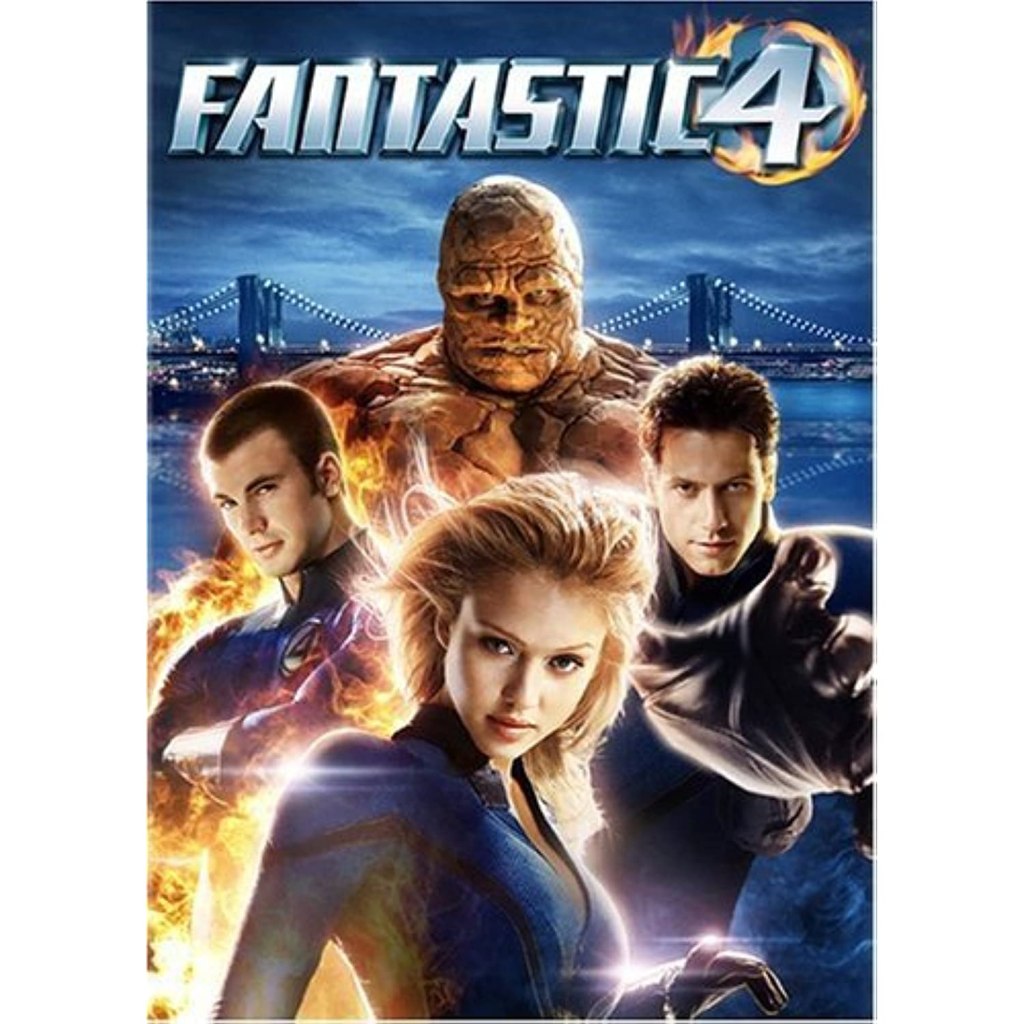
All this insanity reminds me of The Fantastic Four movie.

No, not that one.

Certainly not that one.

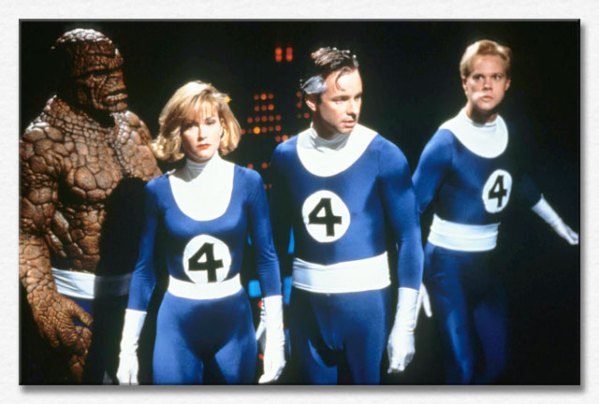
Yep, that one.

Not familiar with it? I’m not surprised. It’s technically a movie you can’t watch (unless cough cough bootleg DVD at Comic-Con cough cough).

The story behind this Fantastic Four is interesting, because it was a movie made specifically to never be seen. Why?

The 1994 film was made just to retain the rights to the characters. Although this Looper article claims otherwise.

A paltry $1 million dollar budget was set. A music video director was hired to direct the film. Cast and crew were hired at breakneck speed. This was definitely a race against the clock. Principal photography ended just three days before the contract would expire. The movie was edited in 28 days, and soon after it was served with a cease and desist from the producers.

Producer Berd Eichinger claimed it wasn’t his intention not to release the film, but Marvel exec Avi Arad was the one who stopped the movie in its tracks. In fact, Arad did buy the movie for several million dollars and order the prints destroyed. But still, it persisted, and bootleg versions exist out there for people to see the film in all its awkward B movie glory.

Pay or Play

Some movie contracts have a Pay or Play clause.

a pay or play clause guarantees that someone will get paid, even if they end up not doing the job that they were contracted to get paid for in the first place. They either get paid or they “play” and get paid. 

-Wrapbook

A good example was when the American The X Factor initially hired Cheryl Cole to judge two seasons of the show. Problem was, they didn’t think American audiences would understand her accent, so she was let go after the pilot episode. Cheryl Cole eventually had to sue, after she was paid for only one season. Her contract guaranteed her two seasons of pay, even though she didn’t work out as a judge.

This clause is also how Johnny Depp got paid $16 million after being fired from Fantastic Beasts 3 and replaced by Hannibal‘s Mads Mikkelsen. He had a pay or play, and the contract, as the IndieWire article points out, “did not have a morality clause.” This was after the highly publicized U.K. libel trial regarding the story of abuse with his wife Amber Heard. Mikkelsen was a better villain anyway. But still, $16 million is a lot to lose to an actor not appearing on screen.

I personally have worked on movies that have never, and will never, be seen. These are typically due to issues with finances at the indie budget level. I’ve worked on pilots that were never picked up by a network. I know several people who worked on The CW’s live action Powerpuff Girls show. I can’t imagine working on something so huge that it cost $50-80 million — and it never gets to be seen.

The cancelation of Powerpuff, from what I heard, might have been an act of mercy.

Pay or Stream?

We’ve got to a sticky situation in which titles are being deleted off of servers and shows and movies cease to exist. Actors, writers and show creators can’t earn residuals off that creative work, and not even DVD sales can save the day because…well, there’s not a lot of DVD sales going on. Personally, I’d love to see some streaming shows hit the DVD market. I don’t want Apple TV but I do want to see Silo. Why should I have Peacock in order to watch the Twisted Metal adaptation? Frankly, it would be beneficial to have an on-demand physical or digital download of content like this.

That’s enough for now.

Release Batgirl you cowards!

…and don’t get me started on New Warriors.

Sources

Disney Plus movie deleted just seven weeks after it premiered

Disney+ Not Moving Ahead With Completed ‘Spiderwick Chronicles’ Series Adaptation

HBO Max removes even more original content

Producer’s Guide: Pay or Play Clauses

Johnny Depp Exposé Reveals His Destructive Set Habits and $16M ‘Fantastic Beasts 3’ Payday

Podcasts that put the strike in perspective

One way I’ve stayed in tune with the impact of the WGA and SAG-AFTRA strikes is through podcasts.

I wanted to share several selections from podcasts I’ve listened to recently that stress the necessity for the strikes in the spotlight. I’m on the crew side, so hearing from writers and actors helps put things in perspective.

I listen through Audible, but I imagine you can find most if not all of these on Apple Podcasts and Spotify.

Scam Goddess -“The Film that Hid Fraud”

Laci Mosley (Lopez vs Lopez) and her guests started this episode talking about the insanity of the markup on wedding things – also known as the wedding tax — and it ended up making commentary on film worker’s lives.

Naomi Ekperigin (actor Mythic Quest  and writer Mrs. Fletcher): “Someone’s like ‘Oh yeah, I’ve seen you on TV.’ Just because I’m on TV… doesn’t mean I want to spend all the money I have on this. You don’t know my life. You don’t know my circumstance. We work in a business too where — okay yeah, it was a good year but we don’t know if it will be next year.”

Mosley: “We up on a whole strike right now! It’s up and down. You never know how long you’re gonna need to save your money.”

The episode then covered an interesting story about the fraudulent film production of A Landscape of Lies, so check out that episode. Laci and her guests are very entertaining.

Listen here.

Deadline Strike Talk – Week Sixteen with guests Gale Anne Hurd and Glen Basner

On this episode, host Billy Ray talked with producer Gale Anne Hurd (Terminator) and Glen Basner (FilmNation CEO), and the talk inevitably turned to the problem of AI.

Gale Anne Hurd pointed out that the concept of AI (like ChatGPT) writing scripts would be just a rehashing of what’s been done before. AI can “theoretically formulate box office successes” that are just copies of what was popular before. “The great age of cinema and television series,” Hurd stated, “was always when there was innovation.”

Basner: “If you look at a distributor like A24, Neon, Bleeker Street — they may be great theatrical distributors and there may be an audience at the theatrical level for those movies, but if they can’t sell their movies to paid TV or streamers, at the levels that they currently are, then the whole economic model upends itself and we have to readjust to say well creatively these may make sense but we may need to make them for 60% of the cost that we have been beforehand and that’s not sustainable in the long term to keep reducing the cost structure of each film.”

Hurd: “There’s gonna be continued consolidation.”

Billy: “If streamers add ads, wouldn’t they have to be transparent about their numbers with their advertisers?”

Hurd: “There have been lawsuits about fake data. About just how many people are actually seeing ads on those platforms. I’m always concerned that metrics will not be reliable. I can’t tell you the number of times I’ve had to sue for profits on my films. Some of my most successful films are still not profitable. If they’re not sharing that data with us accurately, I think they will share unreliable data with advertisers.”

Listen here.

Scam Goddess – The Fake Film for… Feminism?

Laci Mosley’s podcast gets a second mention because of her episode with Abbott Elementary writer Brittani Nichols.

Mosley: “I think that regular everyday people look at the strike and think ‘Oh these are Hollywood writers who live in Hollywood mansions and then have millions of dollars and they want even more?! They’re so greedy!’ Where in truth most writers aren’t super duper rich.”

Nichols: “Correct. Our guild is largely working class.”

Mosley: “And the middle class has been shrinking all our guilds because in SAG you used to make residuals and now streaming’s like ‘We’re not going to tell you how many people watched it.’ “

Nichols: “The entire industry has shifted. Streaming has put a squeeze on the middle class writer and made it harder to move up the ranks. Made it harder for people to have a sustainable career.”

Mosley made the example of an actor who did a voiceover line for Friends and still gets a $300 check each month as it re-airs. with streaming, it’s $0.

Their talk then shifted to AI, another major sticking point for both actors and writers during strike negotiations.

Mosley: “We get paid for ADR [sessions] but with AI, they could do it without us.”

Nichols also countered that the AMPTP (or at least streamers like Netflix) doesn’t want a traditional writer’s room. They want to pay the bare minimum and make it a freelance, gig based environment.

The pay for writers and actors may look high at first glance, but it also takes into account the fact that they might not work again for a very long time. It’s the nature of the business, so if a line isn’t drawn in the sand now, it’ll only get harder for that shrinking middle class actor/writer to survive.

Listen here.

Movies in Focus – $34. Filmmaker Joe Russo Gives Insight Into the WGA Strike

Podcast host Niall Browne invited writer/director Joe Russo (Au Pair Nightmare, Nightmare Cinema) onto the podcast to talk about how streamers treat their libraries, and therefore impact the discussion of residuals. Have you ever wondered why a show just up and disappears? Why a show gets canceled for seemingly no reason?

Russo: “What’s happening with streamers is they’ll run a show for one, two, three seasons maybe and as soon as they decide, as soon as that algorithm decides that show is not bringing in new subscribers, they cancel it. And so the chance to make those residual payments over dozens and dozens of episodes, that’s gone away. They’ll replace it with a new show, a new shiny bauble, to try to bring in new subscriber growth.”

Joe Russo went on to describe that the idea of any long term success is fleeting when streamers can just delete a show off their platform like this. Sometimes they barely get a release.

Russo: “They’ve been pulling things off the platform. There was a Disney movie that was released on Disney+ in May and it came down June 30th. It was on the platform 6 weeks. That’s hundreds of people’s labor, time, 1-2 years of their life invested into this thing for 6 whole weeks. And who knows if it’ll ever be seen again.”

Listen here.

Feel free to check out these podcasts and others to learn more about the strike from the perspective of those walking the picket line.

The Forgotten Casualties of the WGA & SAG-AFTRA Strikes

Motion Picture and Television Fund (MPTF) President Bob Beitcher pointed out that although the WGA and SAG-AFTRA have been supportive financially to their own members, a lot of people have been left behind. How about the folks who run cables, operate cameras, apply makeup, design sets, record sound, organize schedules or serve lunch?

“They have become the forgotten casualties during these strikes, overlooked by the media. Let’s face it, actors and writers make better subjects for strike stories; and now crew members are not getting the philanthropic support they’ve earned and deserve.”

Bob Beitcher

The stats are illuminating. Prior to the writer’s strike on May 2, 2023, the MPTF would receive calls from about 100 crew members weekly looking for financial or other assistance. That jumped to 500-1000/week since July.

From the Crew’s Perspective

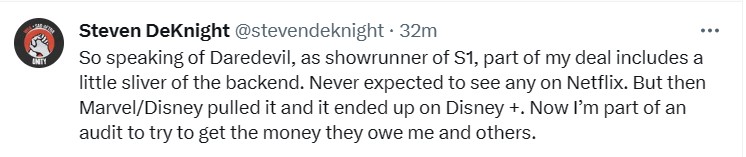
There have been more than a few unkind remarks from people — trolls — online. “Actors make too much already! Writers are just complaining! Get a real job!” We’ve all heard some variation of this.

“The endgame is to allow things to drag on until union members start losing their apartments and losing their houses.”

anonymous studio executive to Deadline

An anonymous executive made the comment that the studios would wait out the writers until they lost their homes. That kind of thing is already happening. And not just to writers. When the writers and actors aren’t working, neither can the crew members who work on those projects.

Let’s face it — the studios knew there was going to be a strike. So even prior to May 2, a lot of us felt it coming. Shows that should have started production in March or April just…didn’t. I remember countless talks with fellow film workers from March on: “Things are slow, right? Yeah they’re slow. Hope it doesn’t stay that way.”

Can I prove this was done on purpose to squeeze the crew and make them as anti-strike as possible? No, but the idea is in your head now, isn’t it? It also could be due to the mergers of various studios which I touch upon in the next section.

Film is a very difficult business. When work is good and plentiful, it seems really good. In fact, most people working regular jobs would probably scoff at some of the day rates I’ve gotten, and I’m not getting the crazy high rates that get advertised in Deadline.

The thing is though… you always have the possibility of not working for weeks or months after a job. You might be hopscotching from one day play gig to another, constantly hustling to find the next gig. There are film workers who already had a backup job as a safety net, and now that’s not even enough to get by.

The Answer is Easy. Just Work on Reality TV!

“But what about non-union? I can just work Reality TV! They aren’t affected by the strike!”

That’s not exactly a consolation prize and I’m a little annoyed people keep thinking like that. There’s a vast number of film workers who specifically work in the reality scene aka unscripted — and they’re being told that people in scripted could just take their jobs instead.

Reality is also not an answer because it’s not even booming like some would expect.

“… something one would assume is that there’s a lot of work and a lot of more projects getting greenlit, and that doesn’t seem to be the case for some reason. You know, I’ve talked to a number of producers who said this is the toughest moment they’ve seen for unscripted TV right now in terms of people aren’t working. There have been long stretches where since maybe December that a lot of people have been in without work.”

Ryan Gajewski, The Hollywood Reporter via article on PBS.org

In this Deadline article, it details the layoffs and cost-cutting that is plaguing reality tv for mid-size production companies. That includes Bunim/Murray Productions (Keeping up with the Kardashians, Real World) cutting eight staffers and Half-Yard Productions “right sizing” the company after being purchased by The North Road.

Mergers have definitely played a role. The Warner Bros Discovery merger, for one, took place in April 2022. That is being felt this year, as shows are just not being greenlit or put on a backburner for what feels like forever. I for one would have started on a season of a show this past April, except the date for production kept moving as it hadn’t been greenlit yet. Then I also heard that some people wouldn’t be able to return anyway — the company (whom I shan’t name so I can be hired again) would only be hiring in-house for certain jobs.

Survival Mode

I just deleted a home renovation show off my calendar. Easy come, easy go. On a normal year, this is a thing that happens from time to time, but there’s other projects to take away the sting. This year, it hurts losing even the possibility of a one-day gig.

This is scarily reminiscent of 2020, when all film work ground to a halt and most of us were out of work for nearly a year. Now, in 2023, we’re facing a similar situation. Some folks might not have had time to recover from 2020 yet. There are going to be film workers who finally just throw up their hands and change careers.

We waited for a while to see what would happen. 2023 started with a whimper, shows that should have started pre-strike didn’t and then the strike solidified it. This career has become even more dicey to try to hold onto.

Friends of mine have resorted to taking part-time jobs or even gig-economy jobs like Uber or dog walking. I’ve seen folks comment online that they can’t even get a job because employers don’t want to hire someone who will jump ship when the strike ends.

Nexxt steps are challenging.

Typical job search engines aren’t keyed into production style resumes.

And just try navigating unemployment when you’re a freelance film worker who can’t easily fit into the government’s forms. Imagine sitting down for hours, filling out information that is not always easy to find (was that job a W-2 or a 1099? What was the payroll company? How many weeks did I work in the last 18 months?) and then getting a call saying you missed one item — now you have to refile the entire application again.

There’s no easy answer right now.

No matter how long the strike takes, even if it ended today, it’ll be months before episodes are written and production actually begins. Meanwhile our rent, car payments, healthcare, and increased costs for groceries and gas still need to be paid.

Having said all that… I am still supportive of the strikes.

I understand, and many of my film fellows agree, that the issues the writers and actors are fighting for will have major repercussions down the line. They need to set standards for streaming and residuals, the middle class actor and writer needs to be able to afford to keep doing what they want to do, and a line in the sand must be drawn against AI use in writing and acting. The fight they are in will effect all of us in the end.

It’s time for the AMPTP to start understanding that.

Anyone interested in helping the MPTF’s emergency relief funding efforts can donate here: http://www.mptf.com/donate.

Sources

Hollywood Crew Are “Forgotten Casualties” in Strike, MPTF Chief Says in Call for Financial Aid

Hollywood Studios’ WGA Strike Endgame Is To Let Writers Go Broke Before Resuming Talks In Fall

Doom & Gloom In Unscripted TV: Producers Battle Challenging Conditions As Mid-Sized Firms Face Layoffs

What You Need to Know about the Warner Bros Discovery Merger

How the Ongoing Writers Strike Impacts Reality and Unscripted TV

header image: Photo 129097006 | Film Crew © Ppengcreative | Dreamstime.com

How to Avoid Film Job Scams – Take Four

I really hate that this has become a recurring theme I have to address. I really just want to teach about the fun stuff. Instead, I have to keep drudging up the fact that there are many people out there taking advantage of the film community.

Things are not good right now. The SAG-AFTRA/WGA strikes combined with corporate studio greed has contributed to a painfully difficult year to work in film. 2023 has brought major career changes, such as layoffs and unemployment and the need for survival jobs to many creatives affected by the strikes.

Facebook film groups are rife with scammers taking advantage of people desperate for work and green people trying to get their start in the film industry.

Here’s some of the latest scams and suspicious posts that I and several community members have come across.

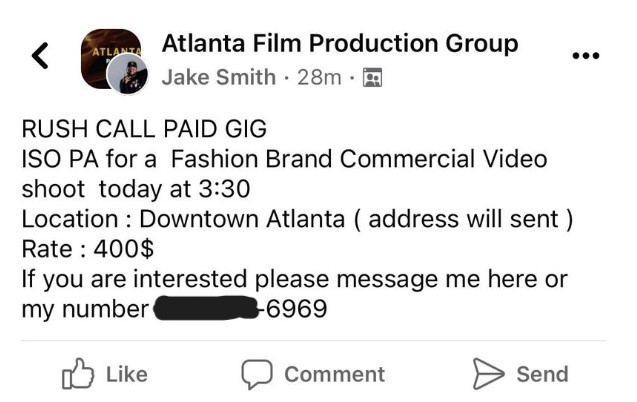
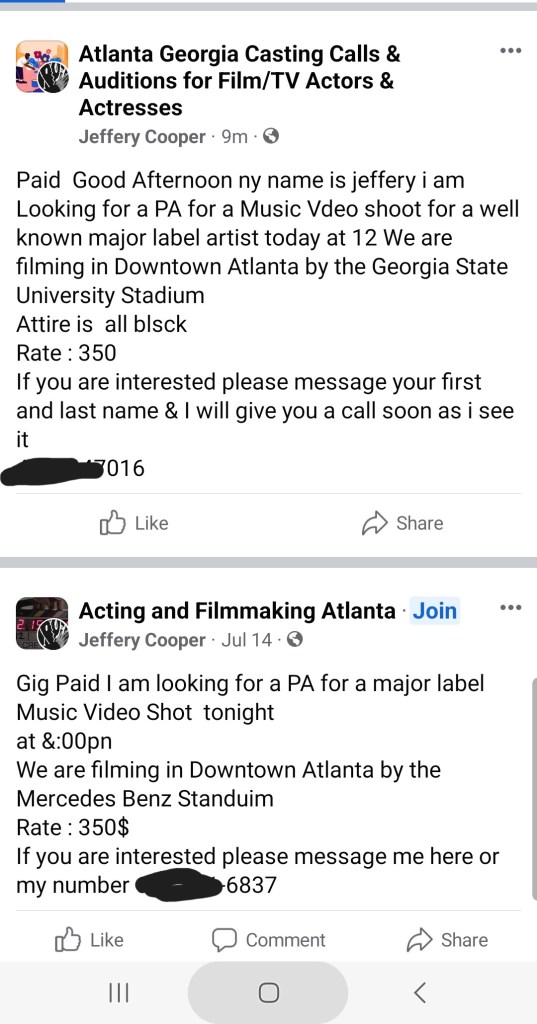
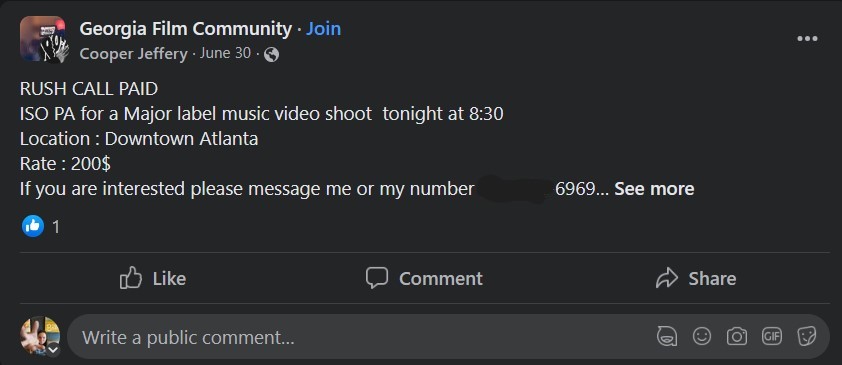
Jake Smith/Jeffery Cooper

This is likely not this guy’s real name. For one, he went from Jake Smith to Jeffery Cooper to Cooper Jeffery. Also a quick Google and both names show up as actors. Maybe they’re just common names, and that helps lure in an unsuspecting individual.

Bad grammar is often a dead giveaway on scams.

“Address will sent.” “400$”

Jeffery/Jake’s posts are rife with spelling and grammar issues. Normally that points to an overseas scammer unfamiliar with English. He appears to be in Atlanta though, because people have worked with him in the Atlanta market before. And one or two of the disposable phone numbers he’s used come back to Marietta, GA.

Be highly suspicious of jobs that are taking place “in a few hours” or the same day. Honestly, it can happen that a production needs last minute help. Someone got sick, had an emergency and couldn’t come in, your feature realizes they don’t have enough extras for a party scene (saw that one happen in person).

But be very suspicious of a job that needs you to throw all caution out the window and immediately jump in head first. They are banking on your desperation, and you will pay for it. Literally.

Yes, I blanked out the phone numbers so nobody makes the mistake of calling him.

One person, who we will call Mary, worked with “Jake Smith” on a rush call gig offering $400 for a PA on a music video. Although Mary had some concerns about it seeing like a high rate for a PA, she took the job. On this gig, she spent over $100 of her own money and was told that someone would pay within two weeks.

What followed was several weeks of ghosted phone calls. No $400 pay or $100 reimbursement. Later when she looked at Jake Smith’s profile, she found he’d changed his name to Jeffery Cooper. His profile pic also changed.

That was weeks ago. Recently, another Atlanta based film worker we’ll call Frank talked to me about the same individual, though now he uses the name Cooper Jeffery. The man sounded very shady on the phone. Frank told me that Jake/Jeffery was asking for a transport PA (Uh, okay?) to use their own car and gas and food and be reimbursed later. Jake/Jeffery then hesitated to give a name of a production, didn’t know what a COI (Certificate of Insurance) was, and soon hung up on the job seeker since they asked too many questions.

The spelling/grammar have gotten even worse. Note that the phone number changed too.

Do your due diligence. Ask questions. Know exactly what you’re getting into.

As I was writing this post, this one popped up:

These “jobs” were posted on different days, on different Facebook groups, and always last minute. This latest one was posted at 10pm, for a rush call “at 12”. So…midnight?

A Data Entry Scam Targets Women in Film

Many people who work in film are turning to survival jobs to get by right now. That includes looking into work from home opportunities. Don’t worry, the scammers have you covered there as well.

I blocked this one’s name because it’s possible this name and profile pic were stolen.

A community member I’ll call Haley alerted me to a somewhat legit looking data entry job targeting women film groups. When she asked for more information, the “employer” asked for her bank information to give her funds in order to purchase equipment.

This is a play on a standard scam that targets film people, so it’s interesting that they re-skinned it as a data entry job. The scam asks a production assistant (usually) to purchase film equipment and then get reimbursed later. It’s not real. If they send you a check, it bounces, and you’re out ALL the money.

Do not use your own money to purchase film equipment or supplies for a job, even if it seems like a legit job. In a real production, they’ll give you petty cash or a P-card in order to purchase supplies, and a PA should never be purchasing equipment at all. A PA could purchase crafty, office supplies, etc, with the production’s funds, but never equipment and never with their own money.

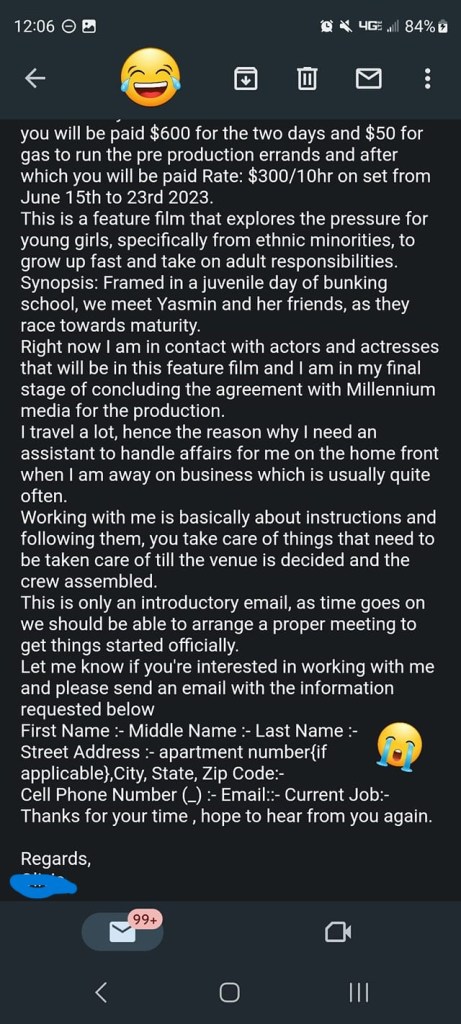
The Huge Paragraphs of Doom

Yet another community member contacted me about a scam she came across from someone we’ll call O. I blocked out the name because I can’t be sure if this name was also stolen.

This is an example I’ve covered before — the word vomit job offer. Honestly, just the giant block of text in enough to provide you pause before you give any info.

The TLDR version of our analysis is this:

  • over explanation of what a PA does
  • Duties that a PA doesn’t do, like check processing and booking travel.
  • “I travel a lot…so I need an assistant there.” That’s a common scam tactic.
  • Requesting a ton of personal info right away. This exact same block of text appears in a number of scams I’ve covered before.
  • overall weird formatting

Most of my job e-mails are this:

“Hi, This is Insert-Name-Here from This Show. Got your name from So-and-So. Are you available to camera operate on a 6 week reality show starting May 7th?”

That’s it. Maybe even less. Producers know you know what a production assistant is. They aren’t interested in giving you a show synopsis. They’ll get your info when you’re officially hired and you sign a Deal Memo.

After this person posted her experience with the suspicious job poster, the job poster O, started sending threatening texts and promised to “destroy you …mess up your F-ing life.” I mean, seems legit, right?

RED FLAGS TO LOOK OUT FOR:

  • Name of famous producer or production company (for instance, just got one from “LucasFilmsLTD” recently.
  • Very short notice request for work.
  • Strangely high rate or strangely worded rate (“weekly pay” “1800 flat” “you get $600 for 2 days”)
  • Job poster doesn’t answer simple questions.
  • They want you to use your money to purchase something for the production.
  • They immediately ask for your banking info.
  • The Facebook account of the poster is new, and/or seems like it’s never used (no friends, no pics, etc).
  • The job poster meets any of these red flags and also just joined the Facebook group you saw the post in.

Where on Facebook did I see these posts?

The Facebook groups I saw these scams in were:

  • Film Production in GA
  • Georgia Film Production
  • Georgia Film Community
  • Atlanta Film Production Group
  • Atlanta Film & TV Casting & Jobs Board (CS)
  • Women in Film & Television Atlanta (WIFTA)
  • Acting and Filmmaking Atlanta

Some groups are less moderated and more prone to scam posts than others (lookin’ at you Film Production in GA). It doesn’t mean you can’t join any and all film related Facebook groups, but it does mean more of the work of identifying scams and bad jobs will fall on your shoulders.

What Can You Do To Avoid Scams?

Ah, that’s easy. Delete Facebook, unplug your internet, and throw your phone into the sea. Not an option?

Then you’re going to have to do more research than you want, but trust me, it’s worth it.

If something seems off about a job, start looking into it. Is the pay rate for the job too high? Are they asking for the wrong job duties for the job title, such as a PA operating a camera? Is the spelling and grammar all wonky?

Google can tell you a lot. Google the name of the employer, the production company they are associated with, or the email. If someone else has run into a scam, they might have shared that info online. Ask your fellow film professionals, “Hey, does this job look scammy to you?”

Look at the Facebook profile of the person posting the job. Is it a new Facebook account? That alone is a warning sign. Doubly so if they just joined the group they posted in. Even more so if they turn off comments on their posts in order to avoid people warning each other.

Be cautious if anyone is trying to pressure you into taking a job without getting all the details straight.

Sources

Layoffs begin in the film industry, as Hollywood strikes continue

Philadelphia film office warns filmmakers against scammers

Why Residuals Are a Big Factor in the SAG-AFTRA and WGA Strikes

The WGA and SAG-AFTRA are both on strike against the Alliance of Motion Picture and Television Producers (AMPTP) halting TV and film productions and leading to a very sparse year financially for many film workers. They’re just asking for more money, right? Yes and no. This is certainly not a case of greed from the average film worker, but from corporate CEOs who make hundreds of millions of dollars a year while balking at a small percentage that writers are asking for. To put it in perspective, since 2018 writers have seen an inflation-adjusted fall in revenue of 14%. For writer-producers it’s worse at 23%. In recent years, the numbers of writers working at a WGA minimum went from a third to half of all writers. Meanwhile SAG-AFTRA actors report paltry residuals and popular TV shows that didn’t properly compensate them either, and a big culprit is streaming.

The WGA Strike Began May 2, 2023

The WGA went on strike in May when negotiations broke down. How far apart was the WGA’s proposal from the AMPTP counter offer? The WGA asked for a pay increase for members totaling $429 million per year (that’s only about 5% on WGA minimums). The AMPTP countered at $86 million per year, an amount they called “generous.”

You can consult this page to see the WGA’s terms and the AMPTP counter offers.

The WGA has gone on strike for several reasons, one of them being paltry residuals for streaming shows. Residuals are compensation for a performer when their work is re-run, syndicated to another network, or sold as a physical media such as a DVD box set to name a few. Streaming obviously complicates this because programs are not broadcast in the same fashion as on traditional TV.

“Over the past decade, while our employers have increased their profits by tens of billions, they have embraced business practices that have slashed our compensation and residuals and undermined our working conditions,” said the WGA Negotiation committee to its members prior to the strike beginning.

Surprisingly, WGA West’s fiscal report in March 31, 2022 reported an “all time high” in guild collected residuals. How does that make sense when writers claim they’re making less?

Because they are making less!

The total residuals may appear higher, but that is due to the volume of extra projects being made. It’s no longer just theatrical releases and network TV. There is a cornucopia of different streaming platforms all vying for a catalogue of material to get you to sign up for another subscription service.

Charles Slocum, assistant executive director at the WGA West, indicated that residuals slashing was taking place on a per-program basis, and the major culprit was streaming services.

And so, when WGA contracts were coming to an end this year, residuals were one of the main points they would negotiate for — as well as not having writers replaced by the likes of ChatGPT.

Slocum also made the point that companies have not agreed to pay residuals at broadcast levels for streaming programs. “If you write for a streamer, you get two residuals payments – one for domestic streaming and one for foreign streaming. It’s a set amount of money. If it’s a big hit, you do not get paid more residuals in streaming, whereas in the broadcast model, you do because of its success. That’s the sense that residuals were slashed – they have not agreed to a success factor when a program is made for streaming.”

Many writers, actors, and other film industry professionals have taken to social media to explain what position they are in. Screenwriter Daniel Kwan, Oscar-winner for Everything Everywhere All at Once, said on Twitter, “It’s about maintaining a healthy middle/working class of writers in our industry. It’s about showing our collective strength as new tech threatens to take away our leverage.”

The average person may assume that screenwriters (and actors!) are making so much money already that this argument is unnecessary. But the truth is, the majority fall into middle class status or lower. Only a small percentage make the insane bucks that make headlines.

Shrinking writer’s rooms has also been a factor that has plagued modern writers. In traditional TV, you’d have a group of people hammering out episode ideas, sharing script writing duties for 20+ episode seasons. Now, with streaming’s angle towards shorter seasons (8 episodes seems the norm these days) and fewer writers, the entire process has shifted. Shorter seasons and smaller rooms equals fewers weeks of pay and more gaps in work for writers and actors alike

SAG-AFTRA Strike Began July 14, 2023

Actors too, are striking for better conditions. They decry similar concerns such as waning residuals from streaming to A.I. creating virtual versions of actors and replacing them, the actors were ready to put their foot down and join the WGA on the picket line.

“There has been a sea change in the entertainment industry, from the proliferation of streaming platforms to the recent explosion of generative AI, and at stake is the ability of our members to make a living,” said SAG-AFTRA Chief Negotiator Duncan Crabtree-Ireland. “We must ensure that new developments in the entertainment industry are not used to devalue or disrespect the performers who bring productions to life.”

The culture’s shift to streaming has led to shorter season runs, and therefore fewer episodes and less work for recurring performers on shows.

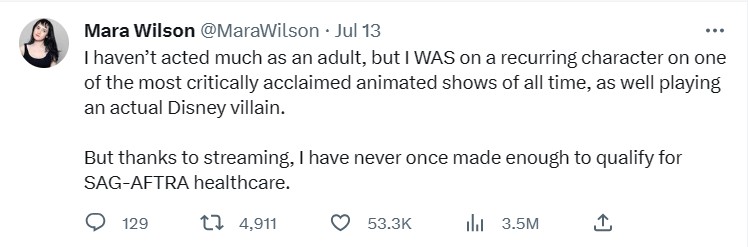
Most actors, like the writers, do not make the big bucks that make readers of Variety blush. Many are considered middle class or even struggling to get by. As the strike was authorized, numerous actors took to Twitter to provide anecdotes on why the strike was necessary.

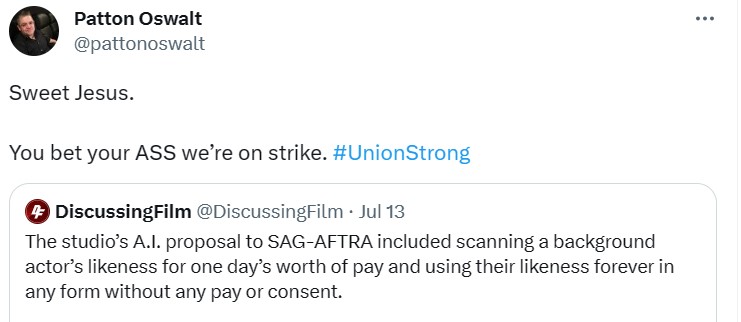
The popularization of A.I. tech has made both writers and actors nervous about the reality of losing their jobs. This is a huge topic, and difficult for me to cover without this post ballooning into a novel’s length, but suffice to say that AMPTP has unironically looked at A.I. as a cost-cutting maneuver to replace people.

This post went around recently by Justine Bateman, A.I. consultant to SAG-AFTRA during the negotiations.:

All indicators are showing that we’re going to be in this for the long haul.

Sources:

Deadline: Are Streaming Residuals Being Slashed? As WGA’s Own Data Shows, It’s Complicated

YouTube Video: Steve Schmidt explains how the SAG-AFTRA & WGA strike impacts the American middle class |The Warning

Tensions from the last writers’ strike cast a shadow over current labor fight

Why Actors Are Going on Strike

Mini Rooms Drive Major Controversy as Creative Community Feels Strain of TV’s Vast Expansion

SAG actors strike, joining Hollywood writers. What are we supposed to do now? Read?

Spider-man: Across the Spider-verse is Breaking its Artists

Spider-man: Across the Spider-verse is still doing gangbusters at the box office 3 weeks after its release. It’s a stunning display of cinematic art, and immediately blew away all high expectations that existed after Into the Spider-verse inspired us all to be our own hero. Too bad the artists who made the film truly had to suffer for that art.

The second Spider-verse movie did some really amazing things, including having the story grow darker and more mature as Miles himself grows into being his own hero. One very notable, and highly anticipated part of the film was how each universe would be rendered in its own unique art style. Gwen’s universe is awash in melty watercolor tones, Pavitr’s universe is Bollywood and boisterous, Miguel’s features some neon colors and sketchy lines.

It’s a beautiful movie. Really.

But 100 artists had to leave the project due to unfair working conditions.

Long hours and rough days are no strangers to those of us who work in film. A 12 hour day is standard for us. Many who work on bigger productions find themselves working way over that time, with a consolation of overtime and learning techniques on how to not fall asleep while driving home. Throw in the mix a Fraturday (day starts on Friday, ends on Saturday) that severely cuts into the weekend and then you do it all again on Monday. And these are actually better conditions than where it all originally started.

The artists on Spider-verse reportedly were hired on during the layout process, then had to wait months to get started, and then were shunted into immediate crunch time with 11 hour days 7 days a week. These conditions lasted for more than a year.

Some were afraid to leave, reticent to allow their work to go to the wayside if they weren’t there to see it through.

Fix it in Post!

Part of the issue was Phil Lord’s angle on editing material after a 3D render had already been produced. That’s pretty late in the pipeline for animation. That’s like an actor getting the director’s notes after you’ve already shot the scene. Those changes should take place during the storyboard stage, a handy pre visualization that filmmakers use to block out their entire movie before it is filmed or animated.

Animators allegedly had to go “back to the drawing board” five times, which had to be incredibly frustrating. After working so many hours on a scene, now you want it done a different way? Sure I don’t need to see my family any time soon.

One artist, pseudonym Stephen in this Vulture article, said:

For animated movies, the majority of the trial-and-error process happens during writing and storyboarding. Not with fully completed animation. Phil’s mentality was, This change makes for a better movie, so why aren’t we doing it? It’s obviously been very expensive having to redo the same shot several times over and have every department touch it so many times. The changes in the writing would go through storyboarding. Then it gets to layout, then animation, then final layout, which is adjusting cameras and placements of things in the environment. Then there’s cloth and hair effects, which have to repeatedly be redone anytime there’s an animation change. The effects department also passes over the characters with ink lines and does all the crazy stuff like explosions, smoke, and water. And they work closely with lighting and compositing on all the color and visual treatments in this movie. Every pass is plugged into editing. Smaller changes tend to start with animation, and big story changes can involve more departments like visual development, modeling, rigging, and texture painting. These are a lot of artists affected by one change. Imagine an endless stream of them.

Of course Sony execs rushed to backpedal on these claims. Amy Pascal, for one, didn’t exactly help things with this statement:

“One of the things about animation that makes it such a wonderful thing to work on is that you get to keep going until the story is right,” adds Pascal. “If the story isn’t right, you have to keep going until it is.” To the workers who felt demoralized by having to revise final renders five times in a row, the Spider-Verse producer says, “I guess, Welcome to making a movie.”

Amy Pascal, from the Vulture article.

A Lesson We Seem to Keep Learning

I don’t think the guy on the left would have gotten a sequel

Back in 2019 I did a post on the Sonic live action movie that dropped a trailer so jaw droppingly terrible that they literally had to rework the Sonic CGI in record time. I ended up watching both Sonic movies later on and they were both delightful family romps — and the correct choice was made to fix the Sonic character to be more like the source material.

My blog focused on the inherent problem with wanting to fix something fast. CGI, animation, and any kind of VFX takes an astonishing amount of hard work and time. It’s not just hitting a button that says render and walking away to watch a season of Black Mirror.

Crunch has been a negative word circulating through VFX houses and video game companies for some time now. I learned a lot about the term when it came to the videogame industry, actually, in Jason Schreier’s nonfiction book Blood, Sweat and Pixels. It’s a pretty insightful read. Animators, VFX artists, and video game designers are pushed into crunch mode to meet imminent and obscenely short deadlines and fix the inevitable problems that comes with that rushed work. It leads to an unhealthy work environment and depressed, overworked artists. Who wants that?

Across the Spider-verse came to a pulse pounding close. M friends and I sat at the edge of our seats in shock when we saw that the next installment would be in theaters March 29, 2024. We’d just been ripped in two by a cliffhanger, and before we could wonder how long it would take a sequel to come out, we were delivered an unfathomable promise.

According to additional reports coming out now, that’s not likely. And you know what?

That’s. Okay.

If we can give these hard working artists some breathing room and some better conditions, I can wait longer to see the conclusion of Miles Morales’s story.

I’d like to imagine an alternate universe in which we respect our artists, give them reasonable time and work conditions, and continue to appreciate their work.

If that means I don’t get Spider-verse 3 next March, I humbly accept that.

Sources:

Damning Across the Spider-Verse Report Reveals 100 Artists Quit Amid Brutal Working Conditions

Spider-Verse Artists Say Working on the Sequel Was ‘Death by a Thousand Paper Cuts’

The Problem with Sonic’s “Fix it Fast”

“Blood Sweat and Pixels: The Triumphant, Turbulent Stories Behind How Video Games Are Made” by Jason Schreier

Networking for Film Makers

I read a book on networking once and realized it didn’t have exactly the information I needed for my own career. But there was some sage advice that could be adapted.

Let’s look at several options for networking in the film industry.

Networking Events

Might seem obvious.

It does make a difference on which networking event you attend.

When I first moved to Georgia, I jumped at the chance to go to meet folks in the industry. I literally went to the first one I saw. It was at some studio and sounded legit. People were encouraged to go up to this microphone, introduce themselves, and mingle afterward. It was so awkward. Everyone there was someone who wanted a job, not anyone who could actually offer one. I ended up making one connection, who ended up humble bragging into making me believe he knew what he was doing. I wasted time prepping a film that fell apart the day before the shoot and I found out they lied and misled about everything. I had to block this person on every form of social media as they got a bit stalkery.

Lesson learned.

So choose accordingly. As a general rule, networking events shouldn’t charge much if anything to its participants. I was at an event that charged $10 to attendees which wasn’t bad. Look at the event, where it is held, and what exactly they’re offering. It may also be helpful to go to more specific events that cater to more narrow criteria, like one specifically for women film makers.

Here are a few upcoming networking events you may want to check out:

April 1 – Class In Session: Creative Industry Mixer & Panel – Free

March 23 – Atlanta Film Production Group – Film Mixer – $10

Other events to look out for in the future:

WIFTA open networking events (open to members and non-members)

Atlanta Film Society‘s Eat Drink and B- Indie Networking events.

Casual Meetups

It’s not all about networking, sometimes it’s just about making a connection.

Film Bar Mondays – Set at a different bar each week, Film Bar is an informal meetup.

Film Brunch Sundays – Another super informal meetup.

Atlanta Script Reading Club – A group of people get together to read and discuss scripts. It’s a new group but I like their chutzpah. They cover screenplays and plays.

Maybe check out some groups on something like Meetup.com as well!

Education

I know I’m not the only one who attended SCAD or a similar film school and referred to it as “Networking School” It really was a trial by fire situation. You quickly built your favored group of film people and made films together. Some of those connections would go on to last into your professional career.

But this isn’t a post about film school. You can see that post here.

Let’s talk about other educational opportunities. A simple Google search or Facebook event search will show you courses and panels you can attend either virtually or in person.

For an entry level course, I’ve heard really good things about both the PA Academy and the Georgia Film Academy, plus I’ve run into graduates on films I’ve worked. Clearly something is working.

Atlanta Film Society hosts a number of great events you can learn from, such as their writing classes, panel discussions and film screenings.

Film Festivals

https://www.filmimpactgeorgia.org/georgiafilmfestivals

Another great way to meet people is at film festivals or screenings! Talk to panelists after a discussion, research filmmakers and talk to them about their work, meet your fellow audience members, go to a social event connected to the film festival. Come equipped with business cards (yes I’m old school) or an easy to share Instagram or Facebook handle so you can connect with people after the event.

I got to DP The Night Courier because the director and I met at a film festival. We contacted each other outside the film festival and said, almost simultaneously, “Hey I liked your film!” and a connection was made. That led to another successful film for both of us.

Working on set

“But I’m trying to network in order to get on set!” You say. I know, it’s a real chicken-and-egg situation.

One great way to meet and network with people in the industry is to actually work on sets, big or small. I’m hard pressed to find a gig I did where I didn’t end up with a phone number, email or Instagram of someone who wanted to work together or connect again in the future.

“Wouldn’t it be cool if we worked together again? What’s your Instagram?”
“Quiet on set. And stand over there.”
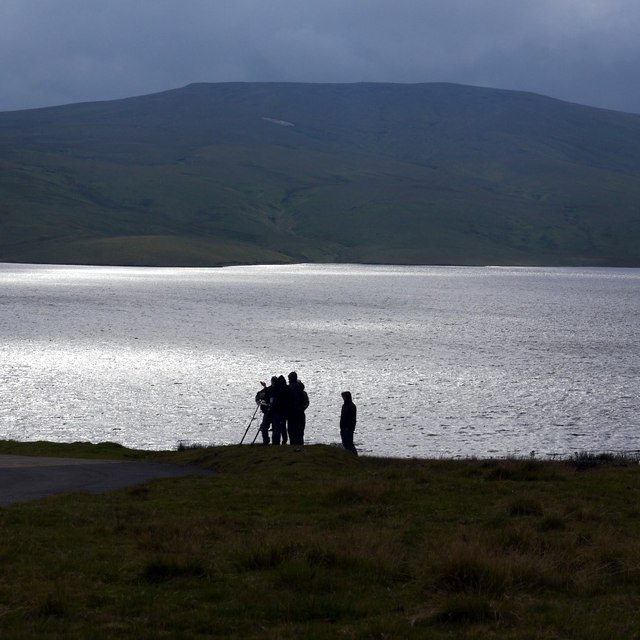
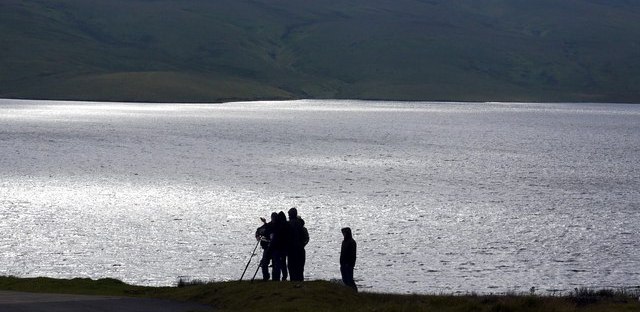
Film crew on location above Cow Green Reservoir by Andrew Curtis is licensed under CC-BY-SA 2.0

I did a lot of the work for you here. Now it’s your turn. Go out and make those connections!

Feast or Famine: Looking at the Stats

It’s the end of February, and all I’ve heard from various film friends is “I’m not working right now, are you?” A winter slump is normal, especially December into January. I just go into these months expecting the slowdown, and for things to pick up in March.

But another kind of work anxiety hits. How much do I need to reach out to jobs before I work regularly? It’s not an easy answer, but looking at my own data, I can see some patterns.

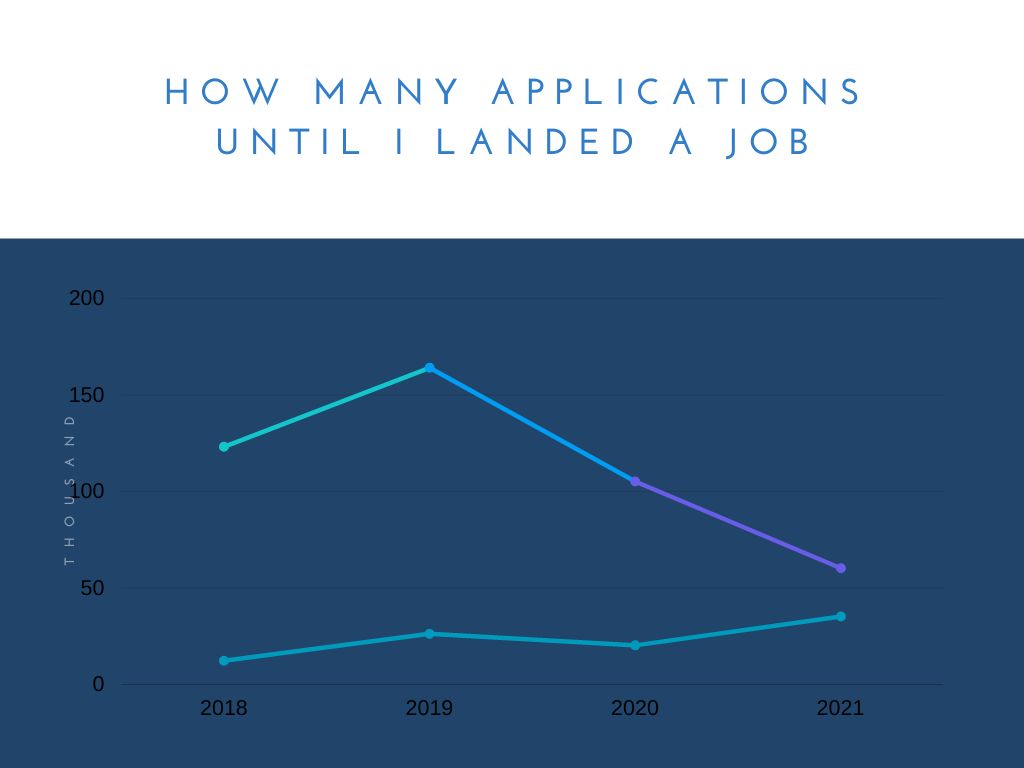
Since 2018 I’ve been keeping track of how many jobs I’ve applied to or been recommended for, and how many jobs I actually got. I meant well, but as times got busy, I eventually lost track or didn’t keep the best data. But I decided, you know what? There’s still something here to see. At least from 2018-2021.

I’m looking at two main things. Gigs applied to, referred to, or inquired about vs Gigs actually worked.

A Handy Dandy Chart

YearGigs AppliedGigs WorkedHow many applications until a job
20181231210
2019164266.3
2020105205.25
202160351.7

Within 4 years, you can see that I went from sending out 10 applications to get to one job, to sending out about 2. Now, I went to art school so I can’t Math all that well, but that looks like a good trend to me.

If I just don’t think too hard about it, the math checks out

I didn’t bother showing info from 2022 because I had several long running gigs and decided not to be Type A about showing what jobs I applied to anymore.

Represented as a hastily thrown together graph on Canva, that looks like:

Top line = Number of applications

Bottom line = Number of jobs landed

Closing the gap is a good thing.

There’s a few things I want you to know about this data.

  1. It takes a lot of effort to establish yourself in a new market. When I arrived in Georgia, I had to do a lot of legwork to start getting jobs.
  2. As time went on, a lot of my applications were actually just recommendations — people recommending me for gigs. When you become known, the work starts coming to you.
  3. I didn’t bother keeping track in 2022 because I was almost 100% working based off recommendations and had several longer runs on shows, whereas previous years I had more day-play opportunities.

If I look at my Google calendar from those years, I see wide swathes of nothing going on for days or weeks during the same slow months. Film is a marathon, not a sprint, and you’ve got to plan accordingly for the slow times. And those slow times can make you feel like you’re beating your head against the wall.

And it’s not just as simple as applying to jobs you see posted on job boards or Facebook groups or throwing your name in the ring for open crew calls.

A lot of the work I did alongside all this was networking, meeting people for coffee, doing casual fun things with fellow filmmakers, helping out on friend’s sets, speaking to students and film clubs, and even writing this blog. Self-promotion is a big deal in addition to applying for jobs. Networking is the glue that holds it all together.

I also applied to a lot of jobs in the slow months of January and February each year. There’s a lot more competition then, because less people are actively working.

This is my way of saying, if it’s slow right now, it’s not just you. It’s a lot of us, and there’s a lot of folks scrambling for the next job.

Keep in mind we’re also on the brink of a possible union strike down the line, and theories have been floating around about productions holding back from starting. I don’t know for sure. All I can say is to hold tight and know that you’re not the only one not actively working right now, and if you’re new — it’s going to take a lot to get yourself established.

This is not an easy industry to get into, but those who have the fortitude to stick through the hard times end up successful.

Sources:

Hollywood Braces for a Possible Writers Strike: Why the WGA and Studios Are on a Collision Course