
Spider-man: Across the Spider-verse is still doing gangbusters at the box office 3 weeks after its release. It’s a stunning display of cinematic art, and immediately blew away all high expectations that existed after Into the Spider-verse inspired us all to be our own hero. Too bad the artists who made the film truly had to suffer for that art.
The second Spider-verse movie did some really amazing things, including having the story grow darker and more mature as Miles himself grows into being his own hero. One very notable, and highly anticipated part of the film was how each universe would be rendered in its own unique art style. Gwen’s universe is awash in melty watercolor tones, Pavitr’s universe is Bollywood and boisterous, Miguel’s features some neon colors and sketchy lines.

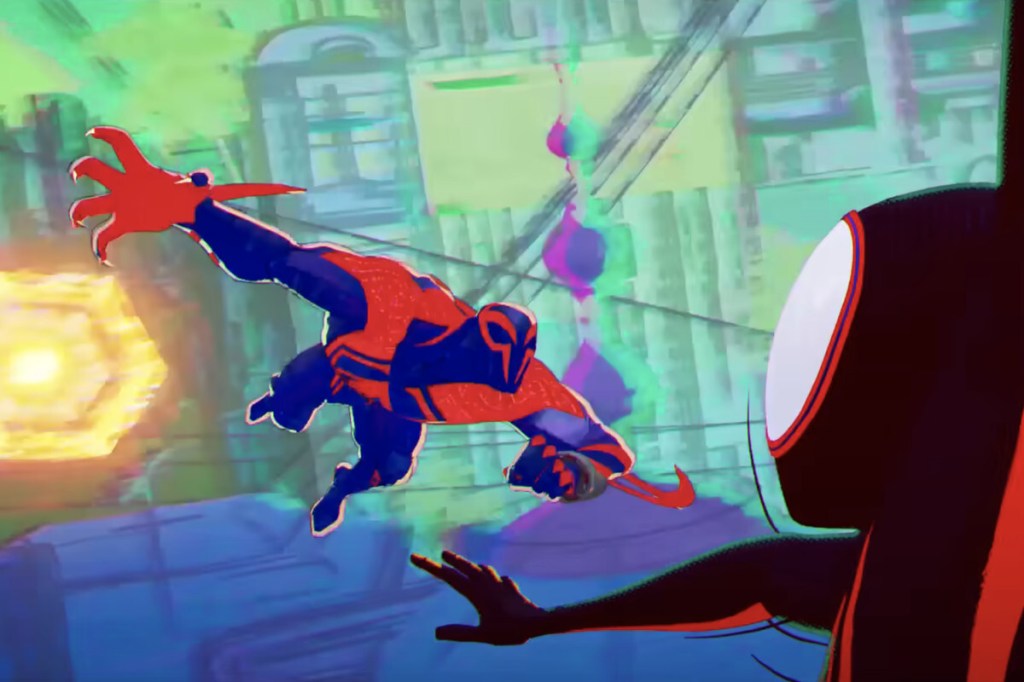

It’s a beautiful movie. Really.
But 100 artists had to leave the project due to unfair working conditions.
Long hours and rough days are no strangers to those of us who work in film. A 12 hour day is standard for us. Many who work on bigger productions find themselves working way over that time, with a consolation of overtime and learning techniques on how to not fall asleep while driving home. Throw in the mix a Fraturday (day starts on Friday, ends on Saturday) that severely cuts into the weekend and then you do it all again on Monday. And these are actually better conditions than where it all originally started.
The artists on Spider-verse reportedly were hired on during the layout process, then had to wait months to get started, and then were shunted into immediate crunch time with 11 hour days 7 days a week. These conditions lasted for more than a year.
Some were afraid to leave, reticent to allow their work to go to the wayside if they weren’t there to see it through.

Fix it in Post!
Part of the issue was Phil Lord’s angle on editing material after a 3D render had already been produced. That’s pretty late in the pipeline for animation. That’s like an actor getting the director’s notes after you’ve already shot the scene. Those changes should take place during the storyboard stage, a handy pre visualization that filmmakers use to block out their entire movie before it is filmed or animated.
Animators allegedly had to go “back to the drawing board” five times, which had to be incredibly frustrating. After working so many hours on a scene, now you want it done a different way? Sure I don’t need to see my family any time soon.
One artist, pseudonym Stephen in this Vulture article, said:
For animated movies, the majority of the trial-and-error process happens during writing and storyboarding. Not with fully completed animation. Phil’s mentality was, This change makes for a better movie, so why aren’t we doing it? It’s obviously been very expensive having to redo the same shot several times over and have every department touch it so many times. The changes in the writing would go through storyboarding. Then it gets to layout, then animation, then final layout, which is adjusting cameras and placements of things in the environment. Then there’s cloth and hair effects, which have to repeatedly be redone anytime there’s an animation change. The effects department also passes over the characters with ink lines and does all the crazy stuff like explosions, smoke, and water. And they work closely with lighting and compositing on all the color and visual treatments in this movie. Every pass is plugged into editing. Smaller changes tend to start with animation, and big story changes can involve more departments like visual development, modeling, rigging, and texture painting. These are a lot of artists affected by one change. Imagine an endless stream of them.
Of course Sony execs rushed to backpedal on these claims. Amy Pascal, for one, didn’t exactly help things with this statement:
“One of the things about animation that makes it such a wonderful thing to work on is that you get to keep going until the story is right,” adds Pascal. “If the story isn’t right, you have to keep going until it is.” To the workers who felt demoralized by having to revise final renders five times in a row, the Spider-Verse producer says, “I guess, Welcome to making a movie.”
Amy Pascal, from the Vulture article.
A Lesson We Seem to Keep Learning

I don’t think the guy on the left would have gotten a sequel
Back in 2019 I did a post on the Sonic live action movie that dropped a trailer so jaw droppingly terrible that they literally had to rework the Sonic CGI in record time. I ended up watching both Sonic movies later on and they were both delightful family romps — and the correct choice was made to fix the Sonic character to be more like the source material.
My blog focused on the inherent problem with wanting to fix something fast. CGI, animation, and any kind of VFX takes an astonishing amount of hard work and time. It’s not just hitting a button that says render and walking away to watch a season of Black Mirror.
Crunch has been a negative word circulating through VFX houses and video game companies for some time now. I learned a lot about the term when it came to the videogame industry, actually, in Jason Schreier’s nonfiction book Blood, Sweat and Pixels. It’s a pretty insightful read. Animators, VFX artists, and video game designers are pushed into crunch mode to meet imminent and obscenely short deadlines and fix the inevitable problems that comes with that rushed work. It leads to an unhealthy work environment and depressed, overworked artists. Who wants that?
Across the Spider-verse came to a pulse pounding close. M friends and I sat at the edge of our seats in shock when we saw that the next installment would be in theaters March 29, 2024. We’d just been ripped in two by a cliffhanger, and before we could wonder how long it would take a sequel to come out, we were delivered an unfathomable promise.
According to additional reports coming out now, that’s not likely. And you know what?
That’s. Okay.
If we can give these hard working artists some breathing room and some better conditions, I can wait longer to see the conclusion of Miles Morales’s story.
I’d like to imagine an alternate universe in which we respect our artists, give them reasonable time and work conditions, and continue to appreciate their work.
If that means I don’t get Spider-verse 3 next March, I humbly accept that.
Sources:
Damning Across the Spider-Verse Report Reveals 100 Artists Quit Amid Brutal Working Conditions
Spider-Verse Artists Say Working on the Sequel Was ‘Death by a Thousand Paper Cuts’
The Problem with Sonic’s “Fix it Fast”
“Blood Sweat and Pixels: The Triumphant, Turbulent Stories Behind How Video Games Are Made” by Jason Schreier
 Bridget LaMonica